

Safe, continuous crossing
A levelled ramp lets handling equipment drive on and off the trailer over one surface — no step, no loose dock plate.
A joint between two structures that never quite line up.
01Introduction
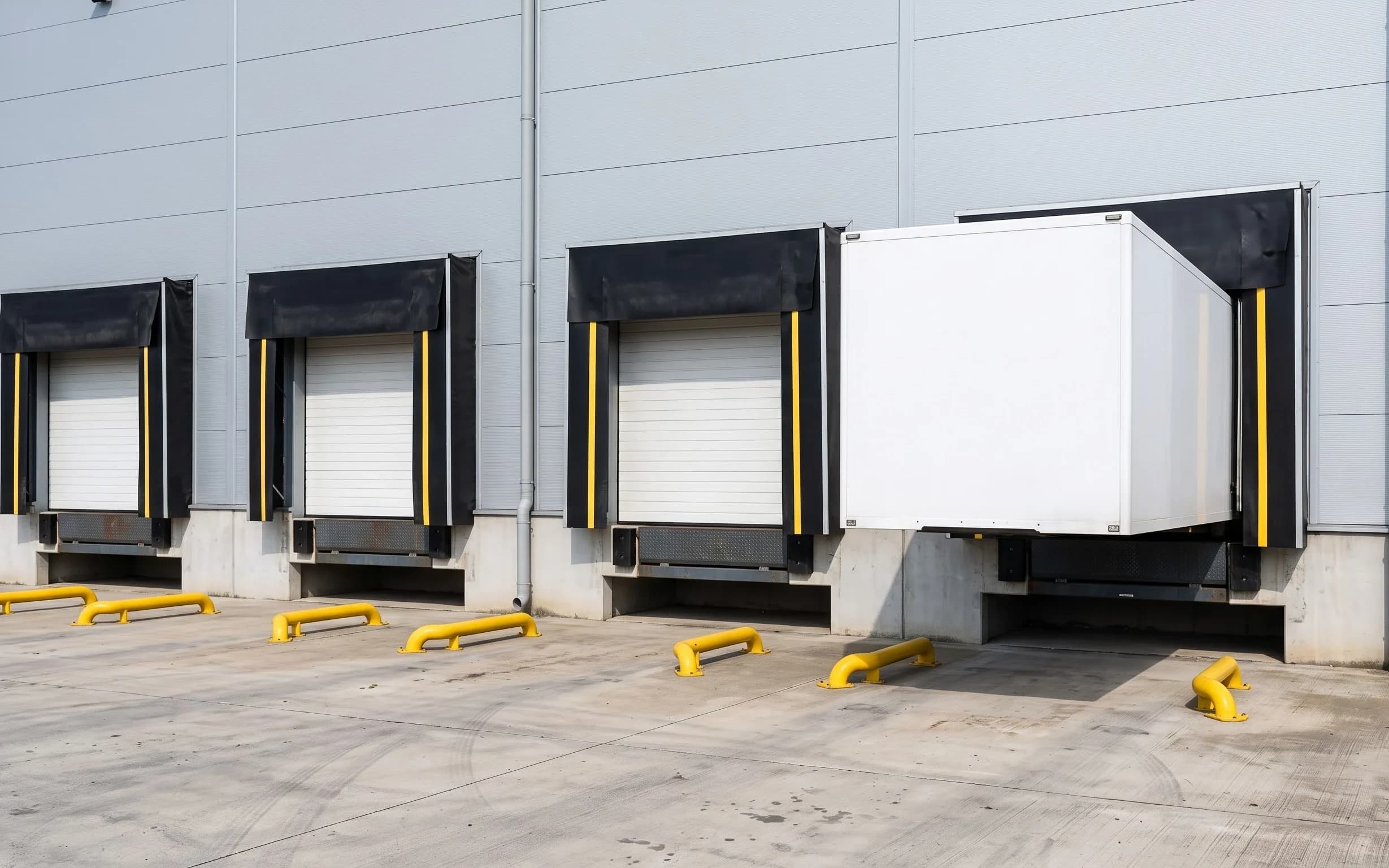
A loading bay joins a fixed dock floor to a vehicle bed whose height changes with every truck and every pallet moved. A leveller closes the gap underneath; a shelter or dock house closes it around the sides and top.
Specification is driven by the vehicle mix, the height range that has to be covered, the capacity of the equipment crossing it, and whether the goods inside need the bay sealed against weather or temperature loss.
02Why
A levelled ramp lets handling equipment drive on and off the trailer over one surface — no step, no loose dock plate.
Working range above and below dock level lets one bay serve a mixed fleet without packing or improvisation.
A shelter closes the gap around the trailer, holding temperature and keeping rain and dust out of the building.
A fixed, powered bay removes the manual setup that slows every vehicle movement.
03Categories
A category here is a construction or operating principle — the level at which two products genuinely behave differently, rather than just being finished differently.
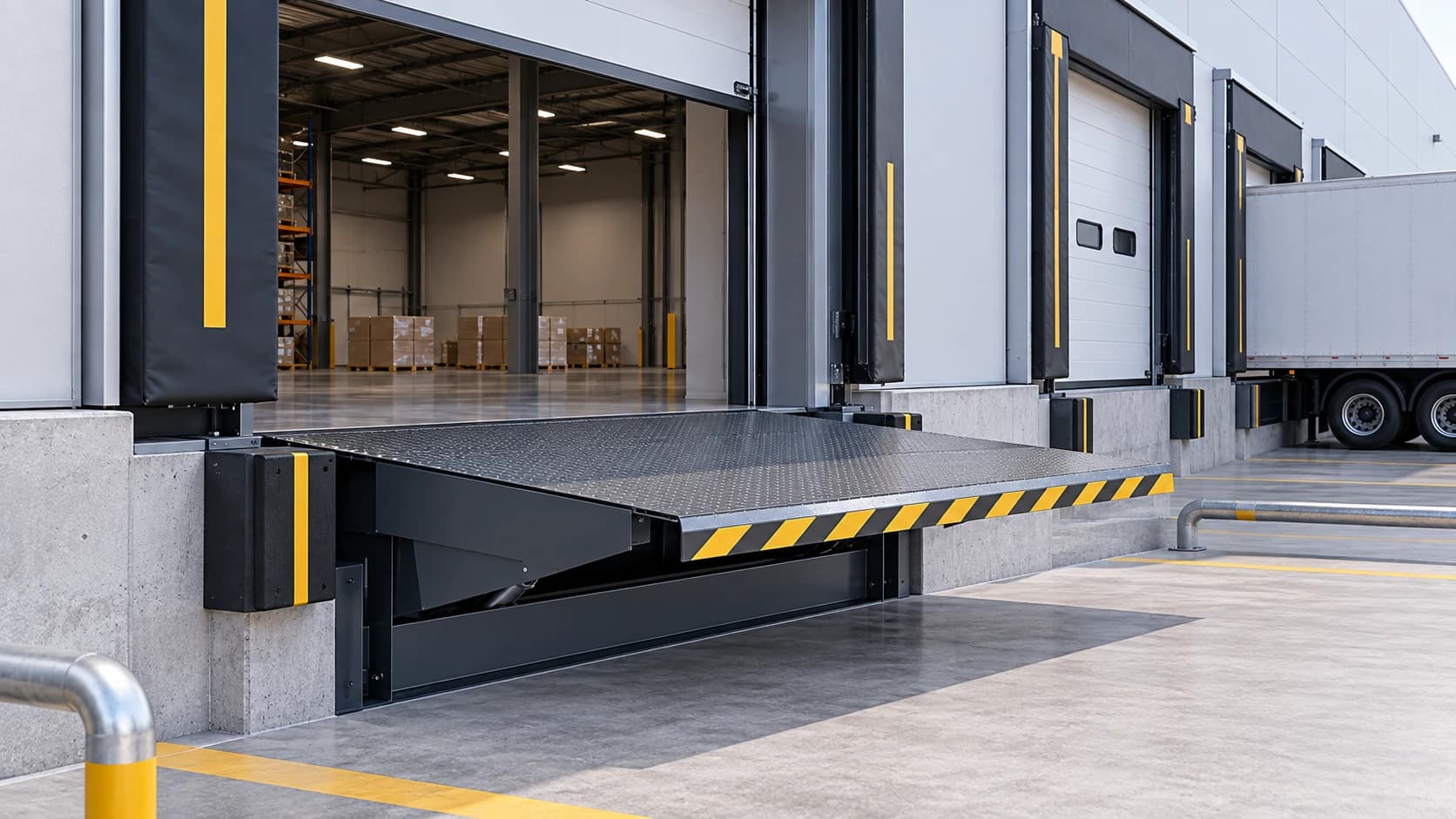
A hinged, load-bearing platform set into the dock edge, raised hydraulically and lowered onto the vehicle bed.
Loading Bay
Hydraulic dock levellers with 2000 and 2500 mm platforms, working above and below dock level, on a 14 mm tear plate deck rated from -35 °C to +50 °C.
2 configurations
A frame and sealing curtain, or a built-out housing, that closes the opening around a docked vehicle rather than the gap beneath it.
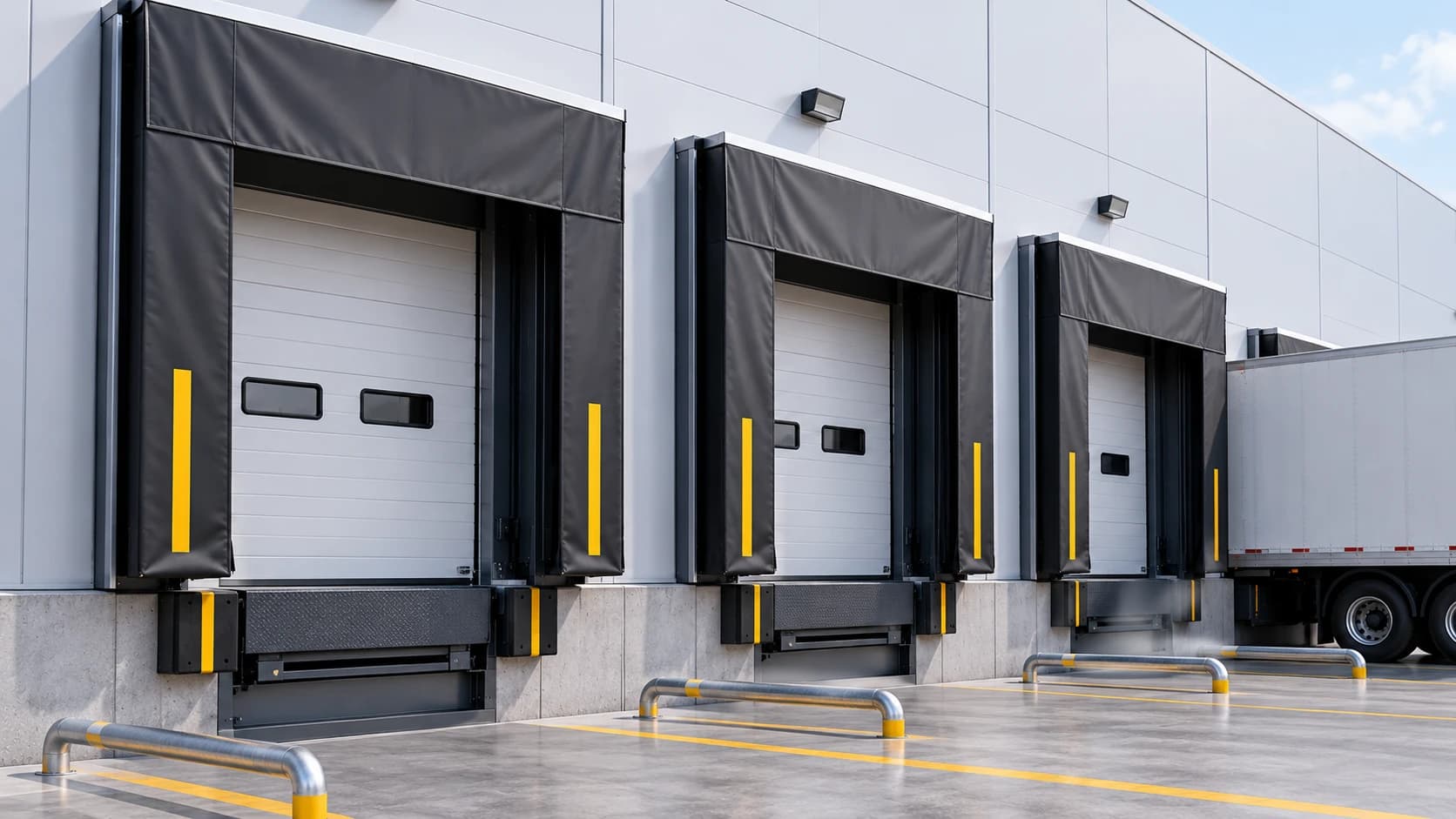
Loading Bay
Aluminium alloy dock shelters and dock houses rated above force 10 wind with a 10–20 year service life, for heat retention and weather protection.
3 configurations
04Compare
What each product in this family is for, what it is built to survive, and whether we can publish a specification table for it today.
05Performance considerations
Vehicle mix and the resulting bed-height range above and below dock level.
Capacity: the heaviest handling equipment plus load that will cross the deck.
Pit dimensions available, or whether a surface-mounted arrangement is required.
Whether the bay is temperature controlled, which raises the sealing requirement.
Approach and manoeuvring space, and how accurately vehicles can be reversed on.
The door above the bay, which is usually specified at the same time.

Get in touch
Tell us the opening dimensions, the daily cycle count and the site conditions, and we will specify the right loading bay equipment configuration and quote against it.