

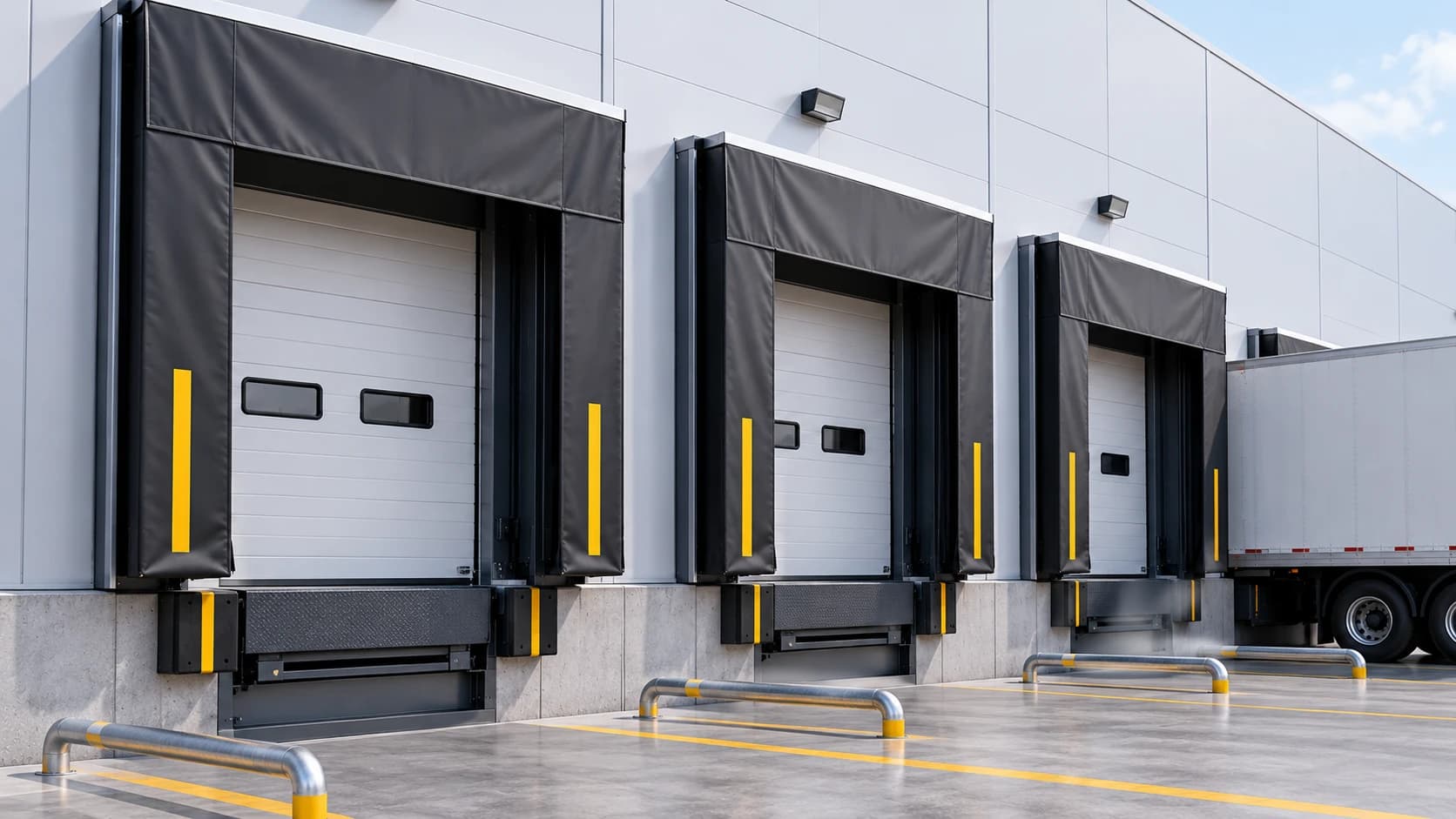
Loading Bay
Dock Shelters & Dock Houses
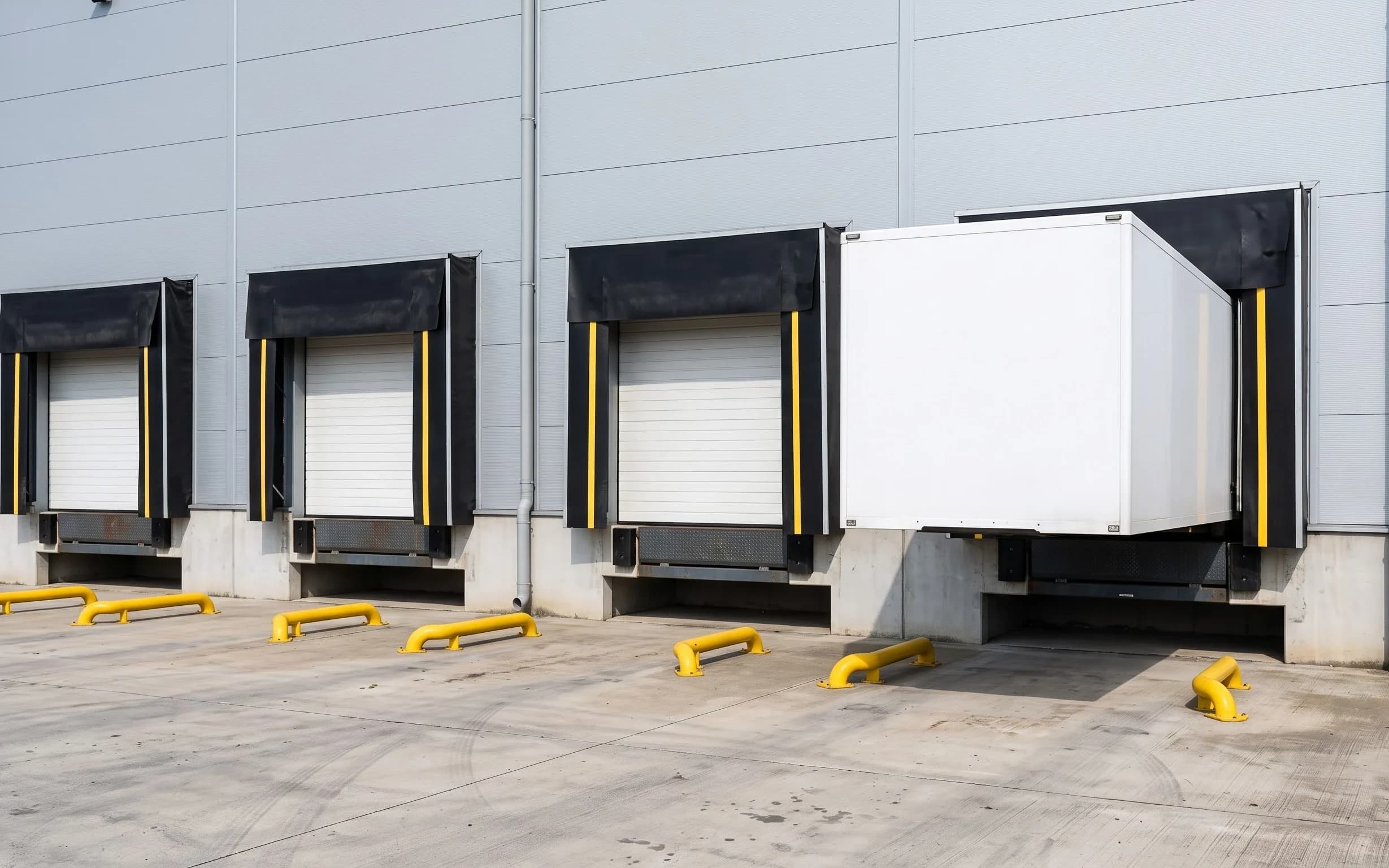
Aluminium alloy dock shelters and dock houses rated above force 10 wind with a 10–20 year service life, for heat retention and weather protection.
3 configurations
Explore product
Loading Bay Equipment/Dock Levellers
A driveable bridge between the dock floor and the vehicle bed.
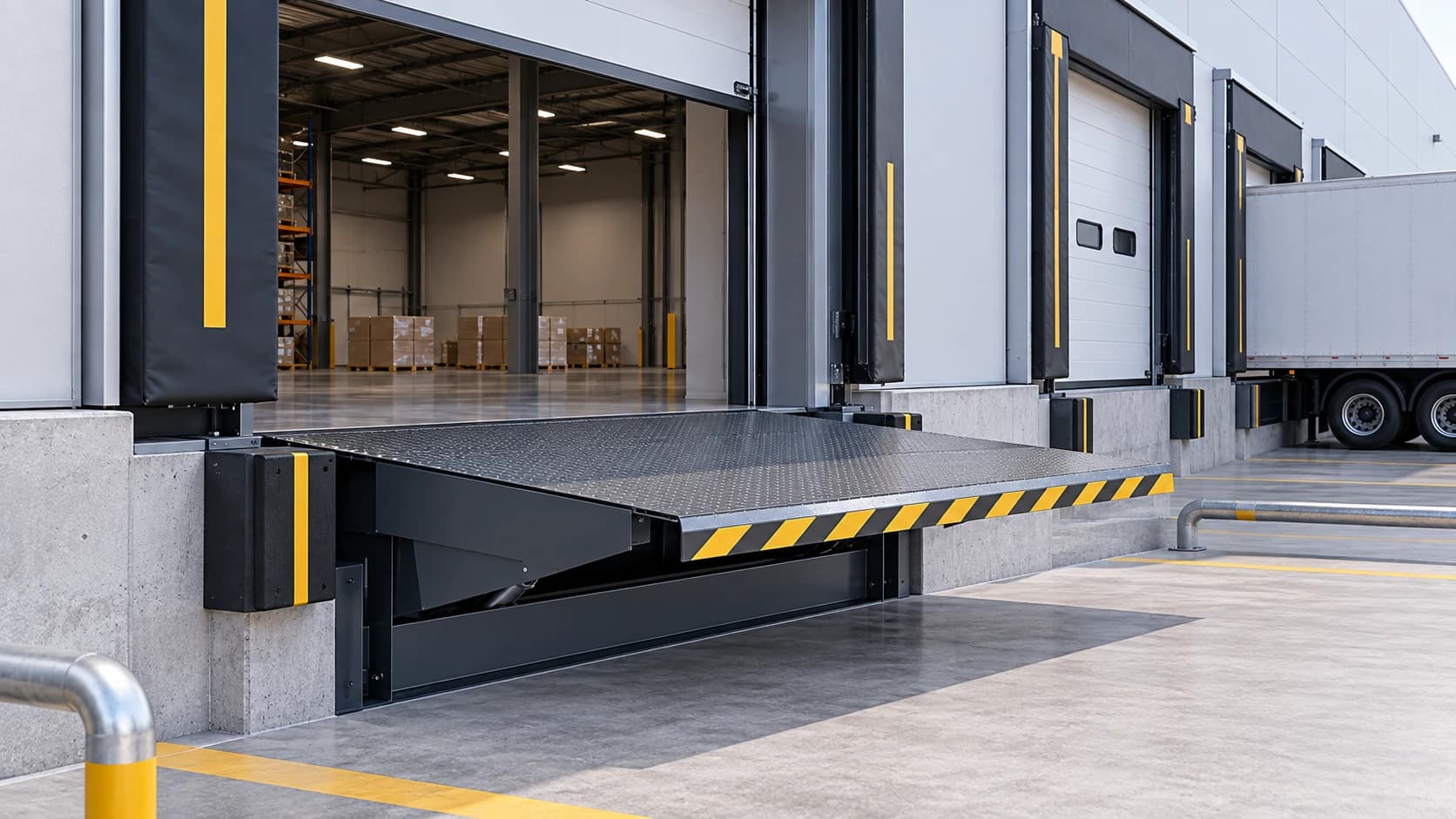 Loading Bay
Key specifications
01Overview
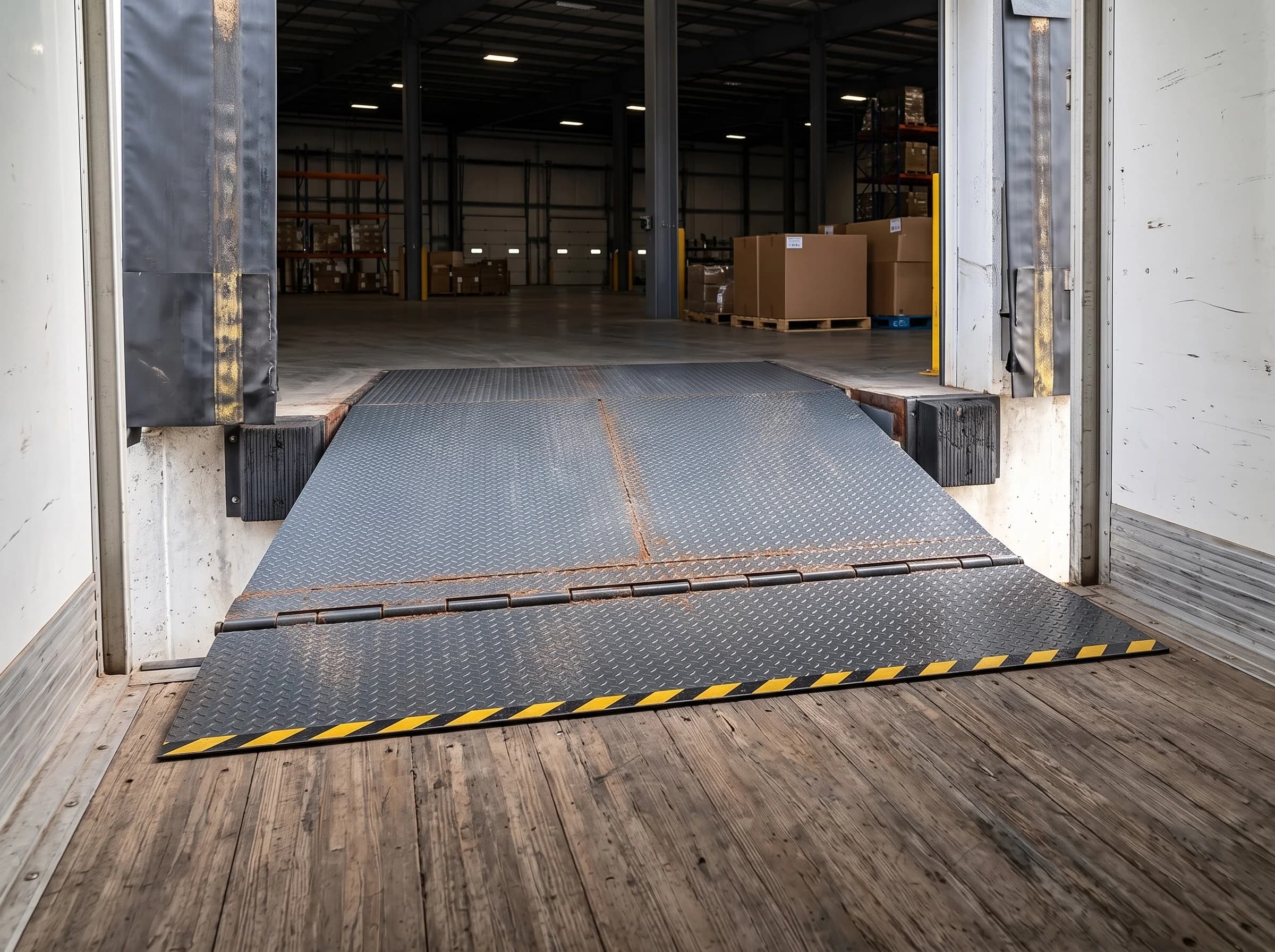
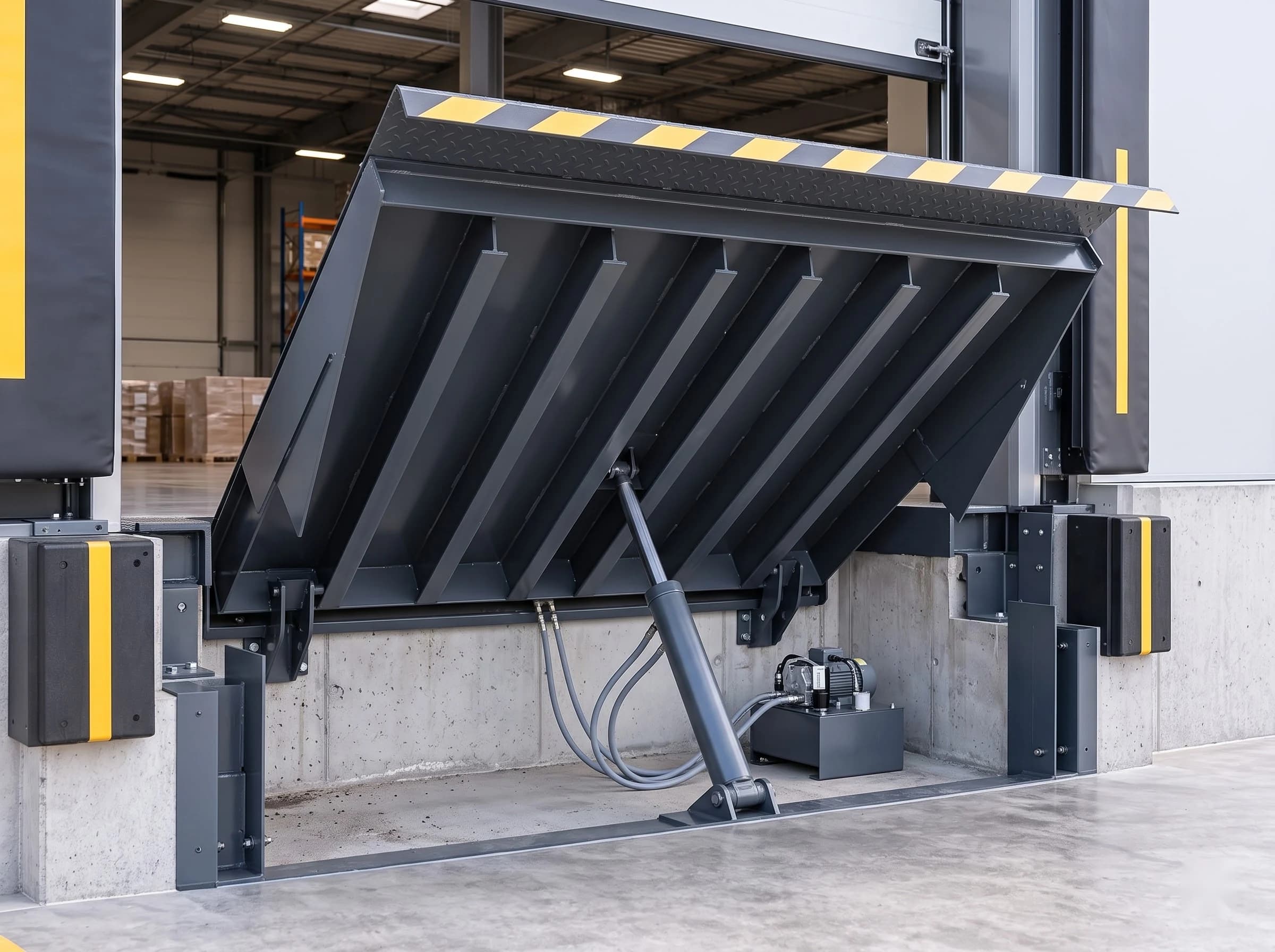
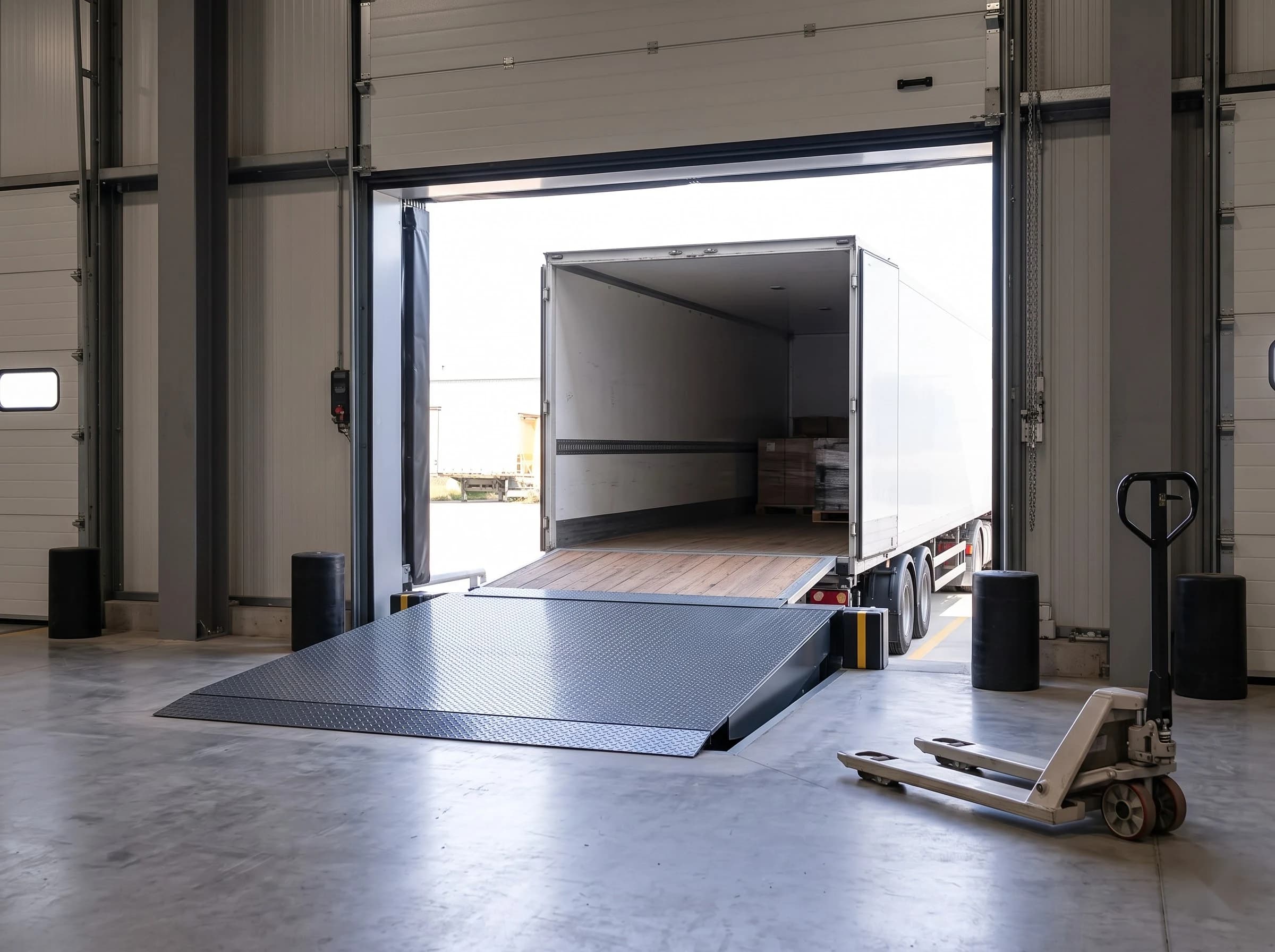
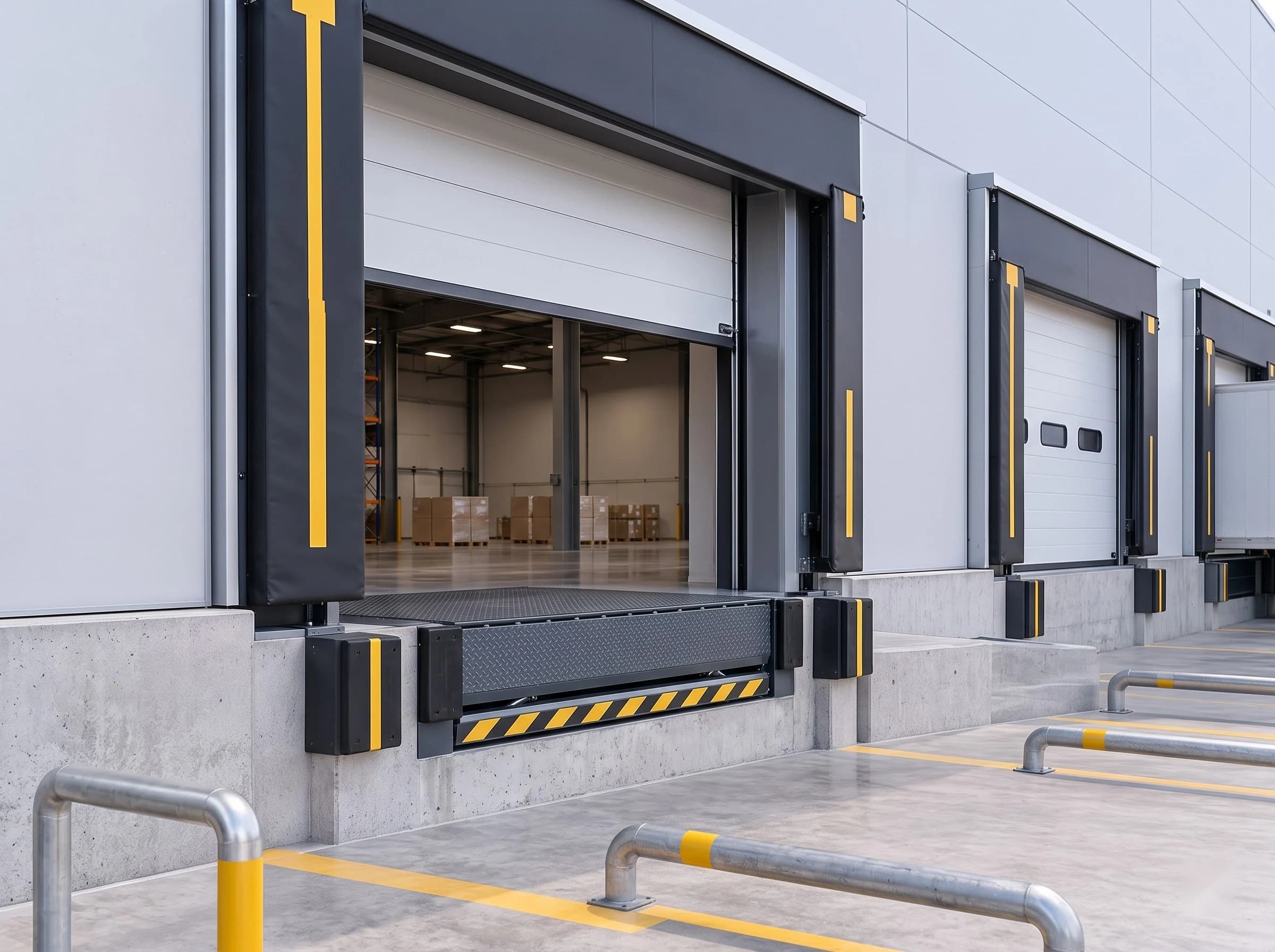
A dock leveller is a hinged platform recessed into the dock edge. Raised and lowered hydraulically, it drops a lip onto the vehicle bed and forms a continuous, load-bearing ramp from the warehouse floor into the trailer.
03Variants
The same product, built for a different job. Where a specification depends on opening dimensions, selected profile, operating duty or site conditions, the final configuration is confirmed during technical assessment.
The lip hinges out and lowers onto the vehicle bed. The standard arrangement where vehicles dock consistently.
The lip extends horizontally, giving longer reach and more accurate placement on a mixed or awkwardly docked fleet.
10Gallery
04Technical specifications
Technical data is shown first; features, applications, compatibility, installation, safety, ordering and downloads are a click away.
Swing lip or telescopic lip.
Rated load and evenly distributed load are different quantities and are quoted separately.
EN 1398 is the safety standard for dock levellers.
| Platform length | 2000 mm or 2500 mm (±2) |
|---|---|
| Platform width | 1830 mm, 2000 mm or 2130 mm (±2) |
| Platform height | 500 mm or 600 mm (±2) |
| Lip length | 400–600 mm |
| Lip typeSwing lip or telescopic lip. | Heavy-duty welded steel lip with an anti-slip surface |
| Pit length | 2000 mm or 2500 mm (±2) |
|---|---|
| Pit width | 1880 mm, 2050 mm or 2180 mm (±2) |
| Pit depth | 515 mm or 615 mm (±2) |
| Pit tolerances | Final pit dimensions are installation and configuration dependent |
| Rated capacityRated load and evenly distributed load are different quantities and are quoted separately. | Rated load 6,000 kg; evenly distributed load capacity up to 15,000 kg |
|---|---|
| Working range above dock | 725–750 mm |
| Working range below dock | 225–380 mm |
| Operating temperature | -35 °C to +50 °C |
| Deck plate thickness | Sized to the rated load; see deck plate type |
|---|---|
| Deck plate type | 14 mm tear plate, double 5° bending |
| Hinge arrangement | Rear-hinged platform on the pit frame at the dock edge |
| Finish | Epoxy resin, long-term anti-corrosion |
| Power pack rating | ≤ 1.5 kW |
|---|---|
| Supply voltage | 400 V AC three phase, or 230 V AC configuration where applicable |
| Cylinder arrangement | Hydraulic cylinder-operated platform and lip |
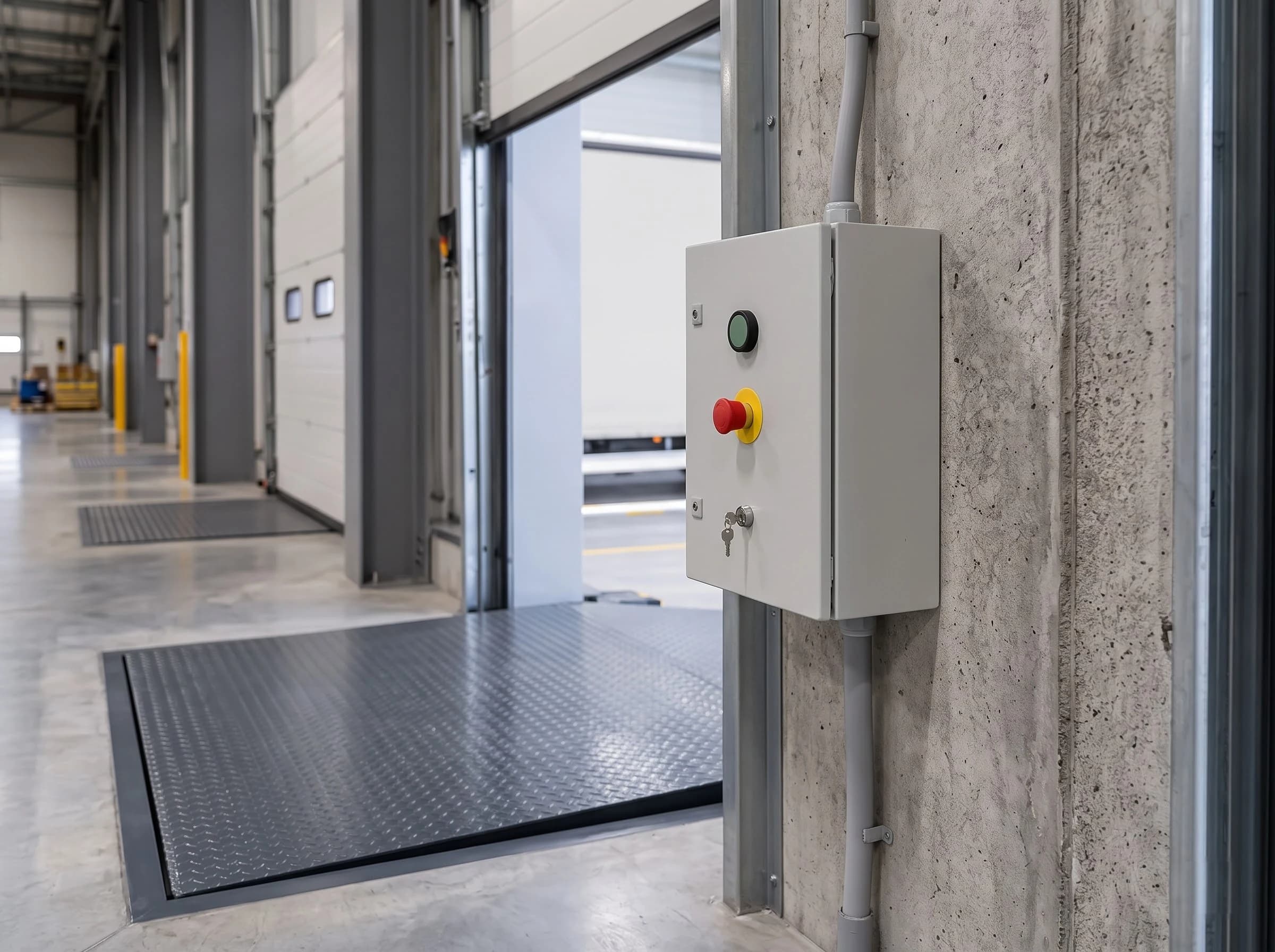
| Control station | Push-button control panel with hold-to-run operation and emergency stop |
|---|---|
| Door interlock | Loading-bay door interlock integration available |
| Bay signalling interface | Integration with traffic lights, vehicle restraints and other dock equipment available |
| Maintenance strut | Mechanical maintenance support prop |
|---|---|
| Hose burst protection | Hydraulic safety valve and velocity fuse to prevent uncontrolled descent |
| Toe guards | Side safety guards and toe protection where required |
| Emergency stop | Emergency stop function |
| Product standardEN 1398 is the safety standard for dock levellers. | Designed with reference to EN 1398 for dock levellers |
|---|---|
| Conformity marking | As applicable to the supplied configuration and market |
| Certificate reference | Available on request; configuration dependent |
Final specification depends on door dimensions, configuration, operating environment and project requirements.
FAQ
Engineering enquiry
Five answers about the opening are usually enough for us to come back with a configuration and a price.

Get in touch
If it is easier to describe the opening than to write it down, call or message us and we will work through it with you.