

Open time, not opening size
Travel speeds measured in metres per second mean the door is open only while traffic is actually passing, which is where the energy and contamination cost of an opening actually lives.
Seconds per cycle on the openings that never stop moving.
01Introduction
A high speed door is bought for cycle time, not for the door. On an opening used continuously the expensive thing is not the leaf — it is the minutes per hour the building spends open to dust, insects, temperature loss and pedestrian risk while a slow door travels.
The seven types here differ in two ways that actually matter. How the leaf is stored and guided: rolled onto a drum, folded into a stack, released from its guides on impact, carried into a spiral, or lifted as rigid panels. And what the door has to survive: a dry internal throughway, an exposed elevation, constant forklift contact, a classified room, or a freezer at the other end of the cold chain.
Choose on the first axis and you get a door that fits the opening. Choose on the second and you get one that is still working in three years. Every product page below states which figures are fixed and which are set by the configuration, so a specification can be compared honestly rather than by whoever quotes the largest number.
02Why
Travel speeds measured in metres per second mean the door is open only while traffic is actually passing, which is where the energy and contamination cost of an opening actually lives.
A sealed, fast-cycling leaf limits dust, insect and temperature transfer between areas that have to stay different from each other.
The self-repairing configuration re-enters its guides automatically after a strike, instead of taking a critical opening out of service until an engineer attends.
Hygienic and cold storage configurations are engineered for the environment they sit in — stainless and sealed for controlled areas, insulated and heated-guide for sub-zero rooms.
03Categories
A category here is a construction or operating principle — the level at which two products genuinely behave differently, rather than just being finished differently.
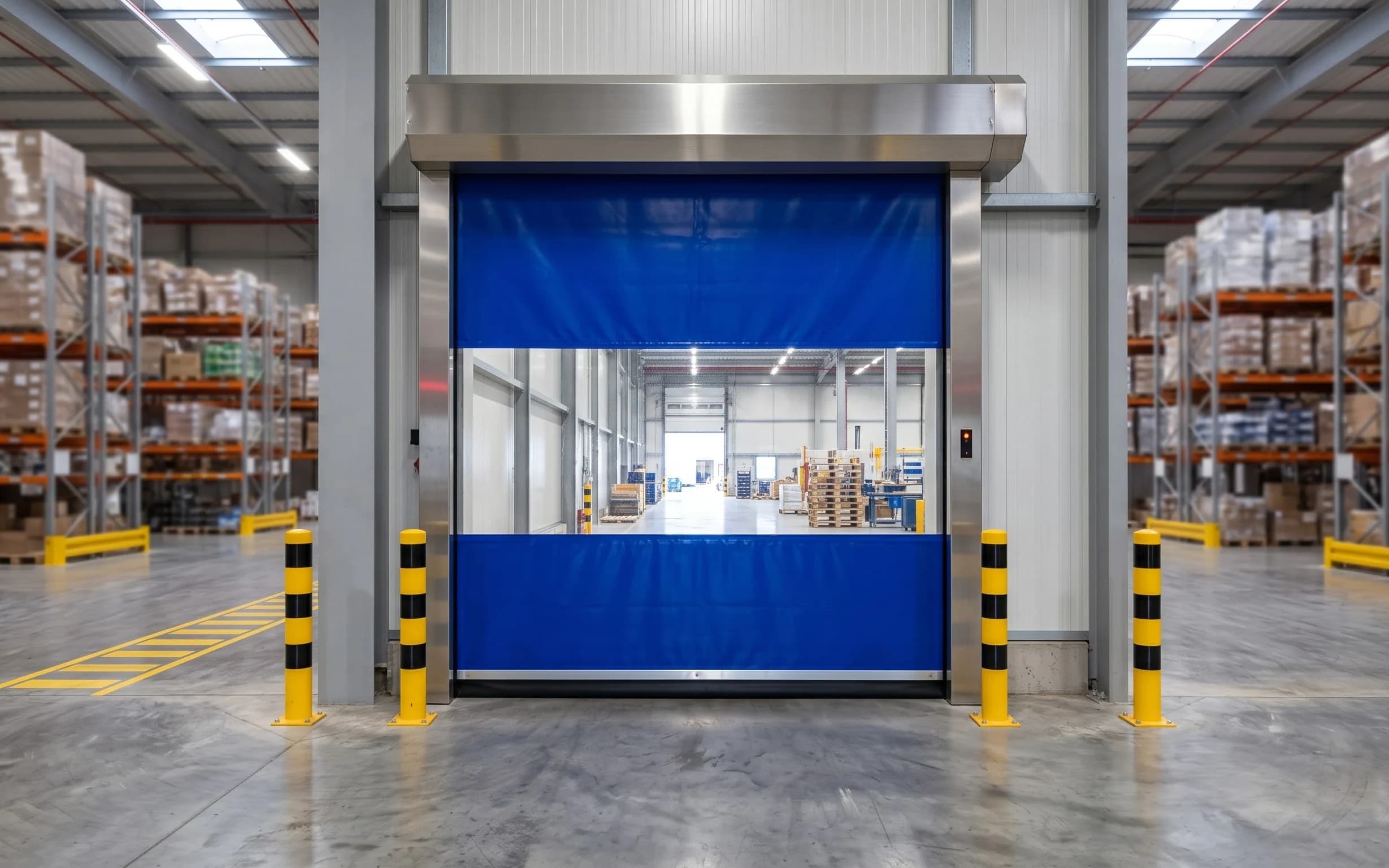
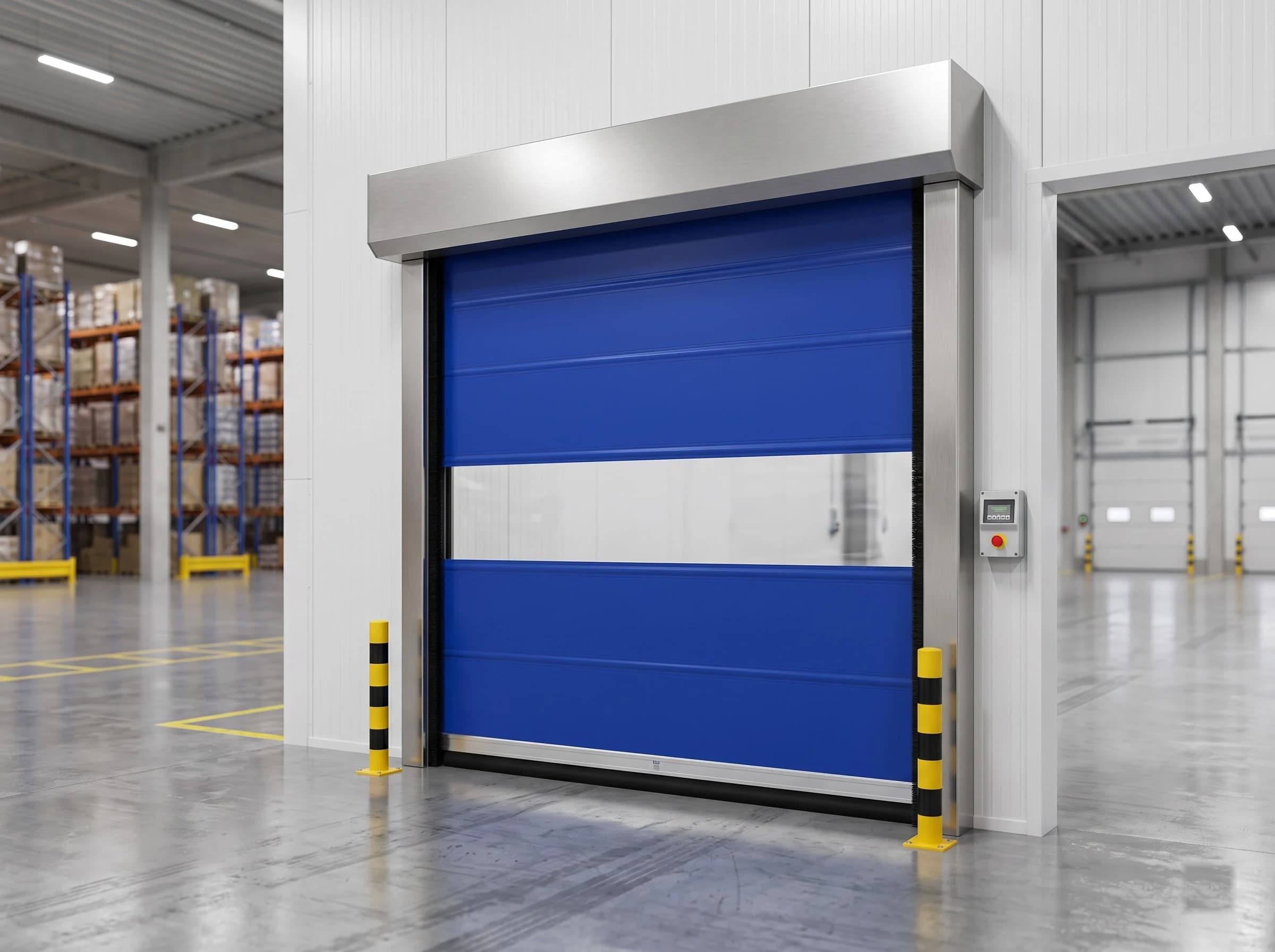
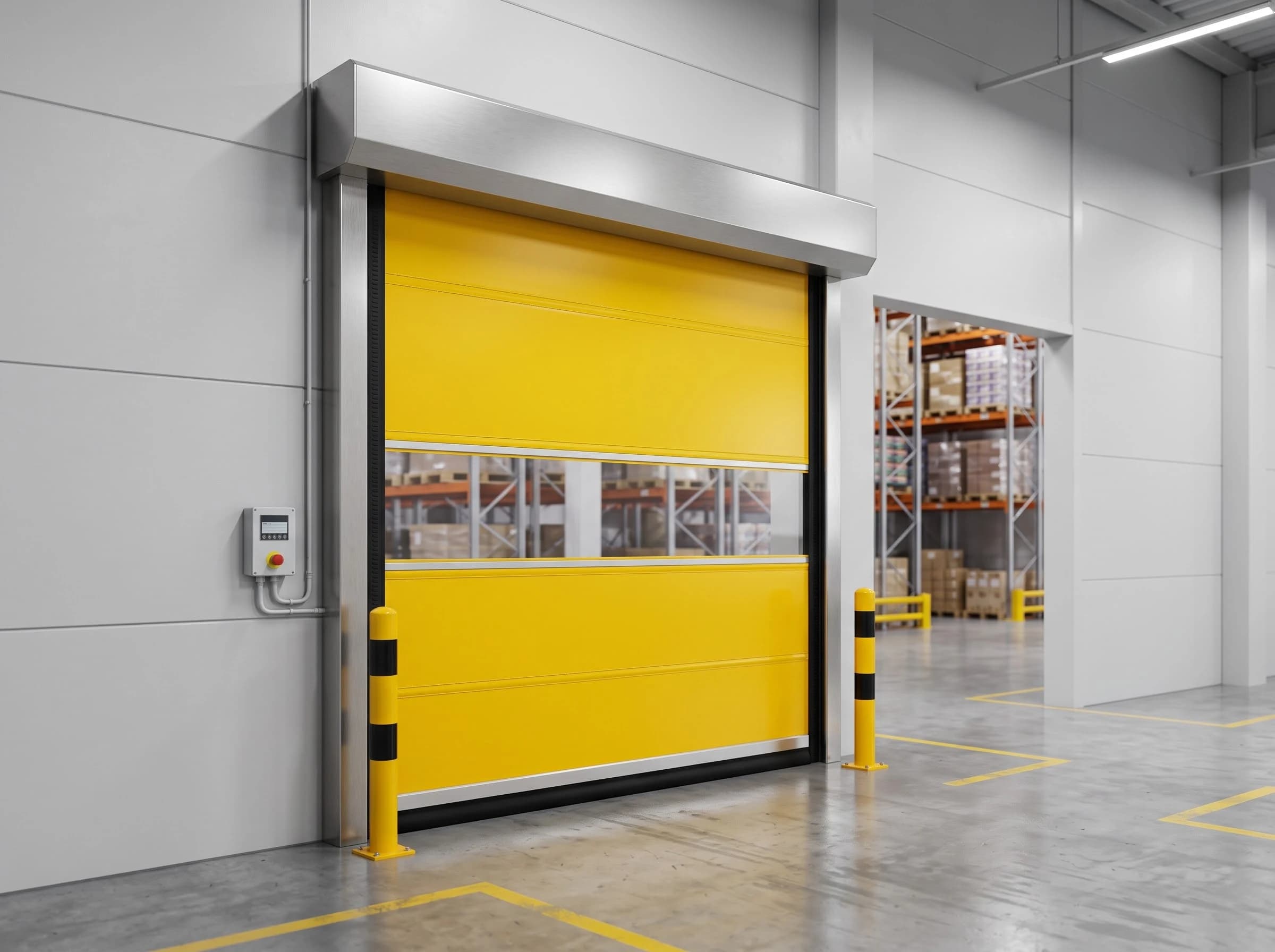
A flexible curtain rolling onto a drum above the opening. No heavy panel to accelerate, so this is the fastest cycle time per rupee of the high speed types.
High Speed Doors
Flexible PVC curtain rolling onto a drum above the opening, up to 5,000 × 5,000 mm, opening at 0.8–2.5 m/s under PLC, inverter and encoder control.
3 configurations
High Speed Doors
Flexible reinforced PVC curtain that leaves its guides on impact and re-enters them automatically, for openings where forklift contact is routine.
2 configurations
The curtain gathers into horizontal folds instead of rolling, giving a shallower stack above the opening — which is what makes tall and wide openings practical.
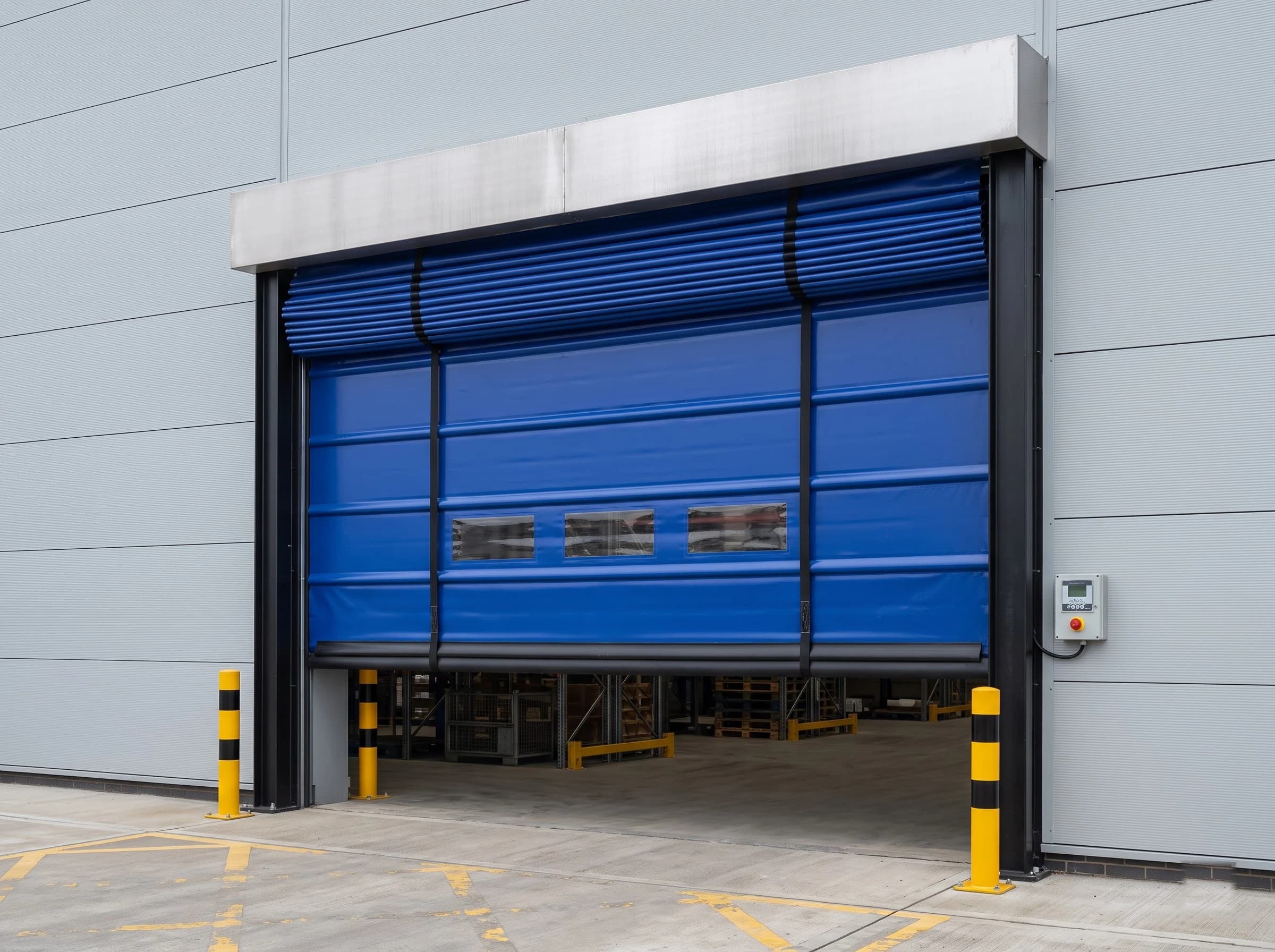
High Speed Doors
Reinforced PVC-coated curtain folding into a stack above the opening, up to 5,000 × 8,000 mm, at 0.8–2.5 m/s in both directions.
3 configurations
Rigid insulated panels guided into a spiral above the opening, so the leaf never rests on itself. A rigid door that keeps flexible-door cycle times.
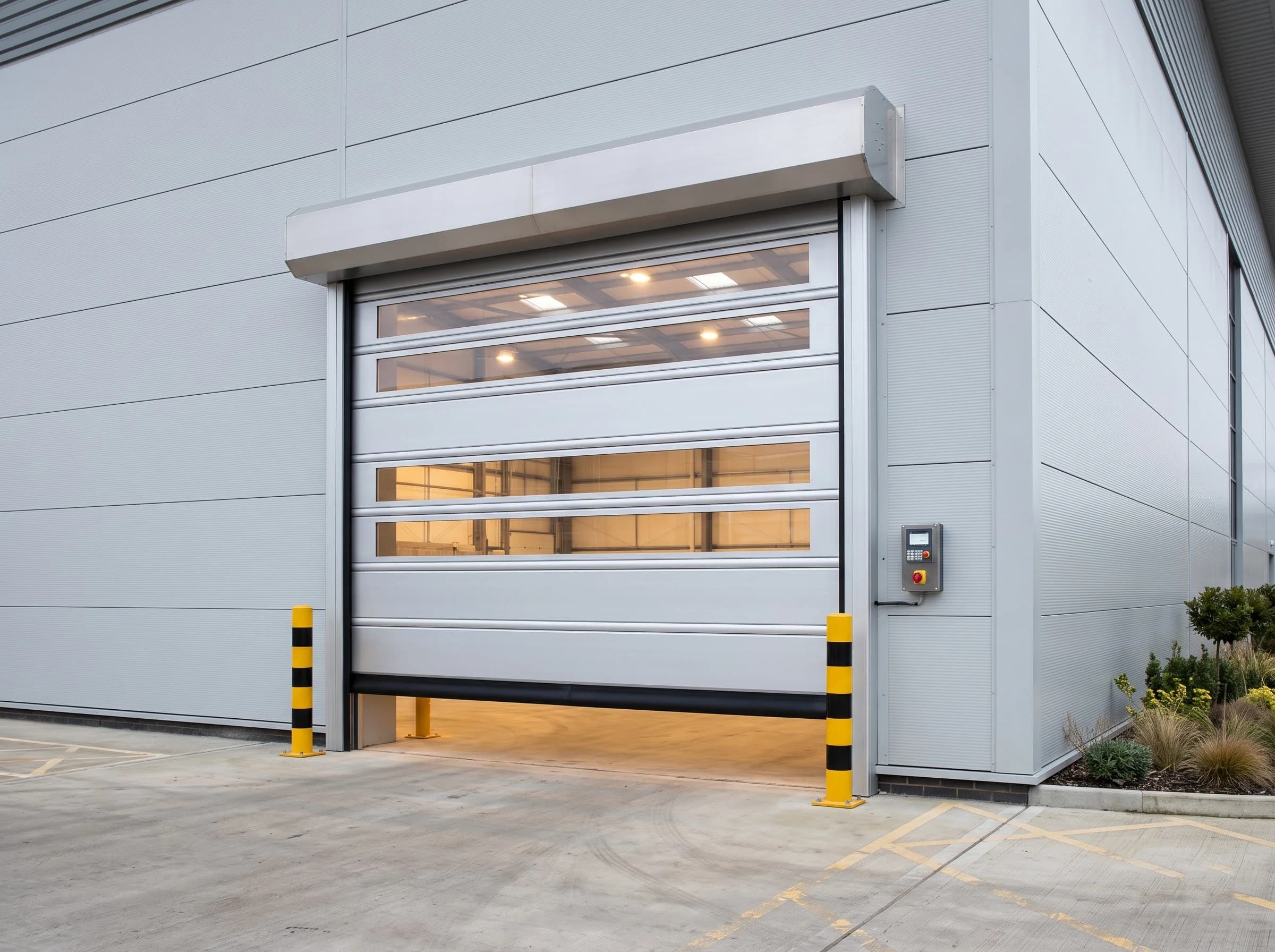
High Speed Doors
Insulated rigid aluminium panels carried into a spiral track above the opening, up to 5,000–6,000 mm each way, opening at up to 2.5 m/s.
2 configurations
Double-skin insulated panels instead of a fabric curtain, for openings that need structural rigidity and thermal separation as well as speed.
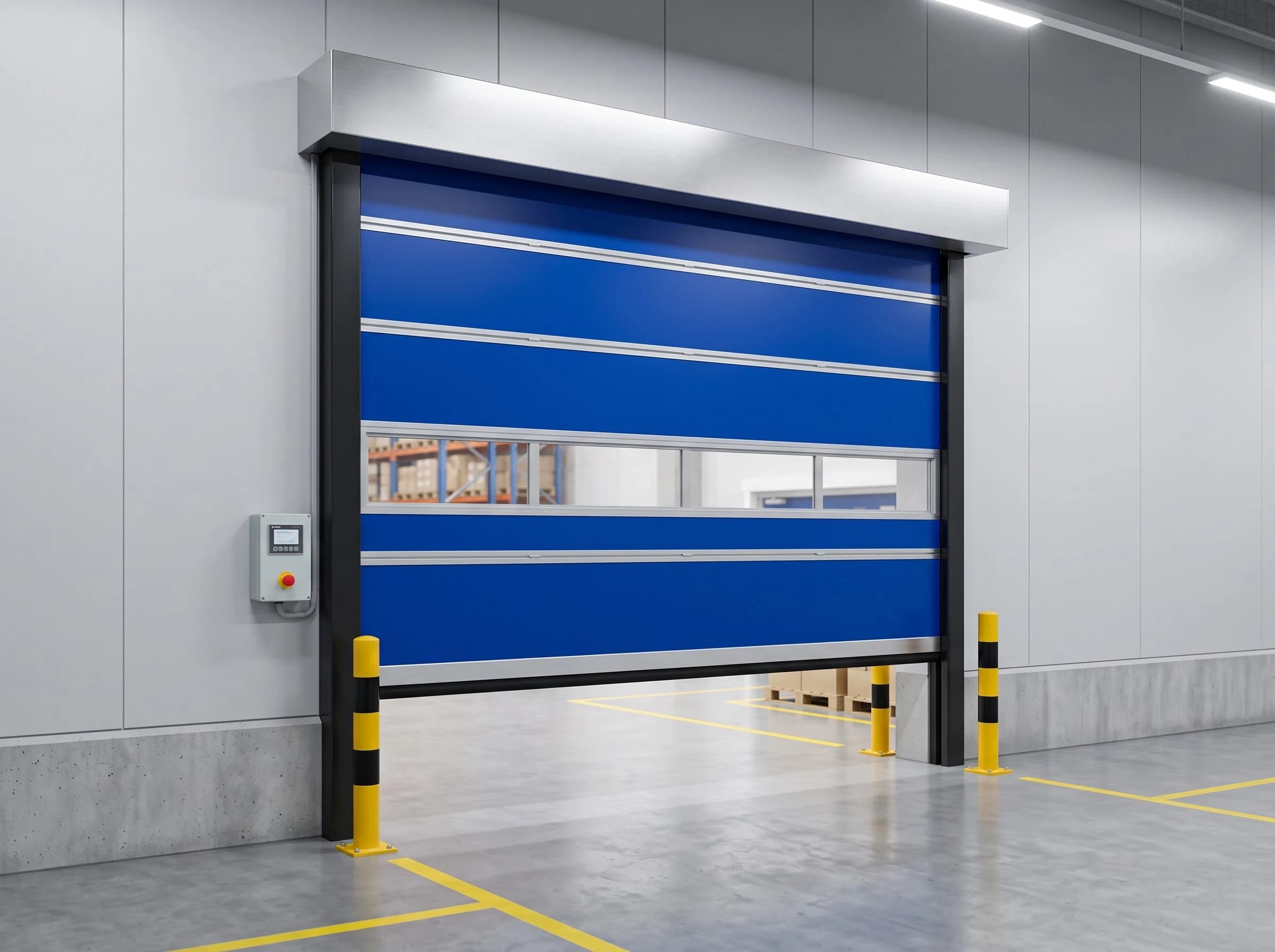
High Speed Doors
Double-skin insulated rigid panels up to 5,000 × 7,500 mm, opening at approximately 1.2–1.5 m/s under PLC, inverter and encoder control.
2 configurations
The same rapid-door mechanism built for the room rather than the traffic — hygienic and cleanable for classified areas, insulated and heated for sub-zero ones.
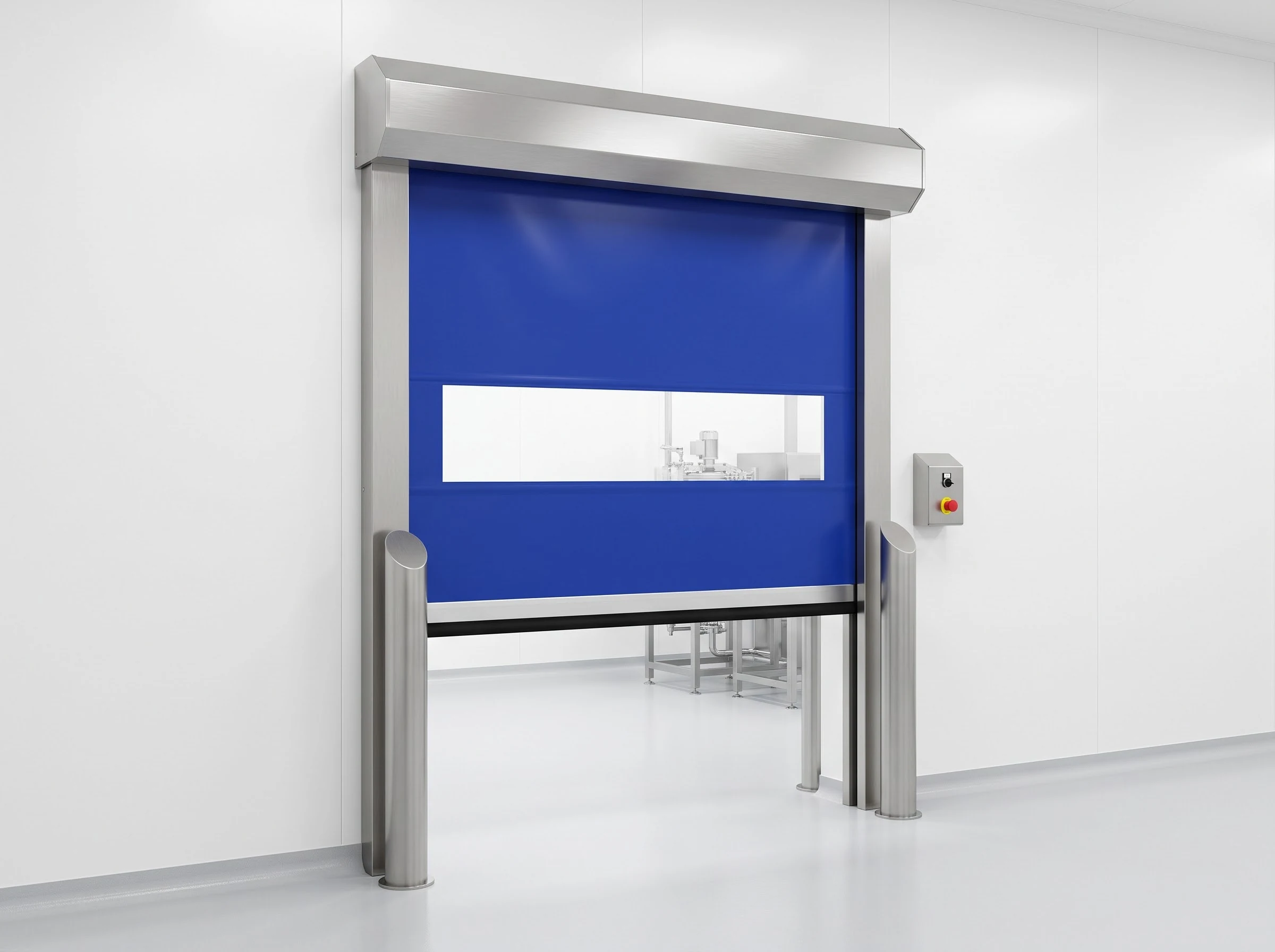
High Speed Doors
Sealed rapid-door assembly with a hygienic PVC curtain, stainless steel or hygienic-coated frame and guides, and side and bottom seals.
2 configurations
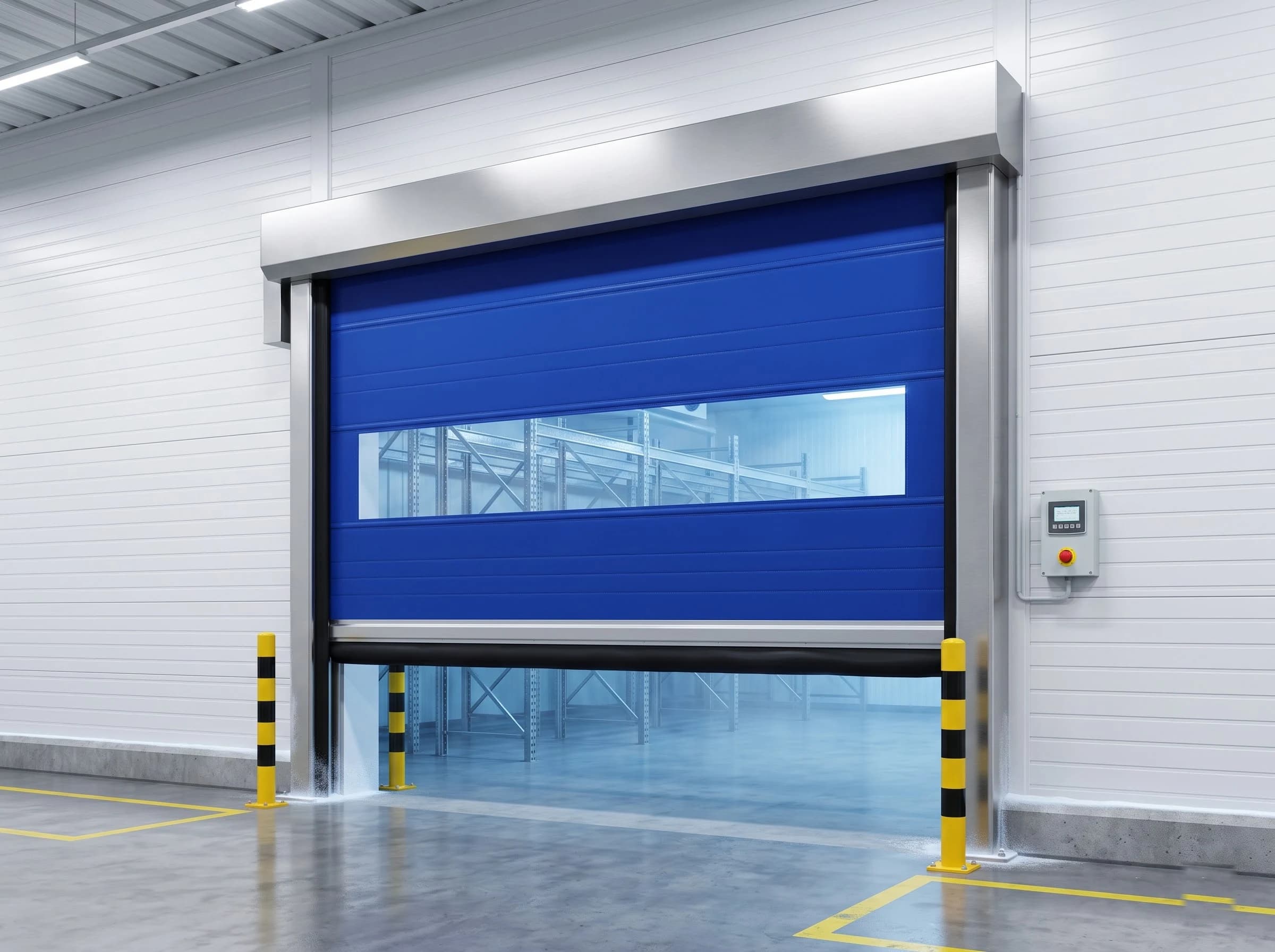
High Speed Doors
Insulated flexible PVC or specialist cold-temperature curtain with heated or temperature-resistant guides and a cold-storage bottom seal, under frequency control.
2 configurations
04Compare
What each product in this family is for, what it is built to survive, and whether we can publish a specification table for it today.
05Performance considerations
Cycle count per day — this, not opening width, sizes the drive and decides whether a high speed door is justified at all.
Internal or external: an external opening carries wind load and needs a leaf and guide system configured for it.
What the opening separates — temperature, dust, insects, noise, or nothing at all.
Impact exposure: how close the traffic route runs to the guides, and whether forklift contact is a matter of if or when.
Available headroom and side room for the drum, stack or spiral track, and the depth of the lintel.
Flexible or rigid leaf: a fabric curtain is faster and cheaper, a rigid insulated panel holds a temperature difference and carries load.
Activation and safety: what opens the door, and what stops it closing on something.

Get in touch
Tell us the opening dimensions, the daily cycle count and the site conditions, and we will specify the right high speed doors configuration and quote against it.