
Openings that are also process boundaries
A production hall is a set of areas that have to stay different from each other — cleaner, cooler, quieter — connected by openings that are crossed constantly. The door is what holds that difference.
Industry
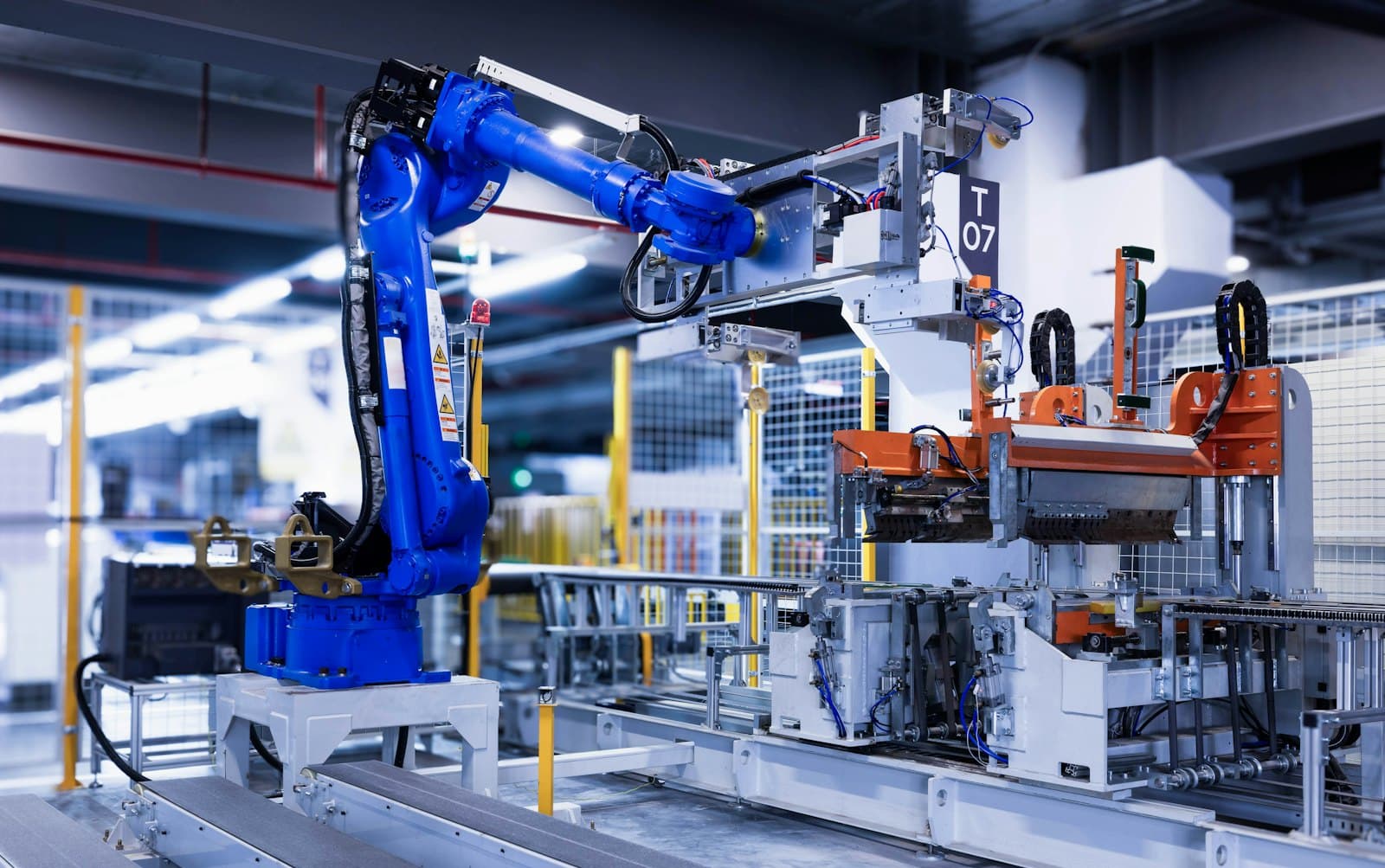
Separating processes without slowing the material flow between them.
01Industry challenges
A production hall is a set of areas that have to stay different from each other — cleaner, cooler, quieter — connected by openings that are crossed constantly. The door is what holds that difference.
Openings inside a plant are used far more than anyone estimates at design stage. Drives sized on leaf weight alone overheat within months.
Fire strategy usually puts a rated wall straight through the middle of a building that needs material to move across it.
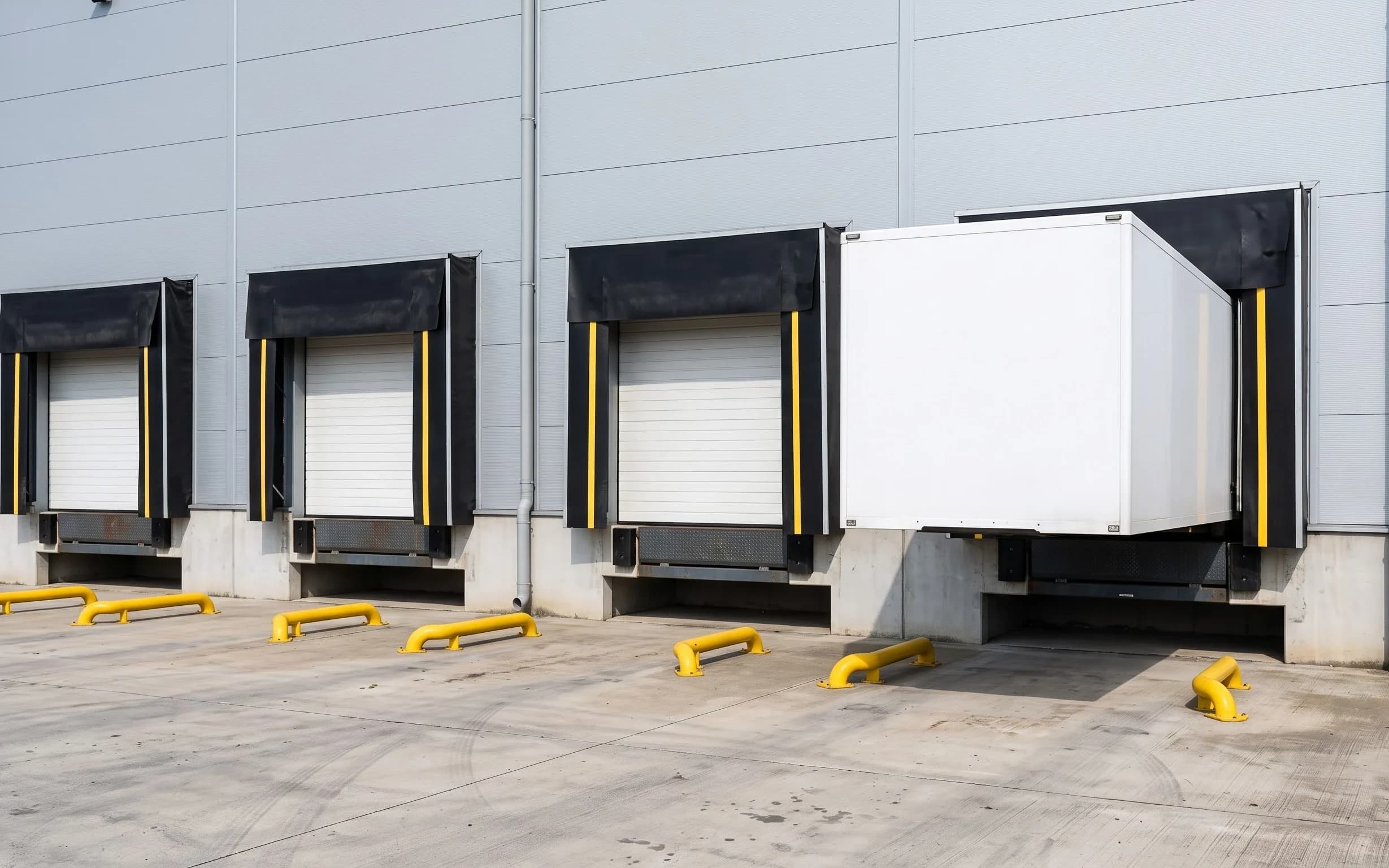
Where forklifts and doors share a route, contact is a matter of when. The question is whether it takes the opening out of service.
02Recommended solutions
High Speed Doors
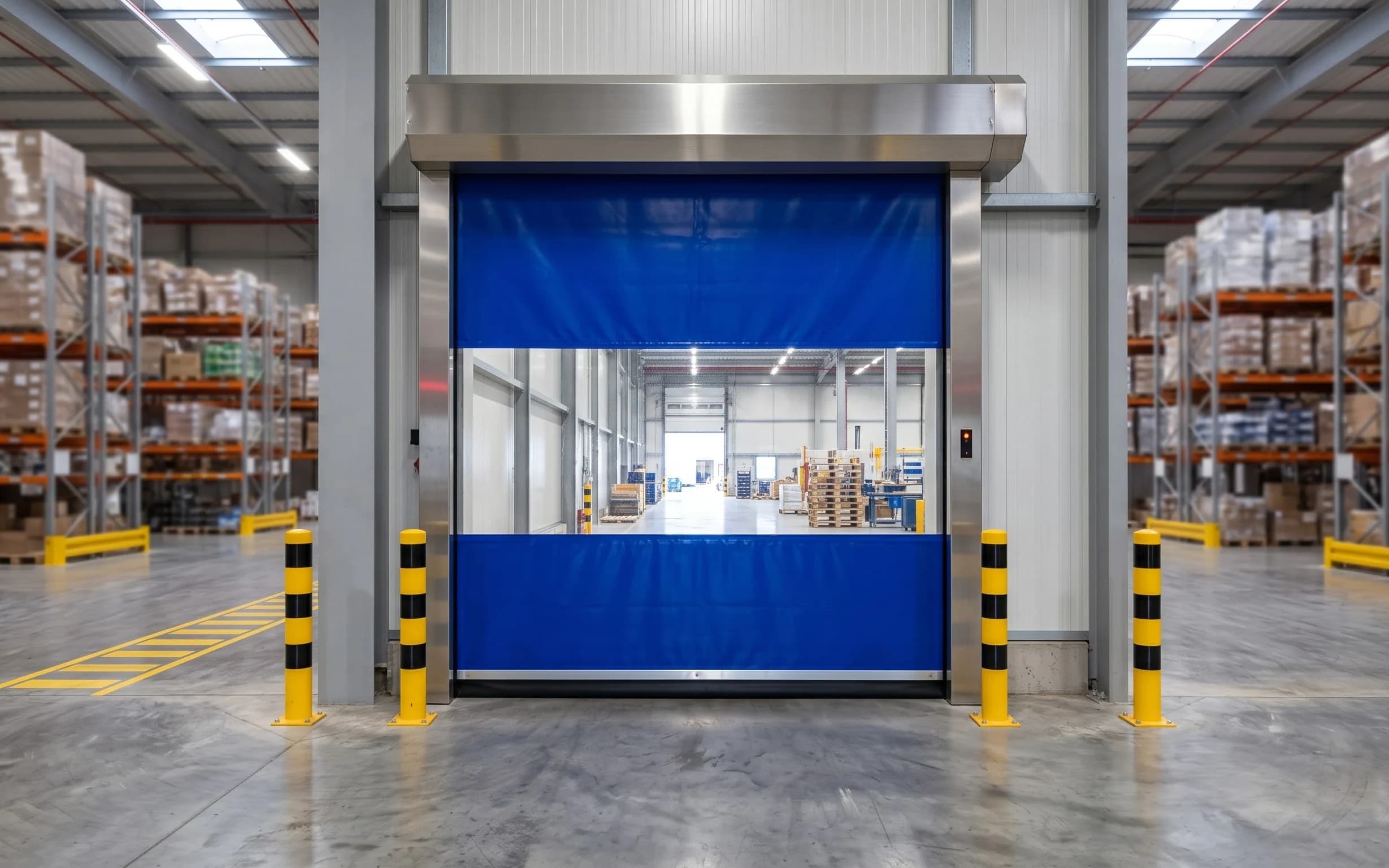
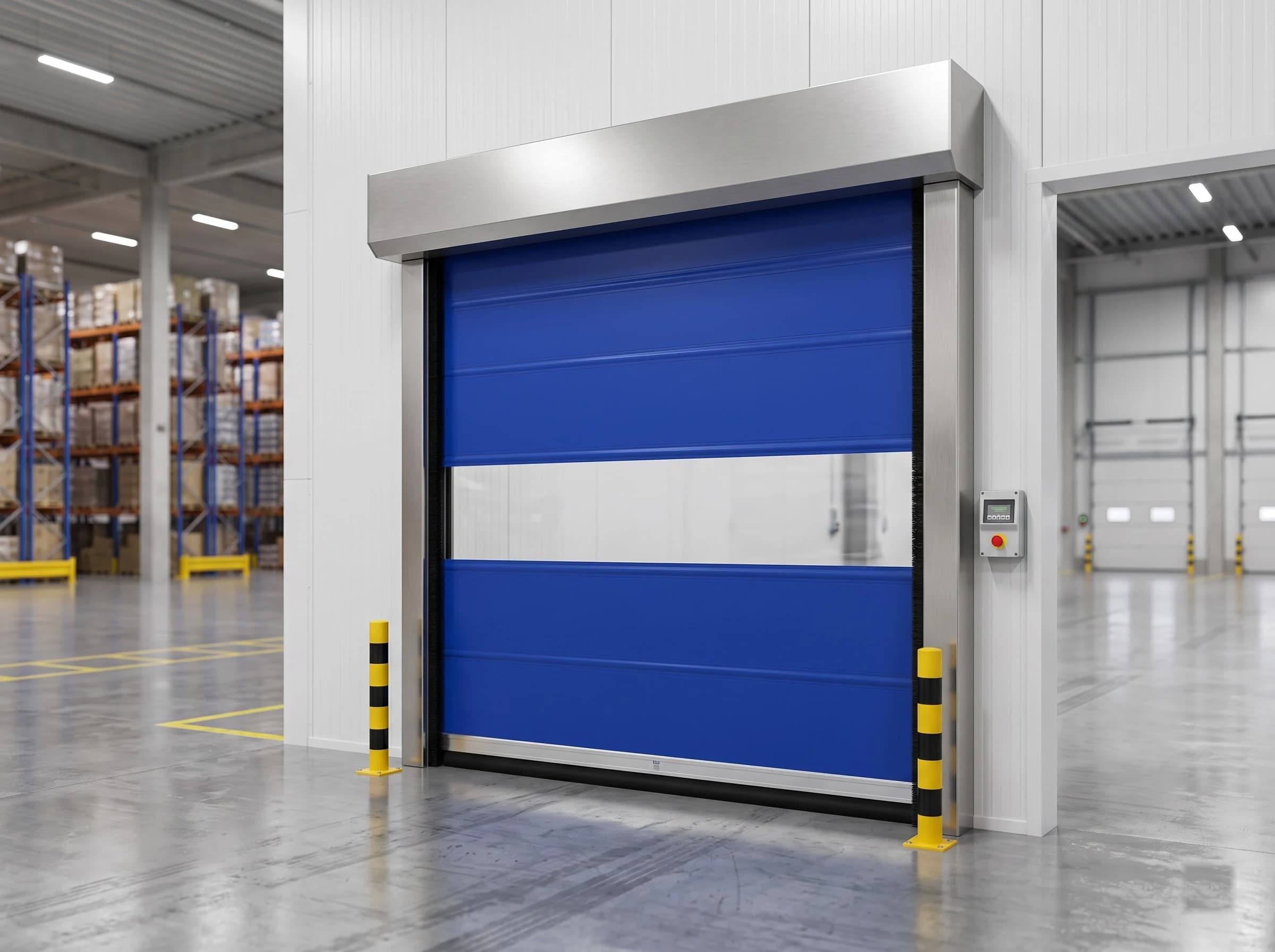
Flexible PVC curtain rolling onto a drum above the opening, up to 5,000 × 5,000 mm, opening at 0.8–2.5 m/s under PLC, inverter and encoder control.
3 configurations
High Speed Doors
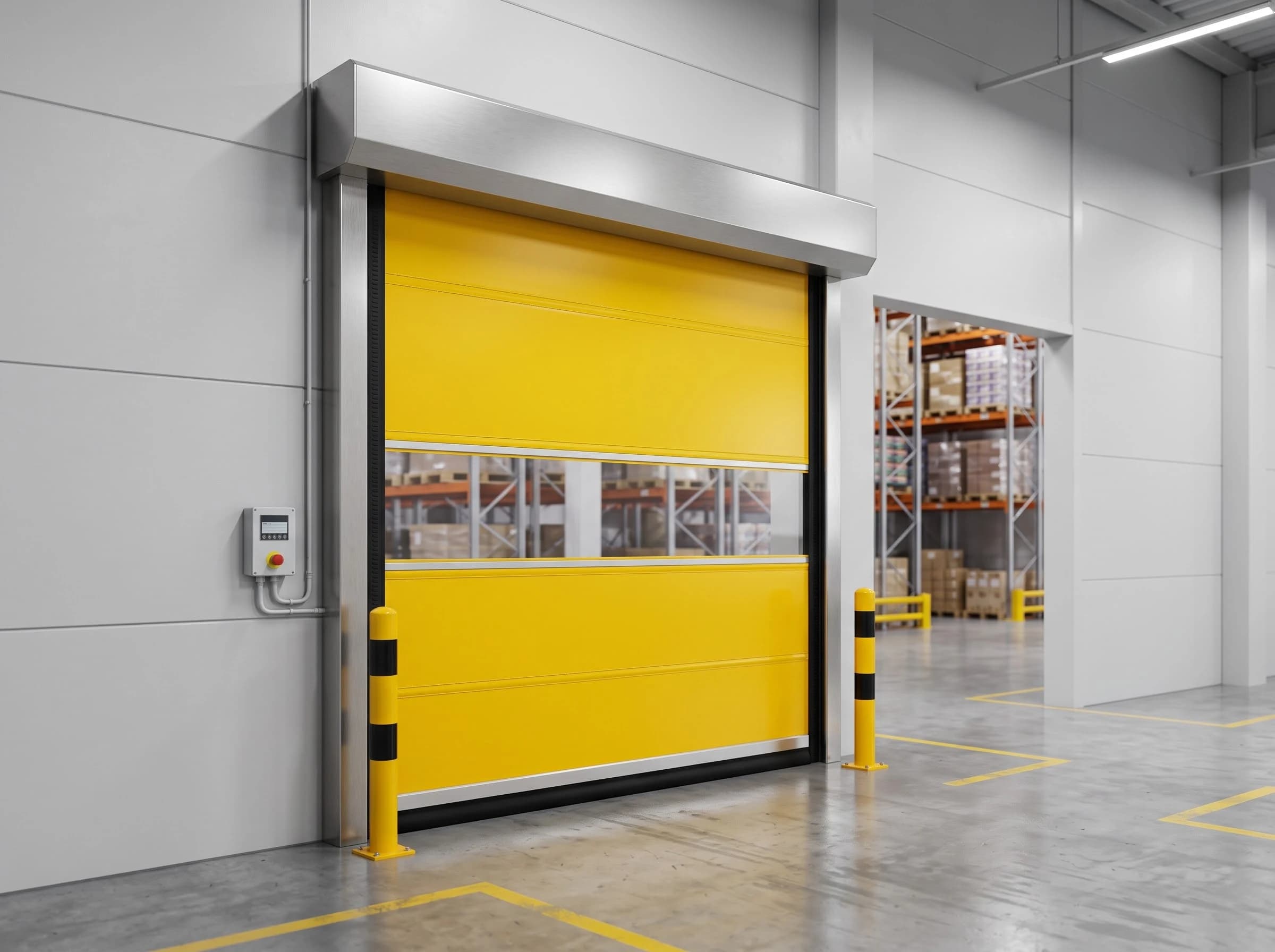
Flexible reinforced PVC curtain that leaves its guides on impact and re-enters them automatically, for openings where forklift contact is routine.
2 configurations
High Speed Doors
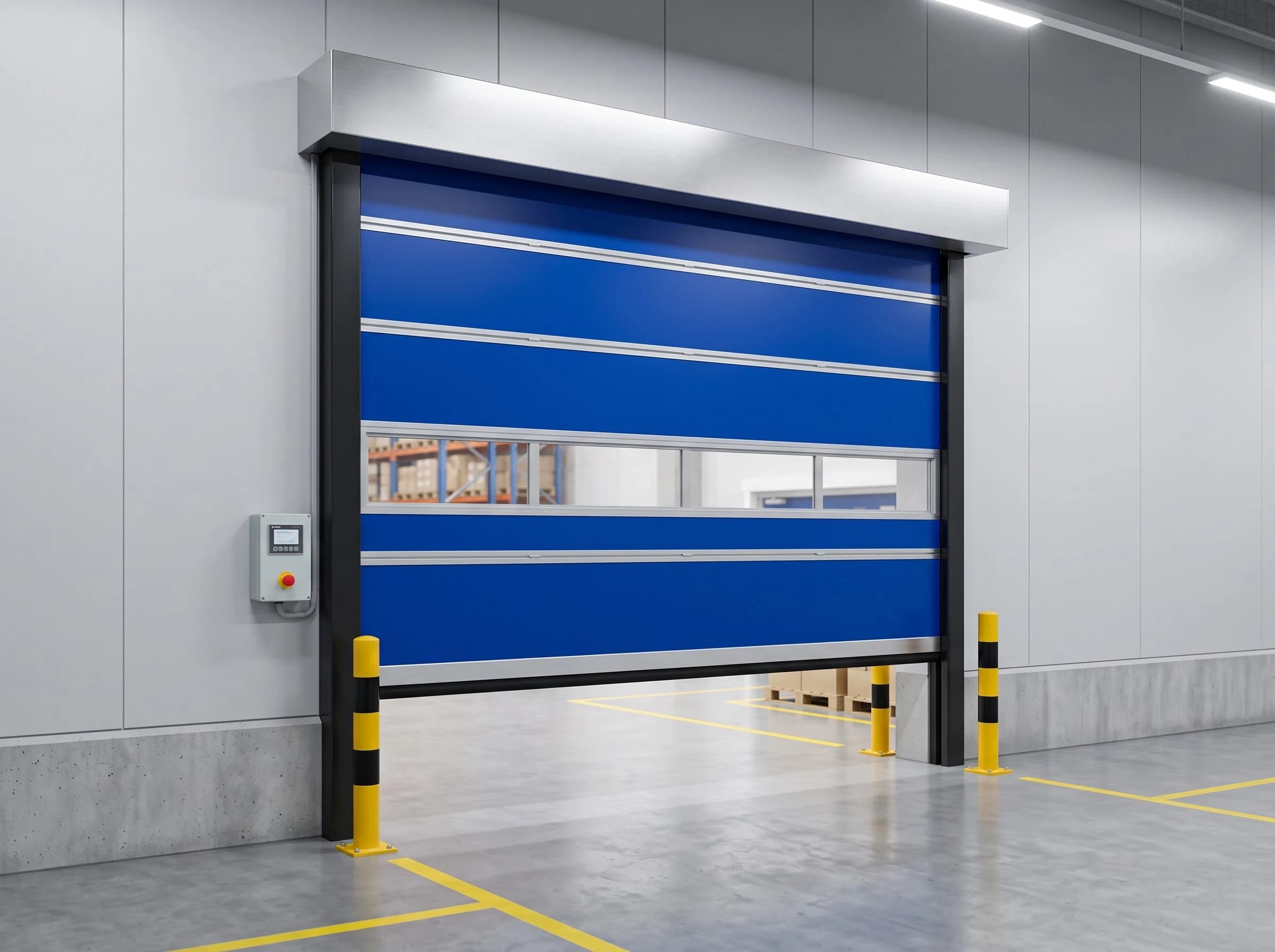
Double-skin insulated rigid panels up to 5,000 × 7,500 mm, opening at approximately 1.2–1.5 m/s under PLC, inverter and encoder control.
2 configurations
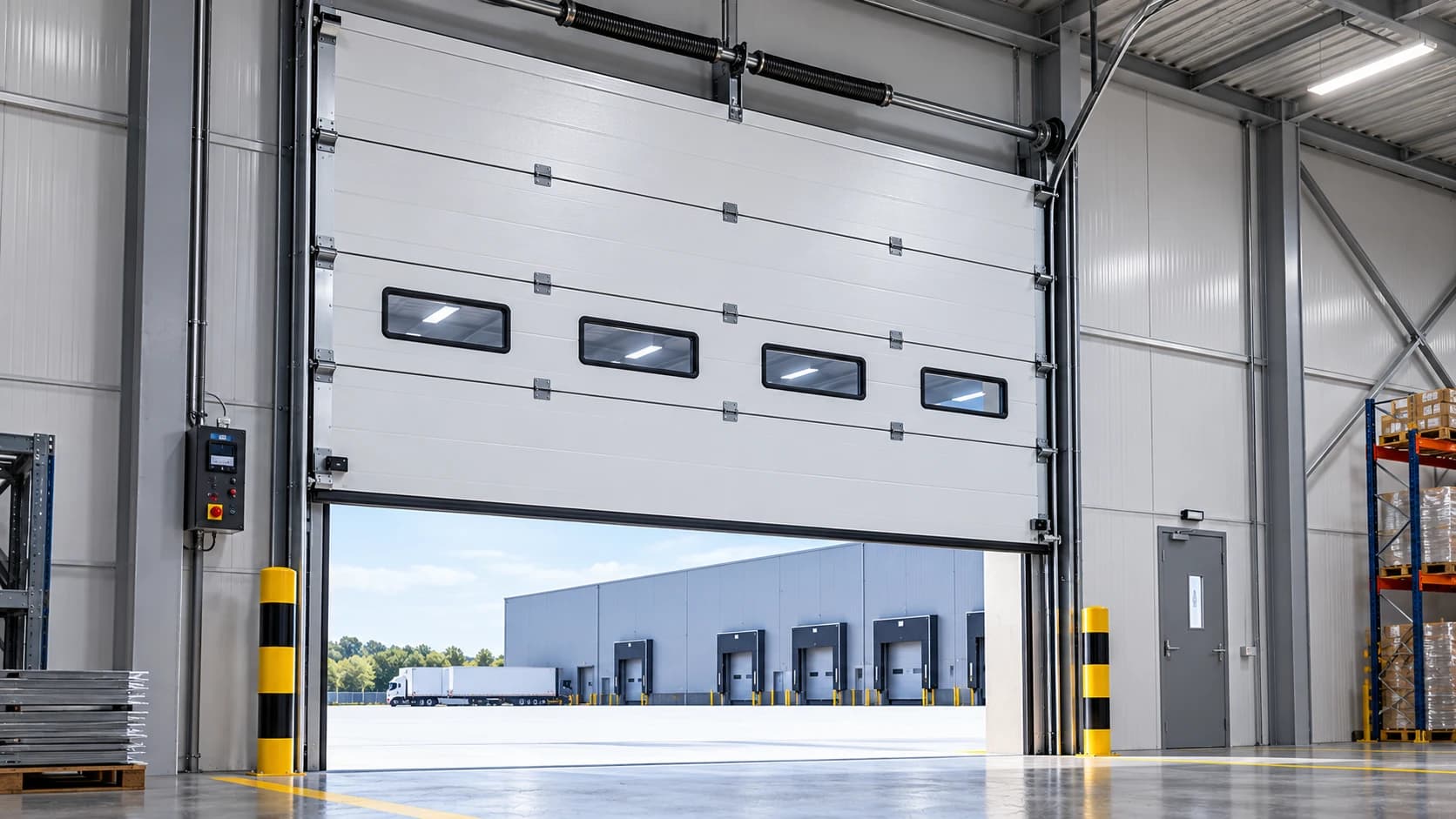
Industrial Doors
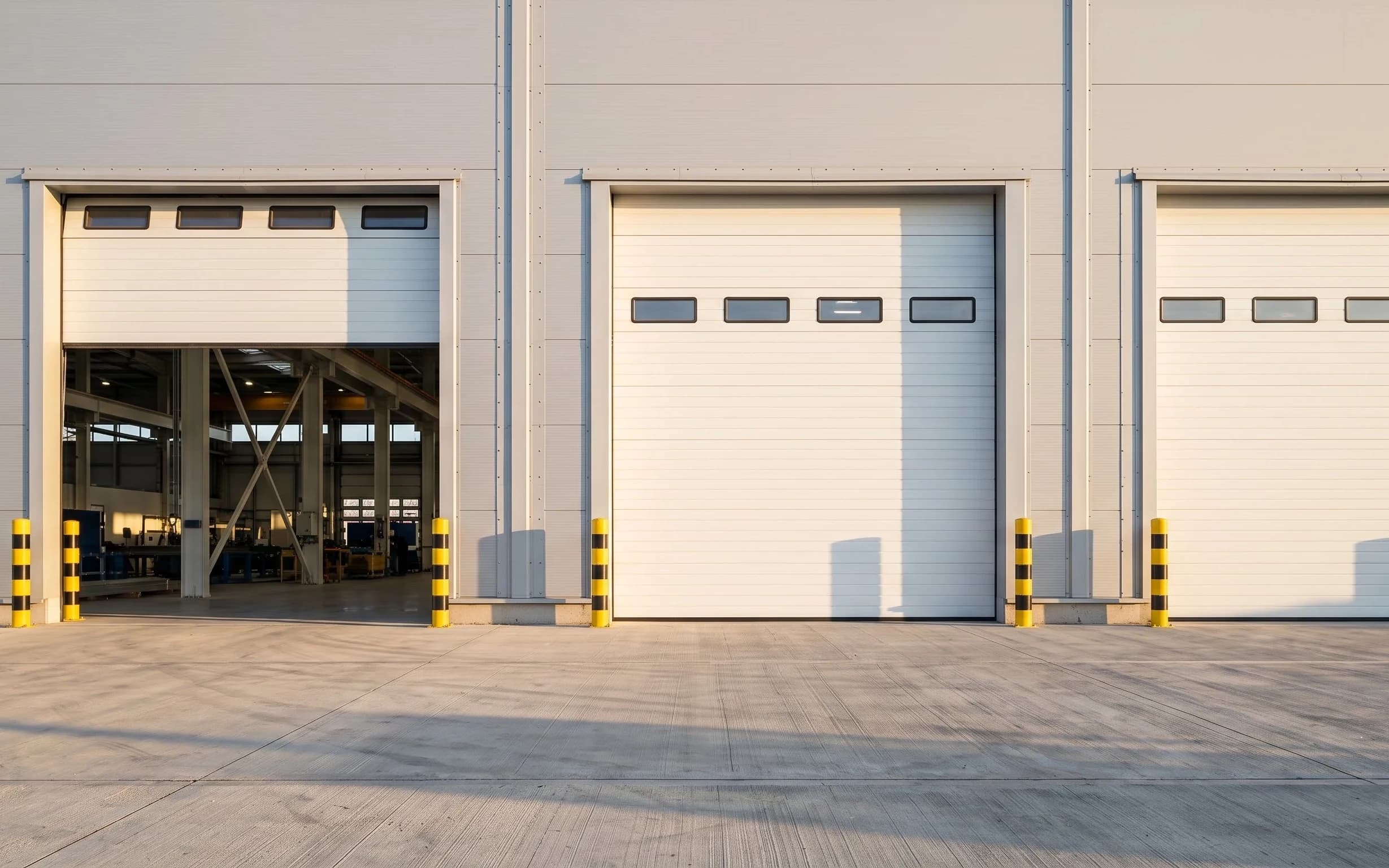
Insulated sectional doors in aluminium or galvanized steel with a PUF core, 40–50 mm thick, spanning up to 10 m, in manual and motorised configurations.
6 configurations
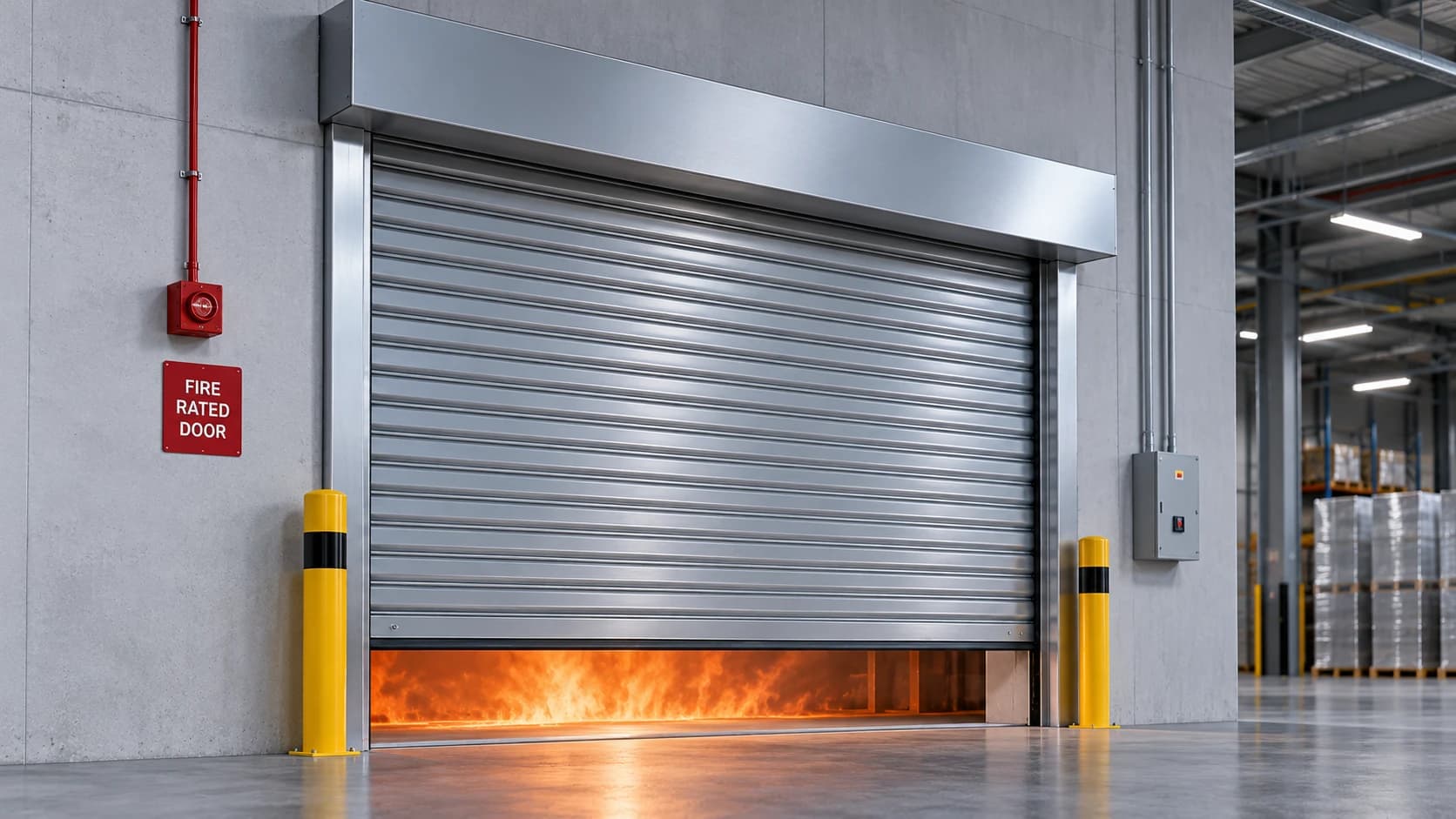
Fire & Safety
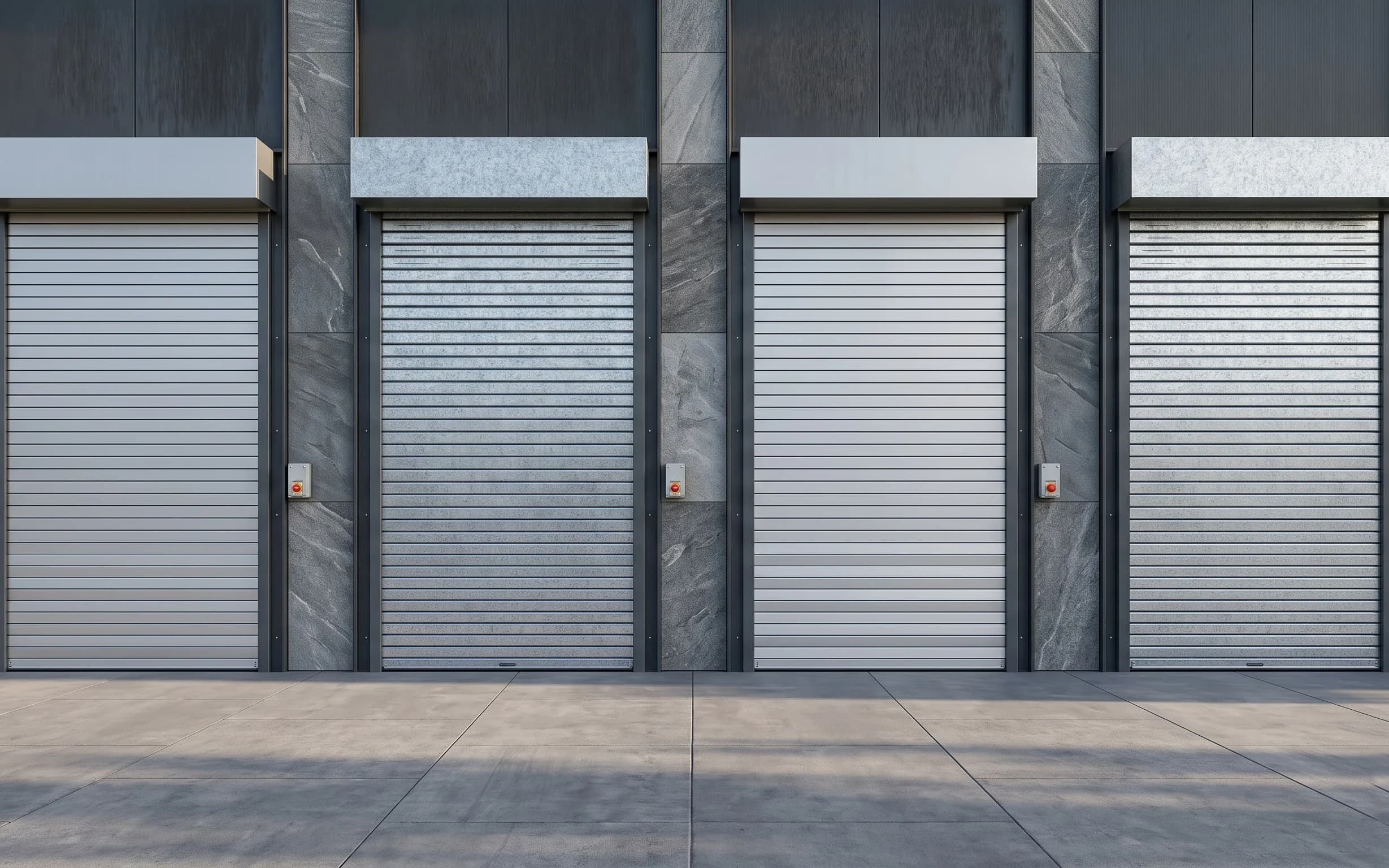
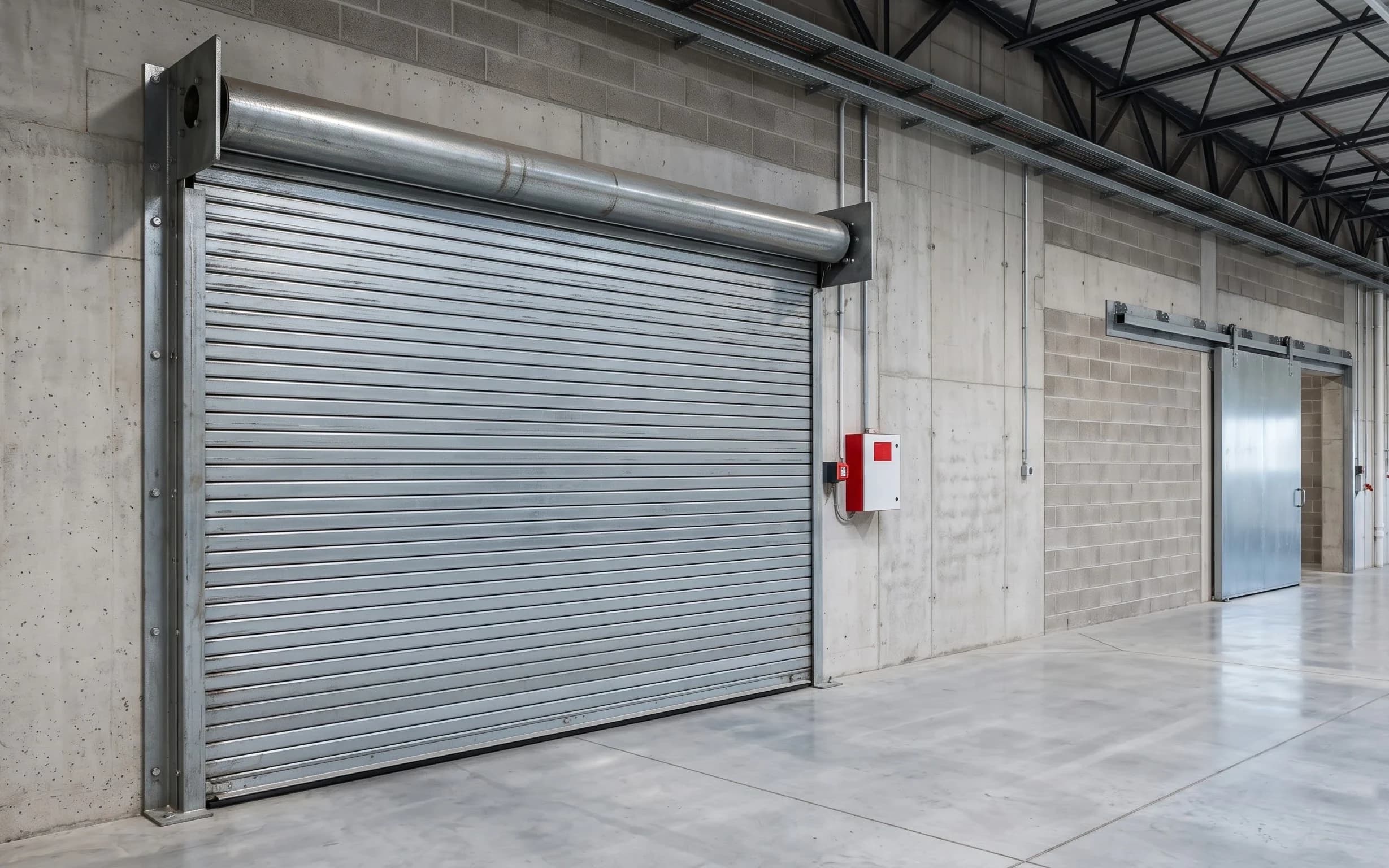
Galvanised double-wall, silicon-insulated shutters in 75 and 100 mm profiles with a stated 21 dB sound reduction, for openings in fire-rated walls.
2 configurations
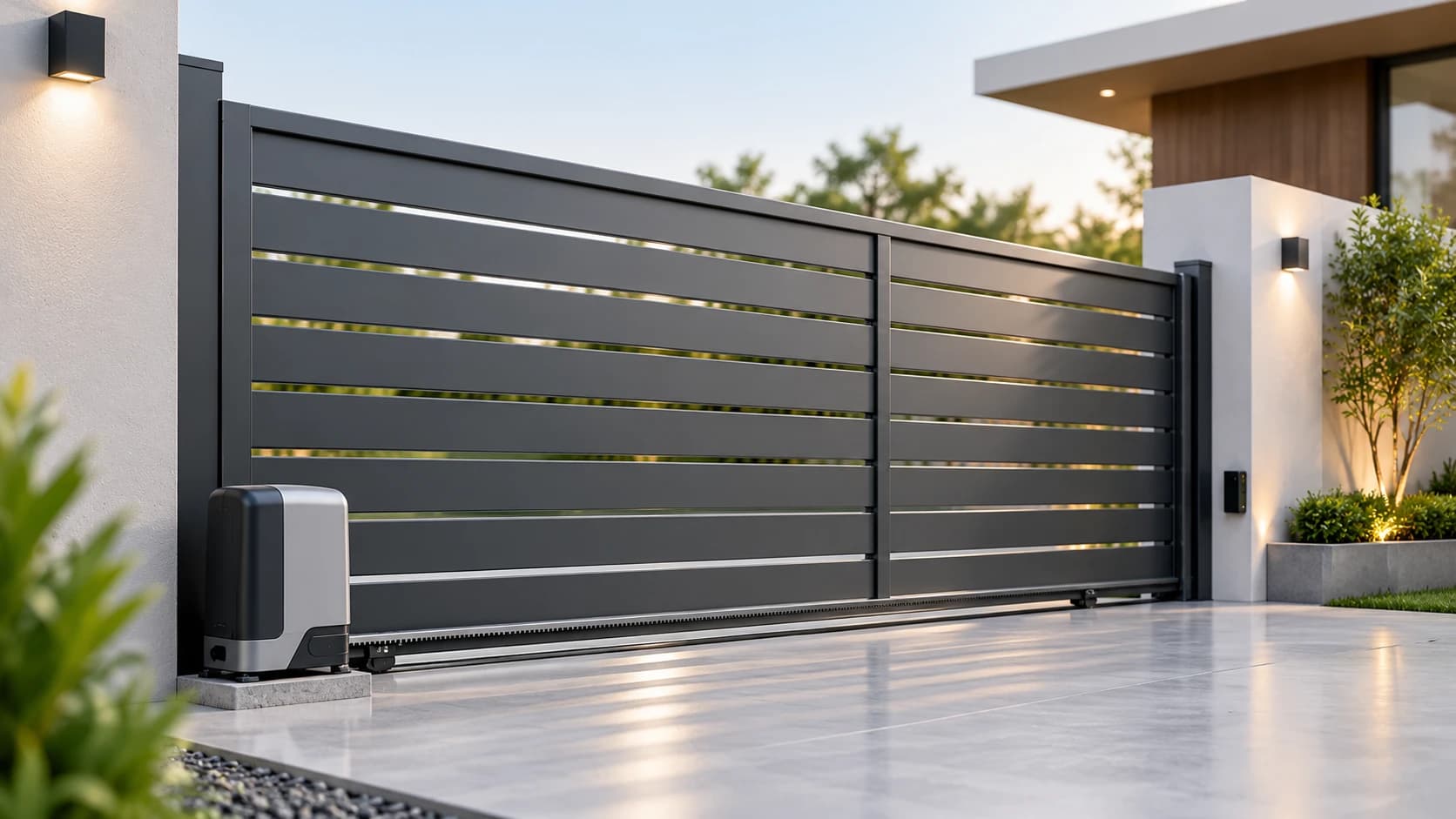
Automatic Gates
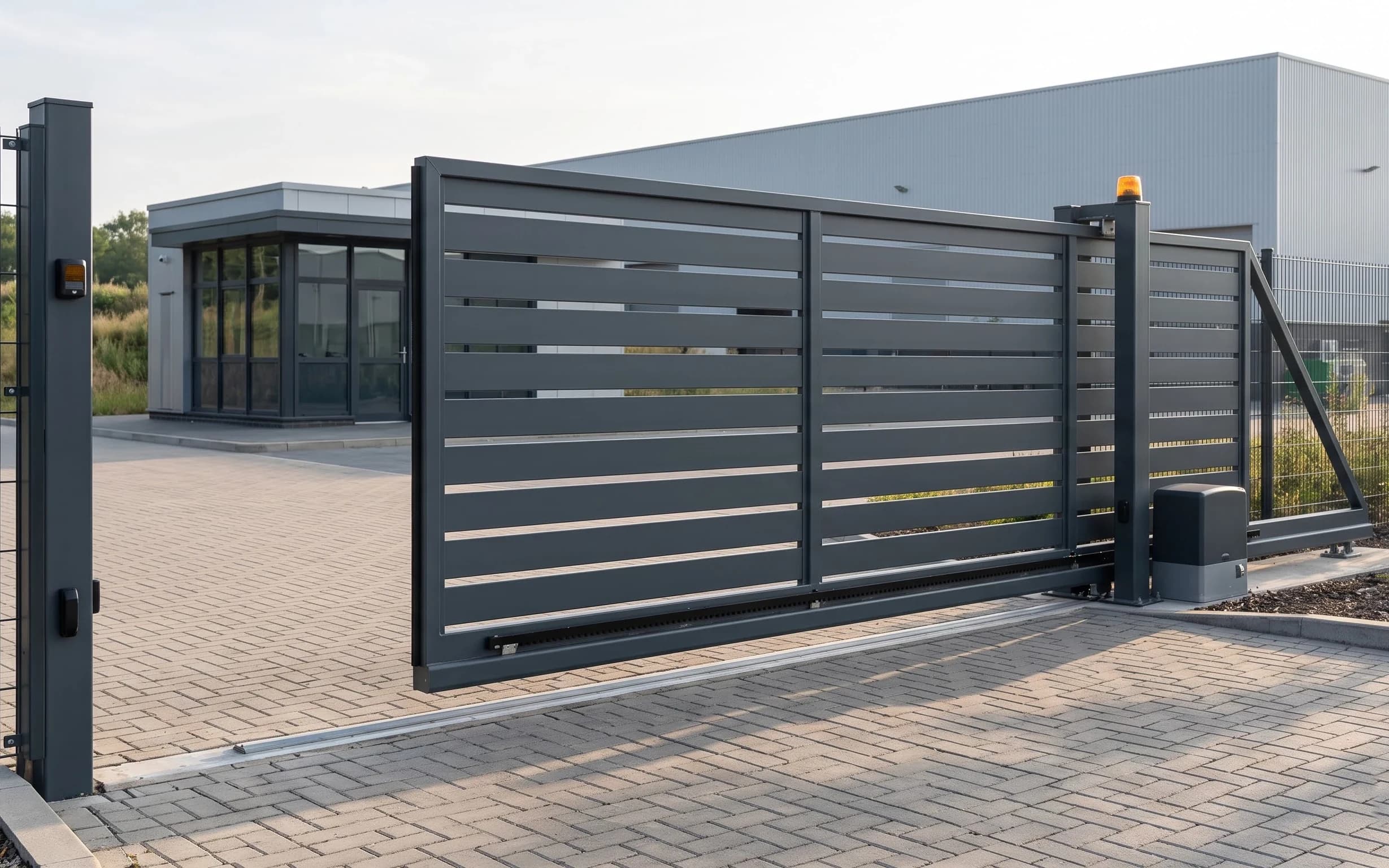
Motorised sliding gates for factory, warehouse and campus entrances, running on a floor track or cantilevered clear of the driveway.
2 configurations
03Engineering considerations
Count the cycles per day on each opening before sizing anything.
Decide what each opening actually has to separate — temperature, dust, noise, or nothing.
Identify which openings sit on a fire compartment line and treat those as a separate specification.
Check the traffic route against the guide positions: impact tolerance is cheaper than downtime.
Agree the manual release arrangement for every powered opening on the plant.
Get in touch
Send the opening details and the constraint you are working against, and we will come back with a specification.