
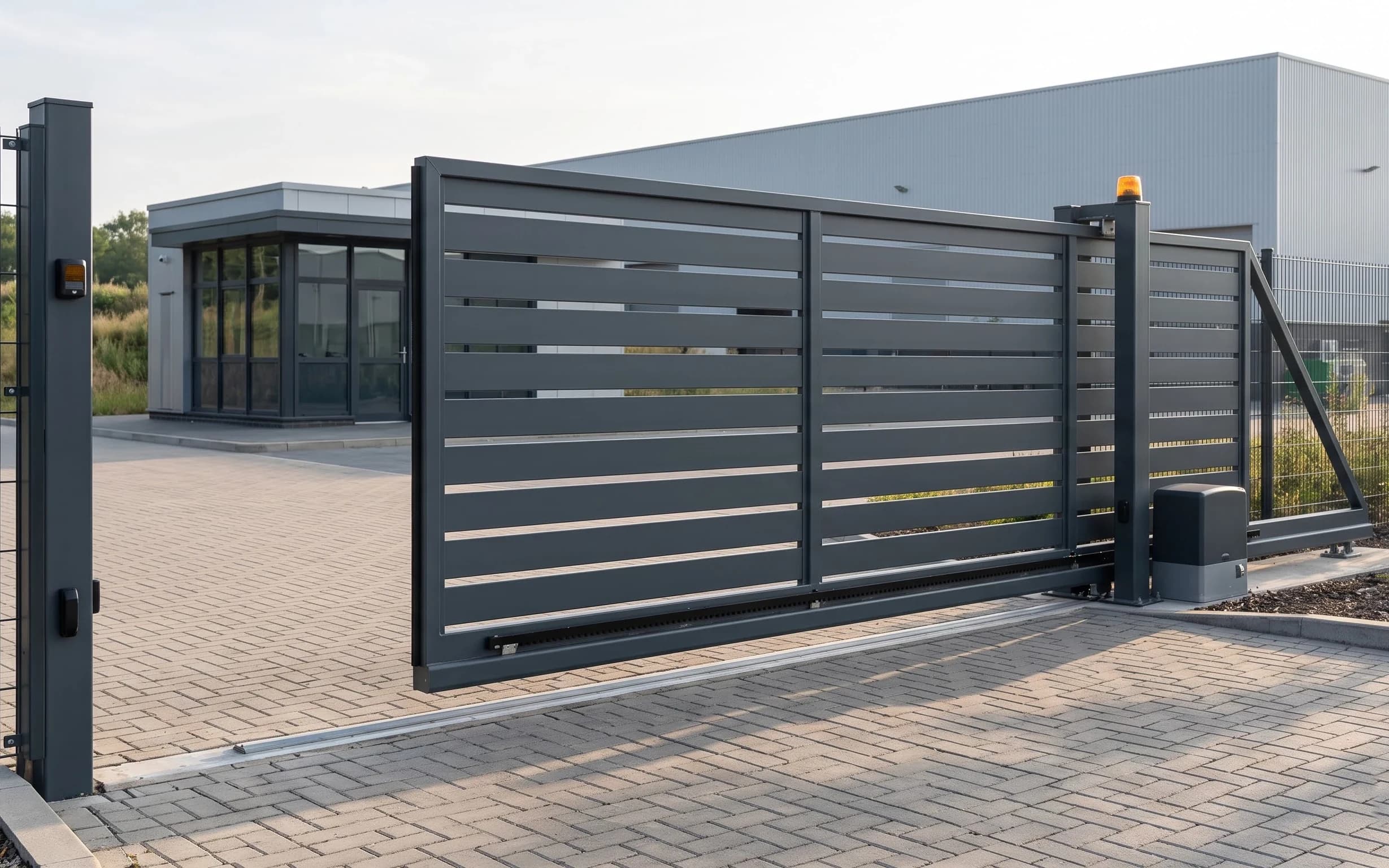
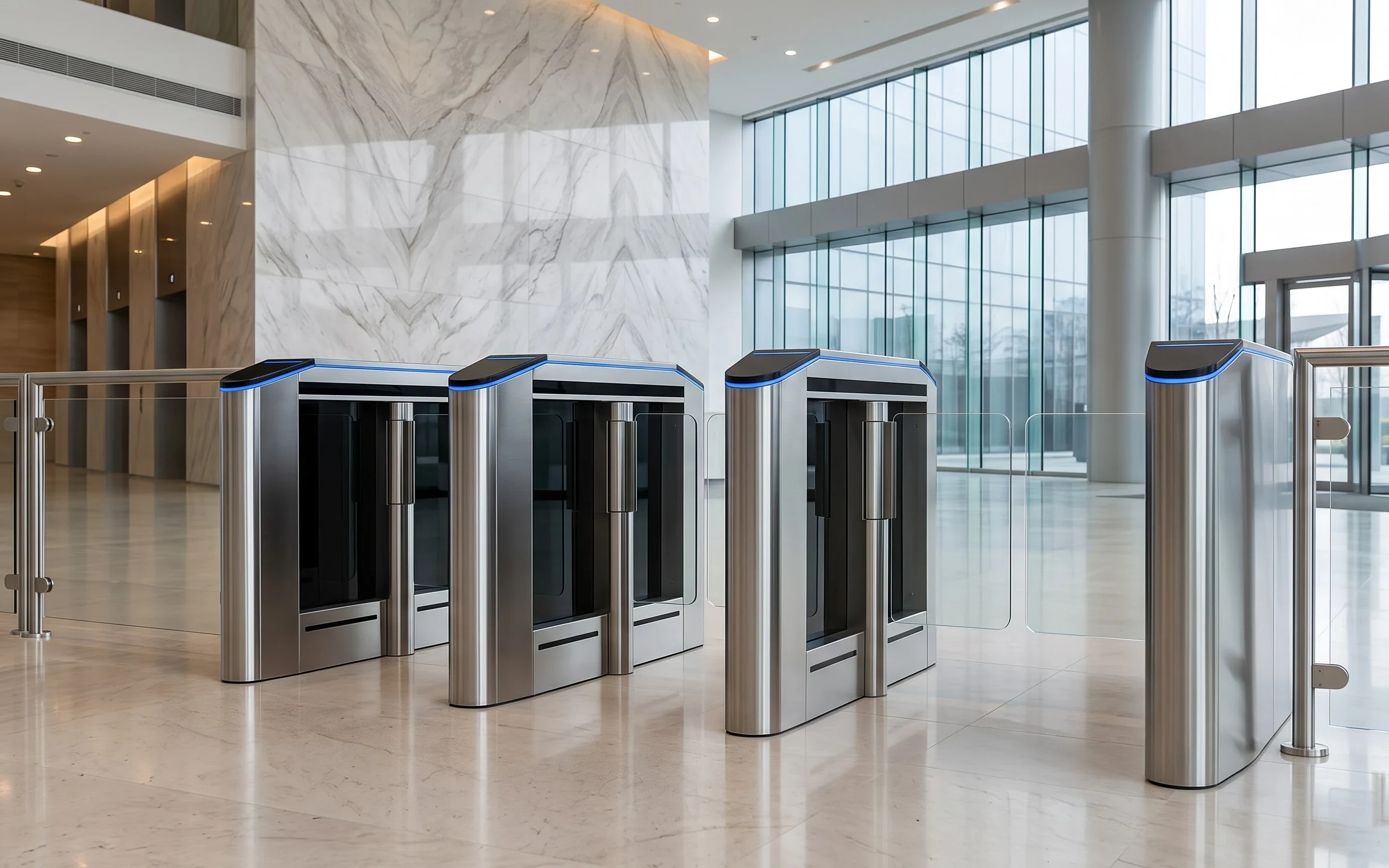
Hands-free passage
Detection opens the door ahead of the user and holds it while the threshold is occupied — no handle, no push.
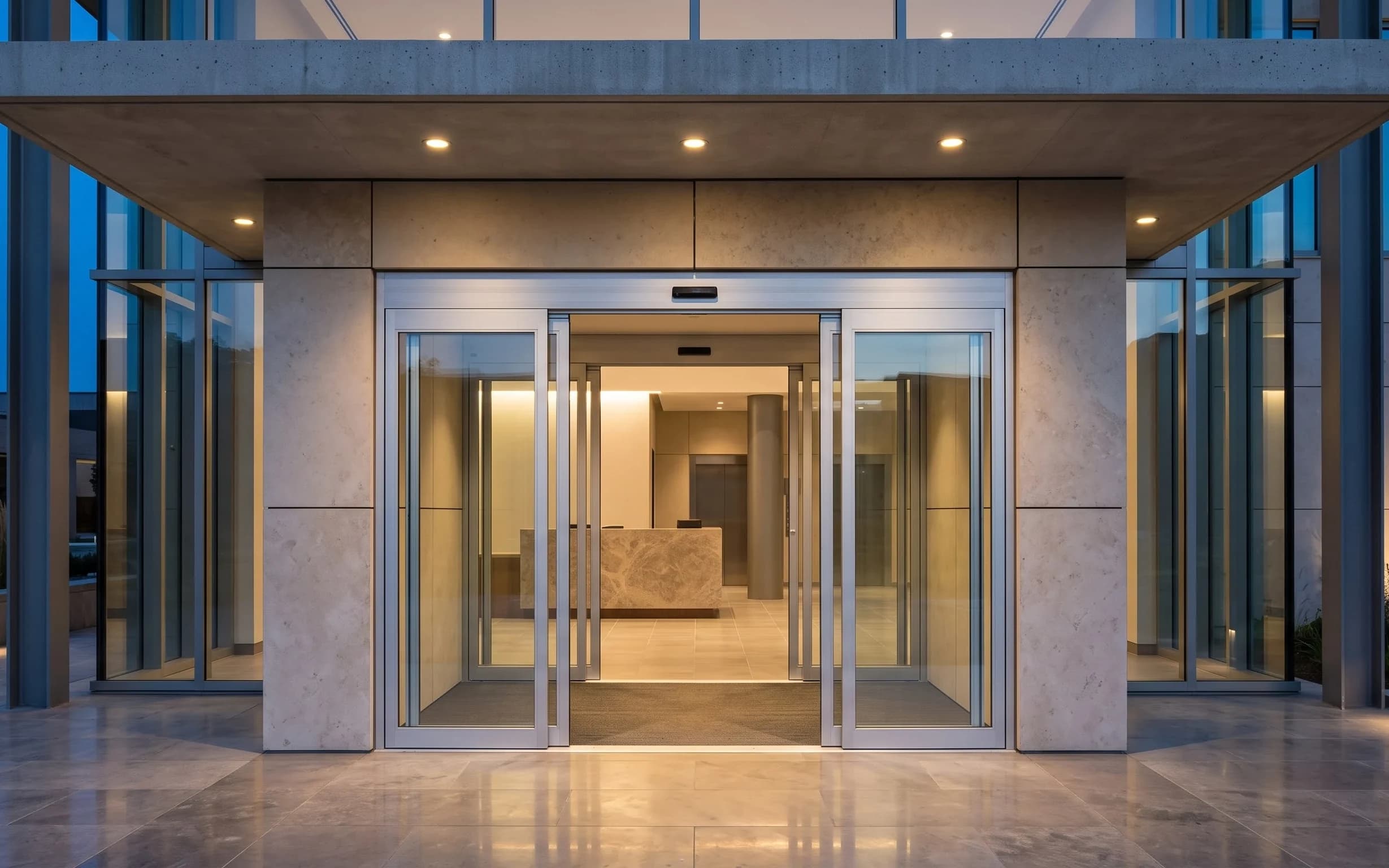
Hands-free pedestrian entrances that hold the building envelope.
01Introduction
An automatic pedestrian door is driven by an operator concealed in a header above the opening, with motion and presence sensors on both sides. It opens before the user reaches it and holds open while the threshold is occupied.
Three questions decide the specification: throughput, sealing and egress. Bi-parting leaves clear the opening faster than a single leaf; a well-sealed door cuts conditioning loss through a busy lobby; and what the door does on power failure and on alarm has to be set against the building's escape strategy before it is installed, not after.
02Why
Detection opens the door ahead of the user and holds it while the threshold is occupied — no handle, no push.
A powered door stands open only as long as it is needed, and part-open modes cut the loss further in conditioned lobbies.
No leaf to pull removes the main barrier for wheelchair users, trolleys, beds and carried loads.
Break-out leaves and fail-safe modes are specified against the escape route requirement for that opening.
03Categories
A category here is a construction or operating principle — the level at which two products genuinely behave differently, rather than just being finished differently.
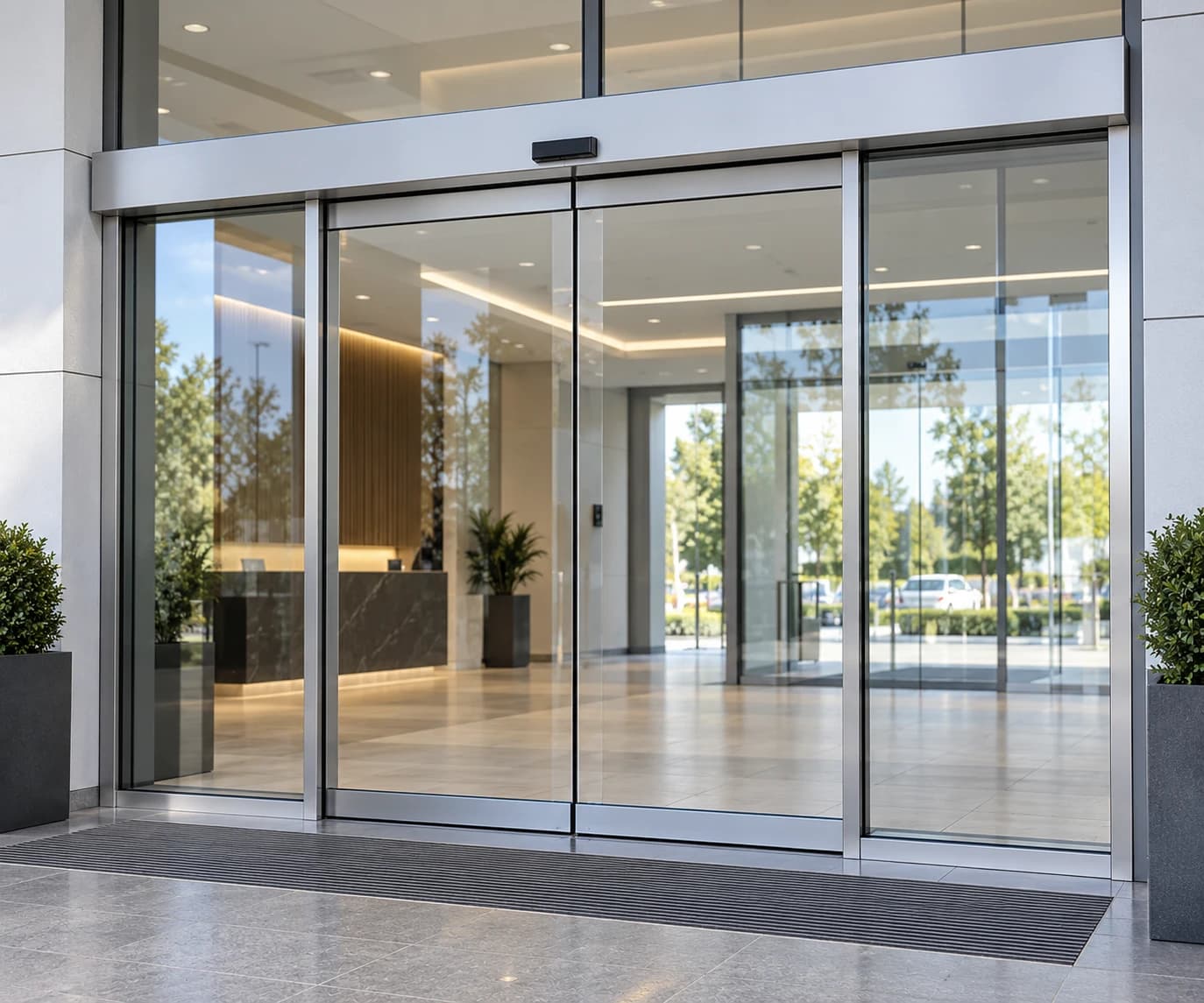
A belt-driven operator concealed in a header above the opening, carrying glass leaves on a track.
Entrance Automation
Sensor-operated sliding glass door systems for lobbies, retail and healthcare entrances, in single-leaf and bi-parting arrangements with defined egress behaviour.
4 configurations
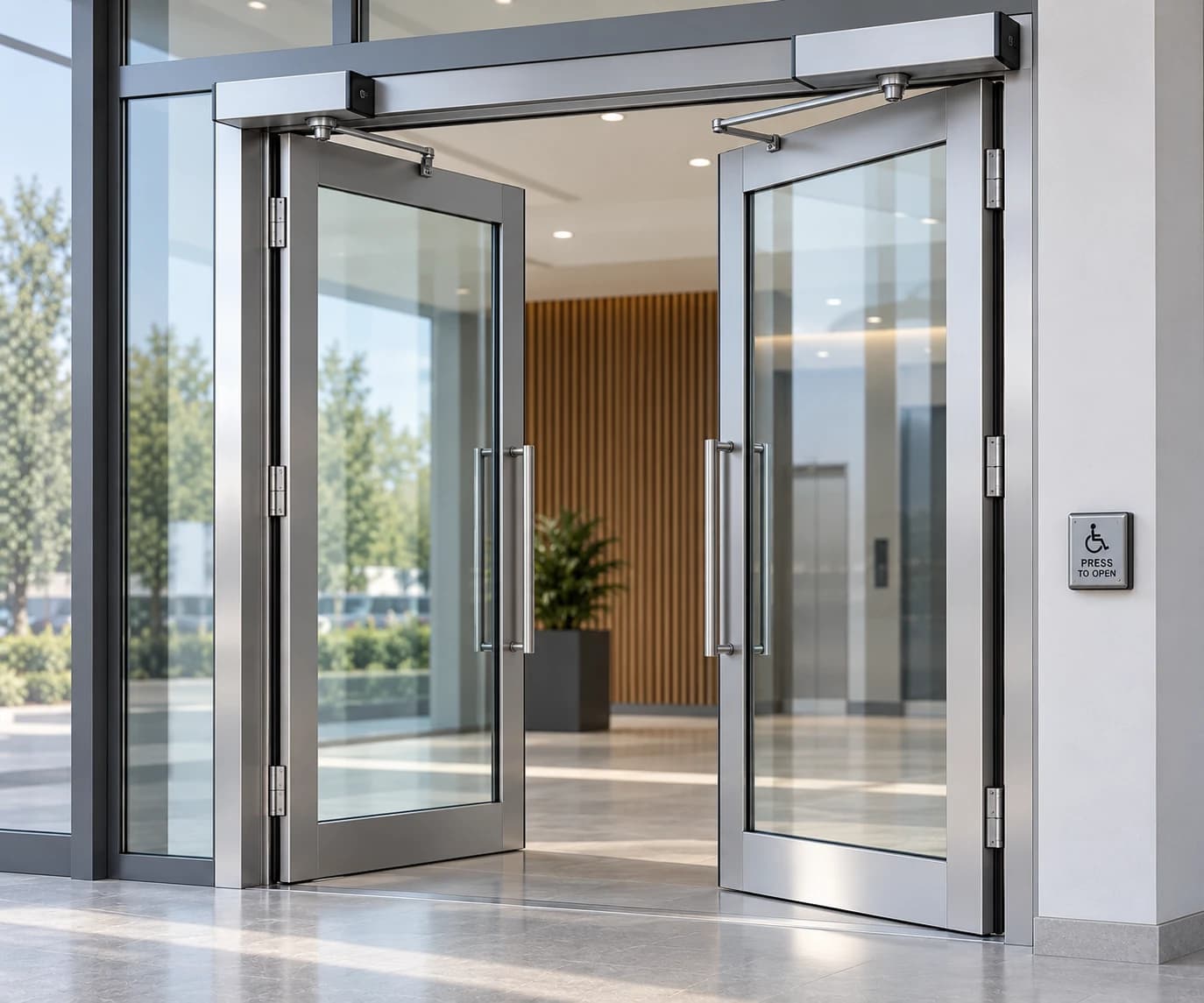
A powered operator on a hinged pedestrian leaf, for openings where a sliding track cannot be fitted or the door must also work as a conventional swing door.
Entrance Automation
Operator-driven swing doors for corridors, lobbies and accessible entrances, in low-energy and full-power configurations with hands-free activation.
4 configurations
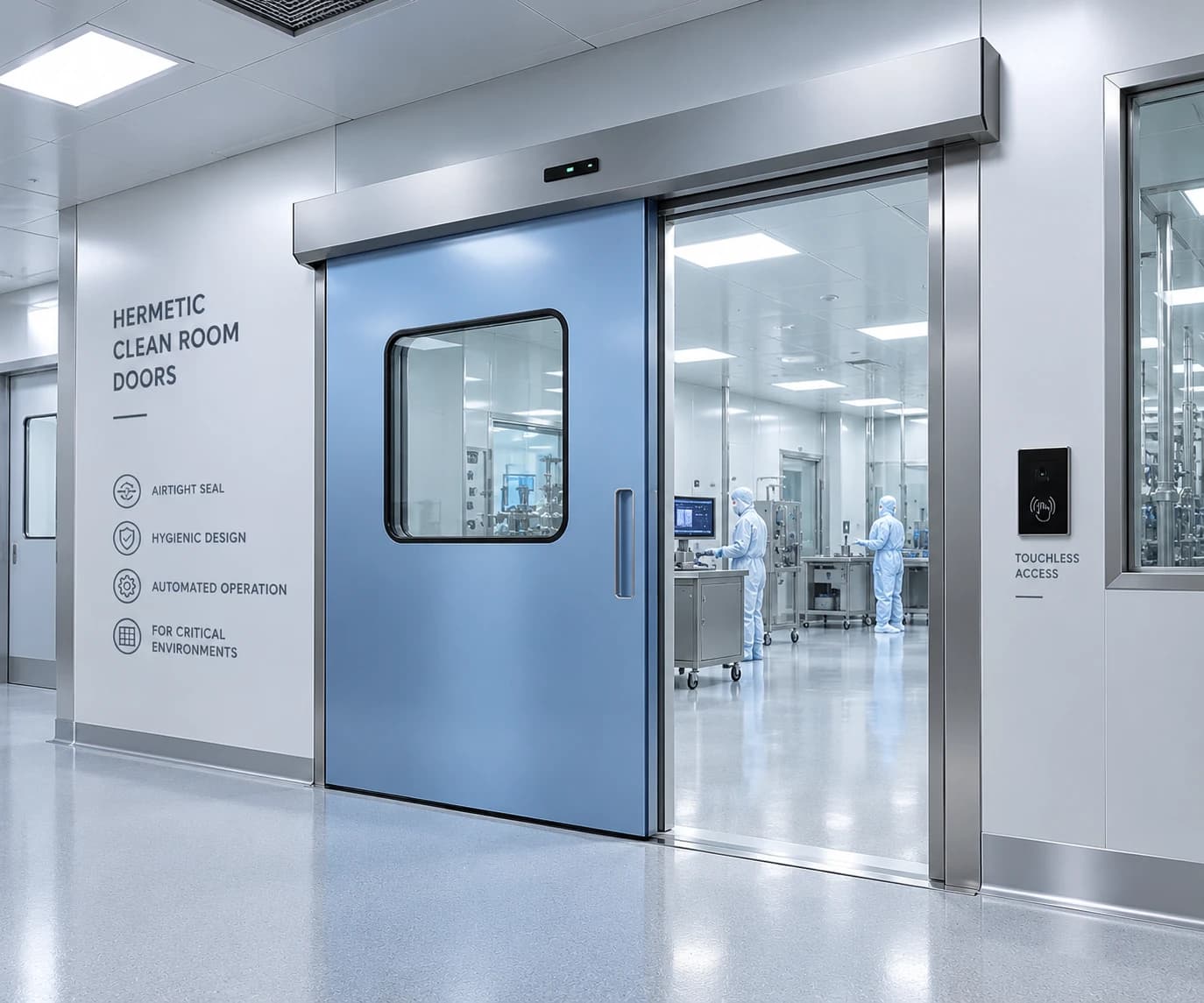
An automatic leaf that seals against its frame on all four edges, so the opening can hold a pressure differential and a cleanliness classification.
Entrance Automation
Automatic sliding doors that seal on all four edges, for operating theatres, gowning rooms, material airlocks and classified production areas.
4 configurations
04Compare
What each product in this family is for, what it is built to survive, and whether we can publish a specification table for it today.
05Performance considerations
Peak footfall, which decides single-leaf against bi-parting or telescopic.
Clear opening width required when fully open, including accessibility requirements.
Whether the opening sits on a designated escape route.
Header depth available above the opening for the operator.
Sealing and threshold detail where the lobby is conditioned.
Integration with access control, intercom and building management.
Get in touch
Tell us the opening dimensions, the daily cycle count and the site conditions, and we will specify the right entrance automation configuration and quote against it.