


Access Control
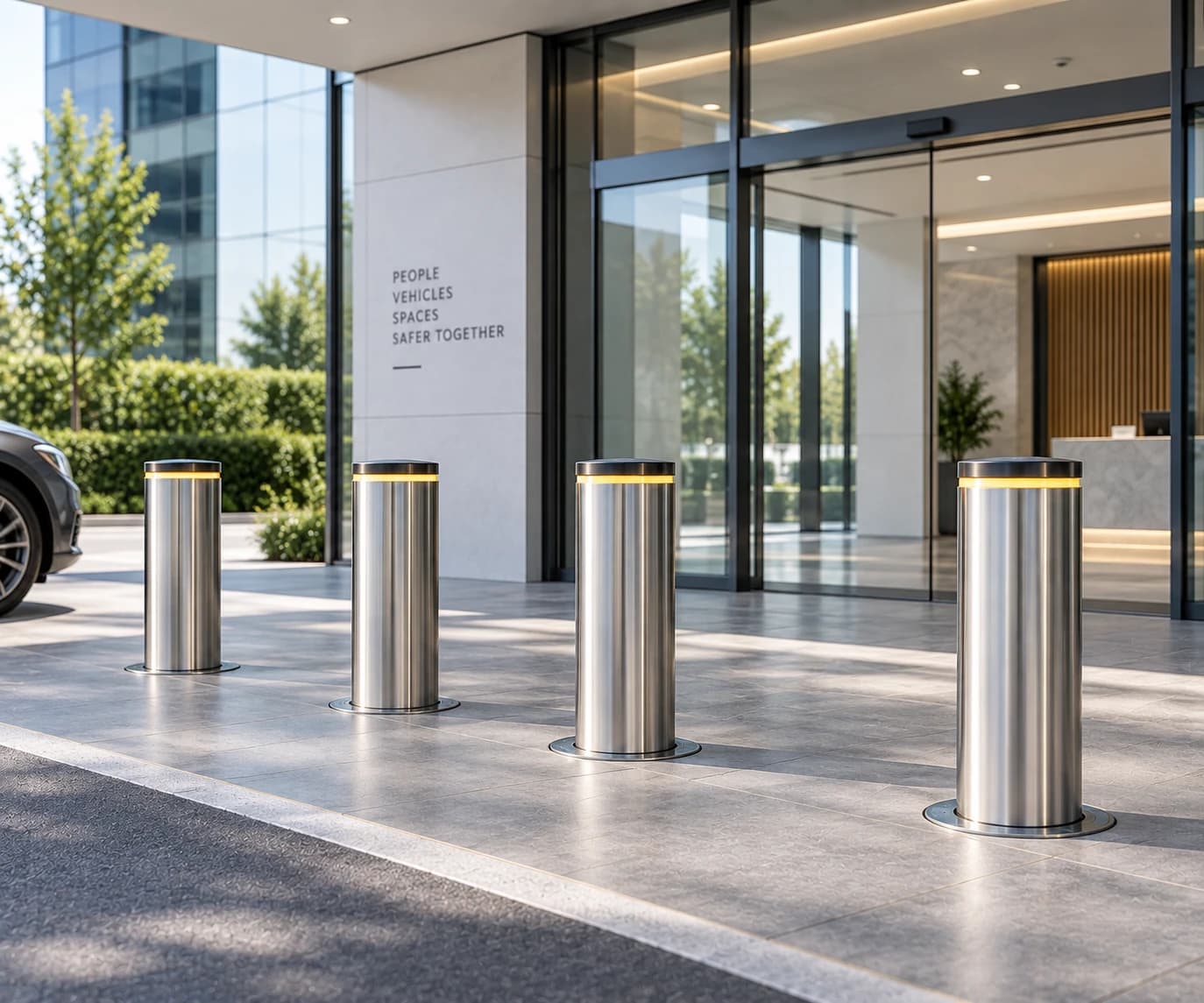
Bollards
Fixed, removable and automatic rising bollards for controlling vehicle access to entrances, plazas and restricted zones while pedestrians pass freely.
3 configurations
Explore product
Access Control & Vehicle Barriers/Vehicle Access Control
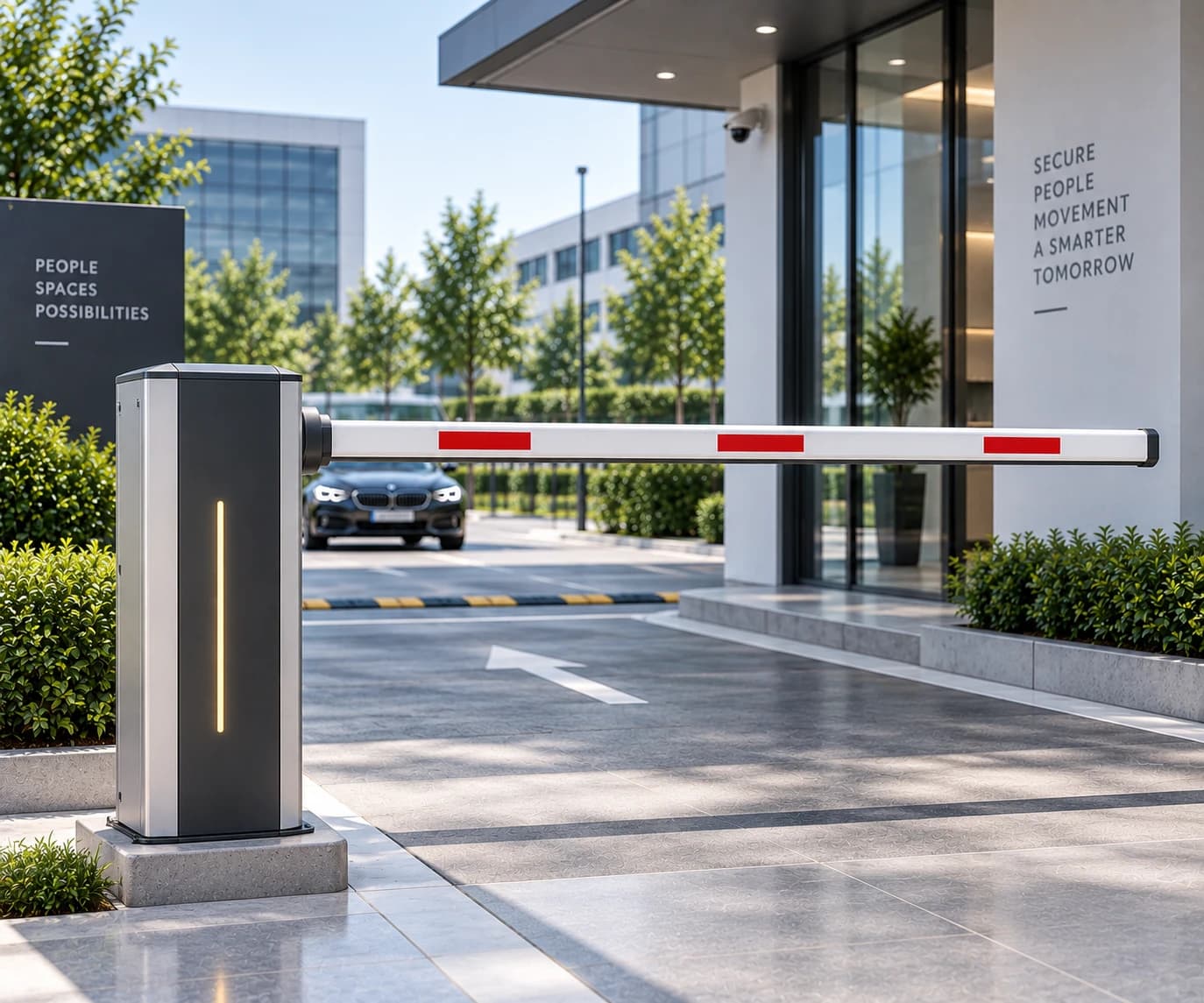
Metering vehicles at the gate line, one at a time.
 Access Control
Key specifications
* Final specification depends on door dimensions, configuration, operating environment and project requirements.
01Overview
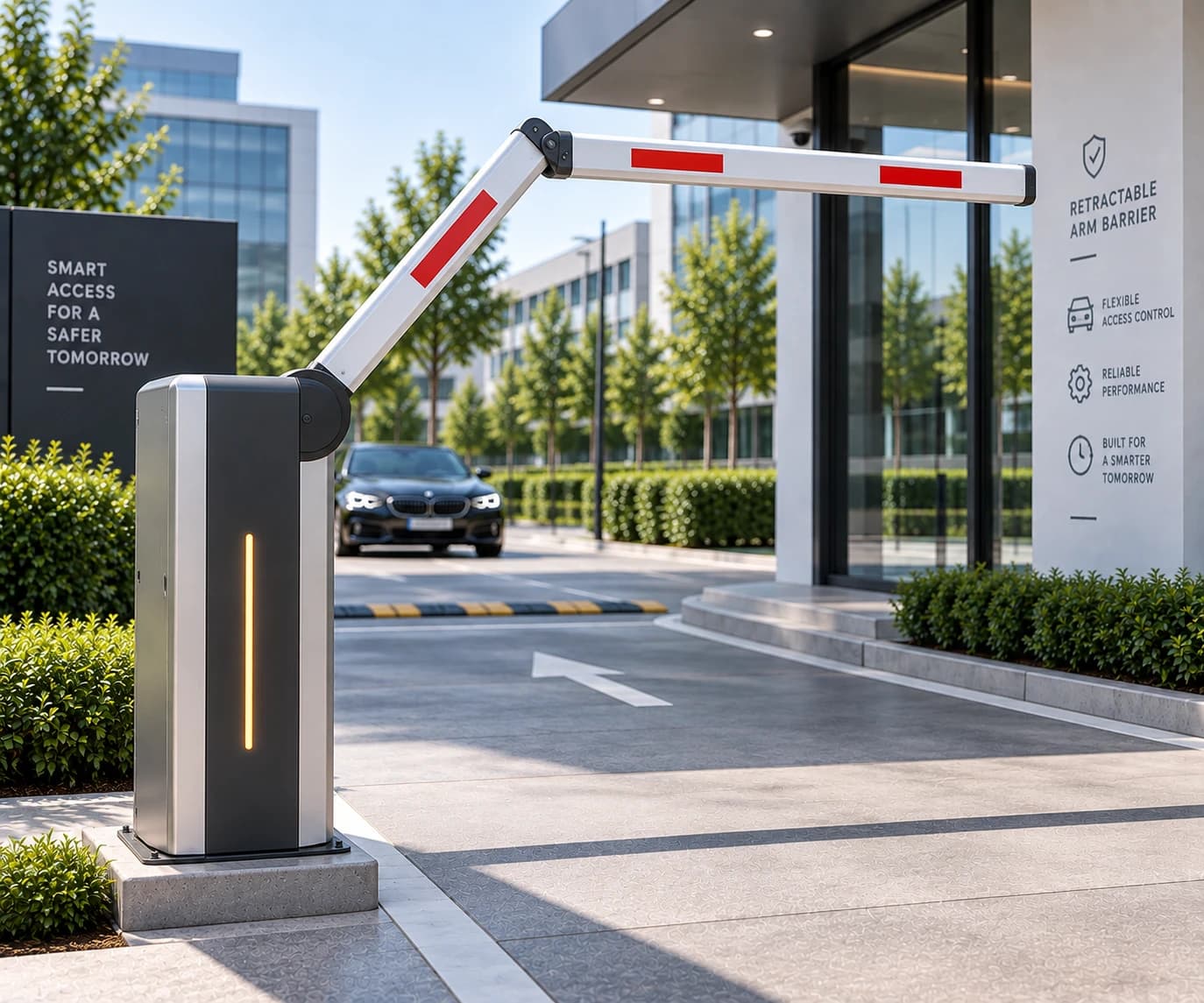
A boom barrier meters vehicles: it holds the gate line closed, opens for one authorised vehicle, and closes again behind it. It is a control device rather than a security barrier — its job is to regulate flow and record movements, and it will not stop a determined vehicle. Where the line has to be enforced physically, a bollard is the correct product.
03Variants
The same product, built for a different job. Where a specification depends on opening dimensions, selected profile, operating duty or site conditions, the final configuration is confirmed during technical assessment.
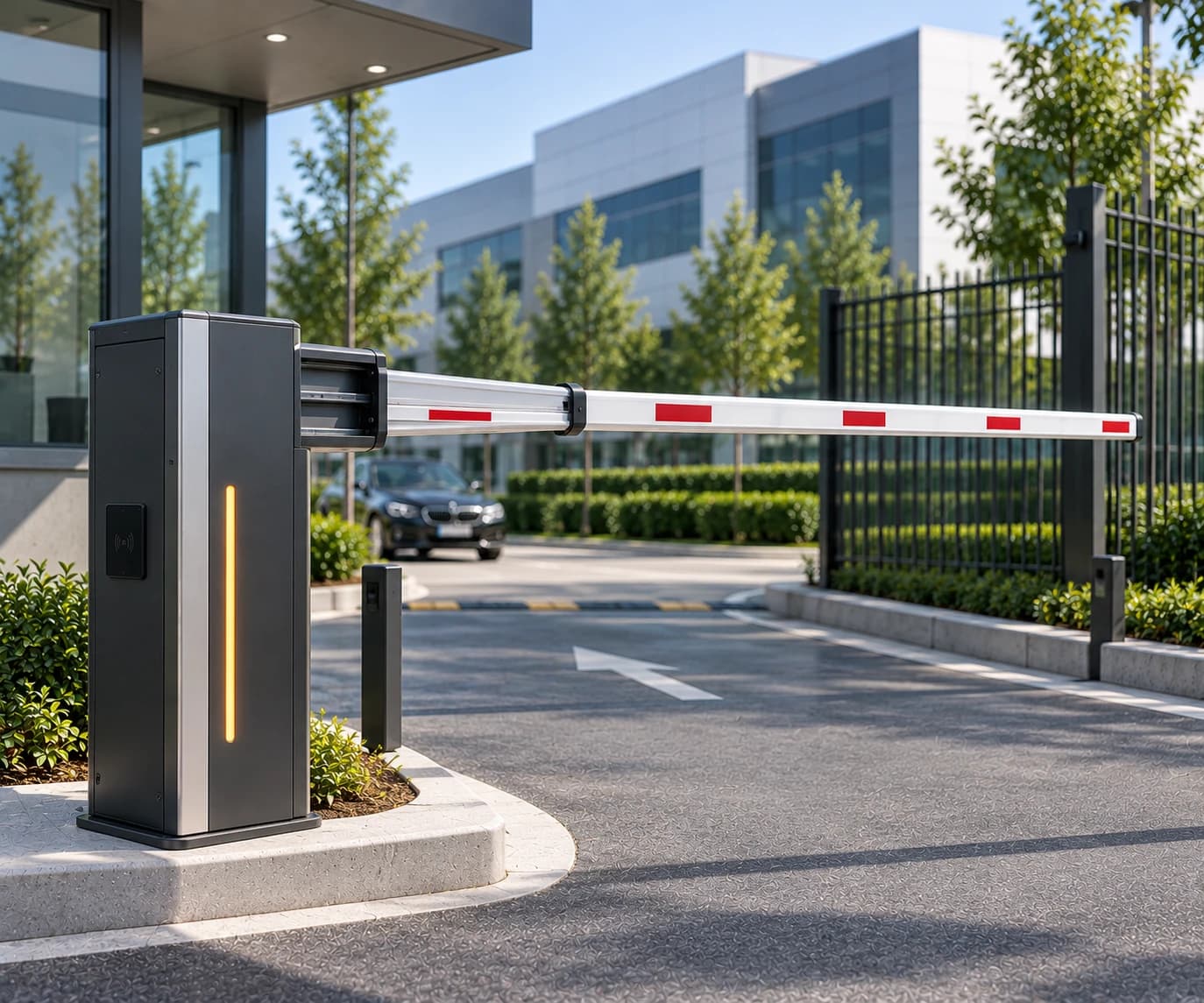
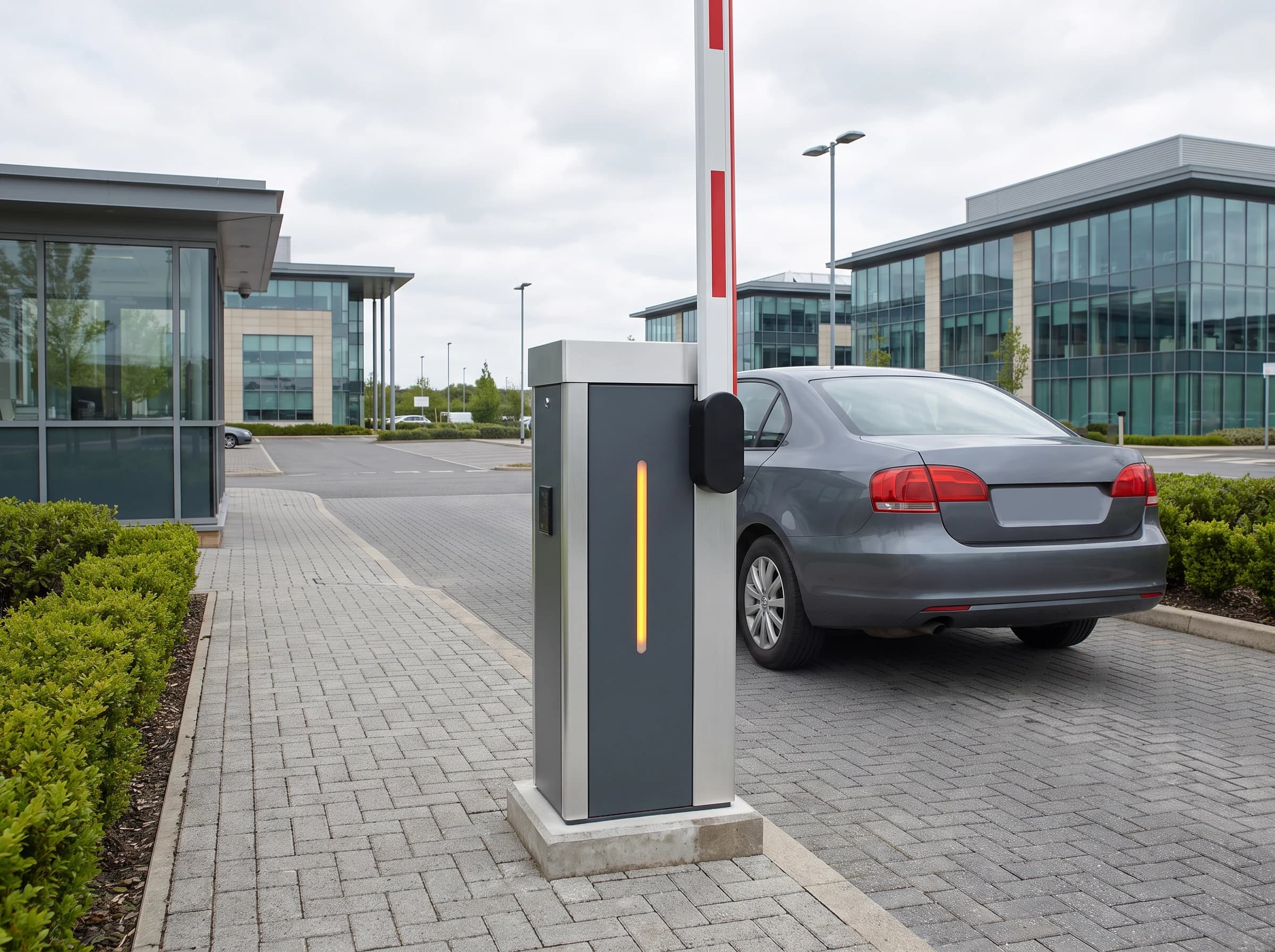
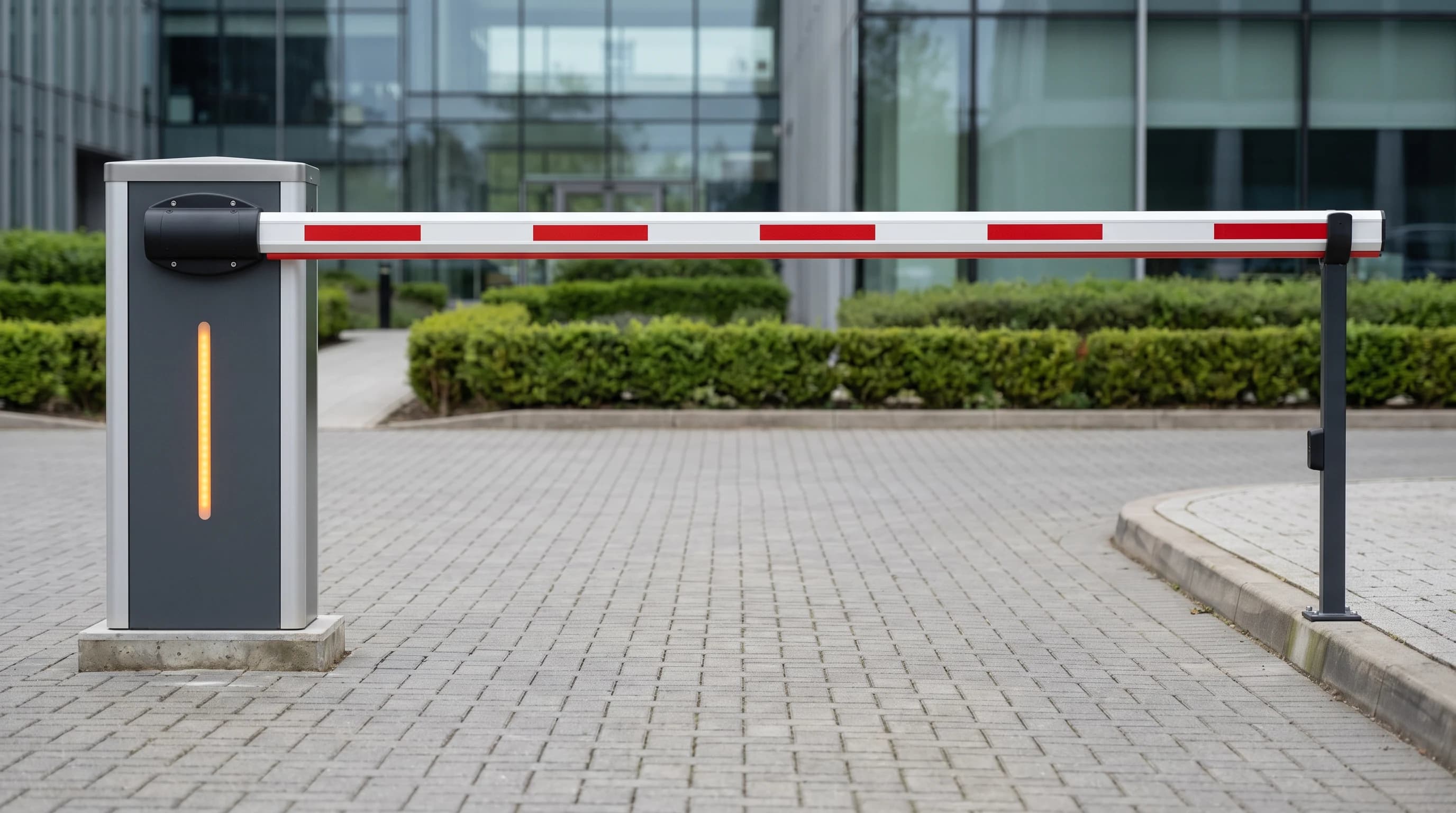
The standard arrangement for a normal-width lane with clear headroom above the barrier.
The boom articulates as it rises, for lanes with restricted headroom such as basement entries.
A skirted boom that deters pedestrians from ducking under the barrier at a mixed-traffic entry.
10Gallery
04Technical specifications
Technical data is shown first; features, applications, compatibility, installation, safety, ordering and downloads are a click away.
Only for products actually tested to an impact standard.
EN 12453 applies to powered vehicle barriers where they form part of a gate installation.
| Boom length or barrier width | Typically 2–9 m depending on model; booms over about 5 m are supplied in two sections |
|---|---|
| Bollard diameter | Not applicable |
| Bollard height above ground | Not applicable |
| Foundation depth required | Site dependent; set by the cabinet base plate and the supplied operator's foundation drawing |
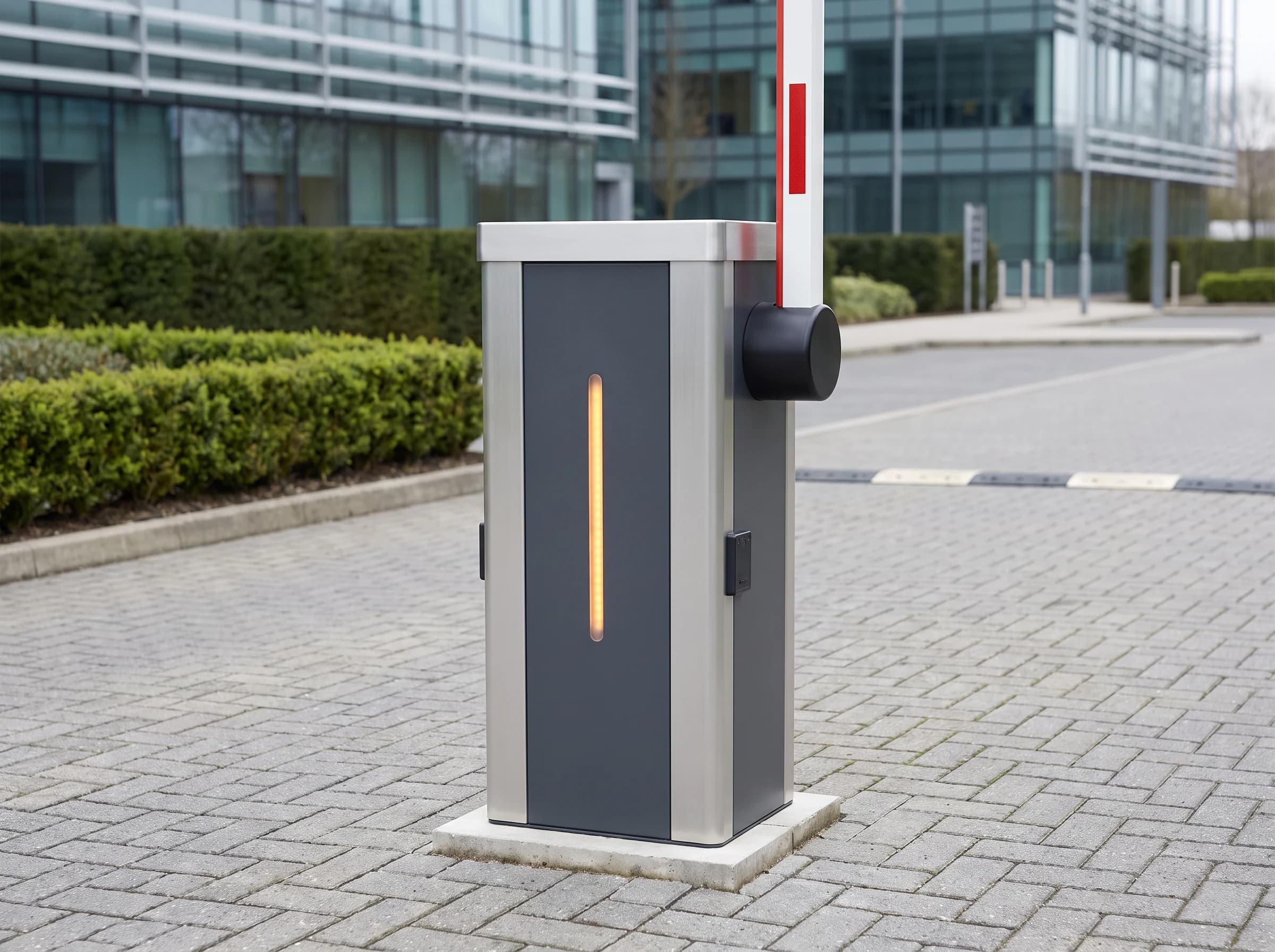
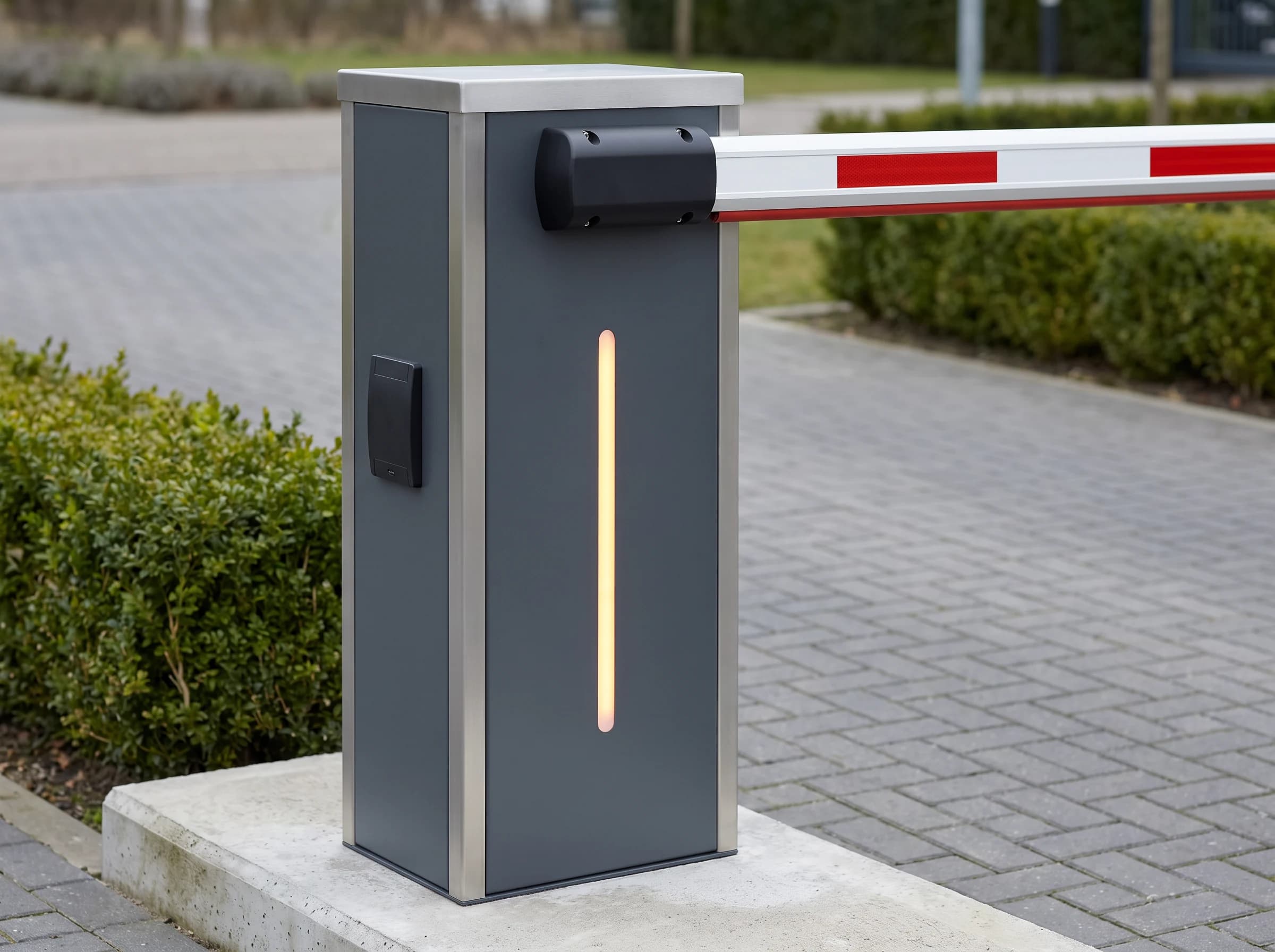
| Cabinet or body dimensions | Depending on model; a typical cabinet is around 400 × 300 × 1,200 mm |
| Opening time | Typically 1.5–6 s for booms up to about 6 m, adjustable on the control unit; longer booms take up to 10–18 s depending on model |
|---|---|
| Closing time | As opening time; adjustable on the control unit |
| Mean cycles between failure | Manufacturer ratings range from about 1,000,000 to 10,000,000 cycles depending on model; continuous-duty models are common |
| Impact resistanceOnly for products actually tested to an impact standard. | Not impact rated. A boom barrier is a traffic control device, not a vehicle security barrier |
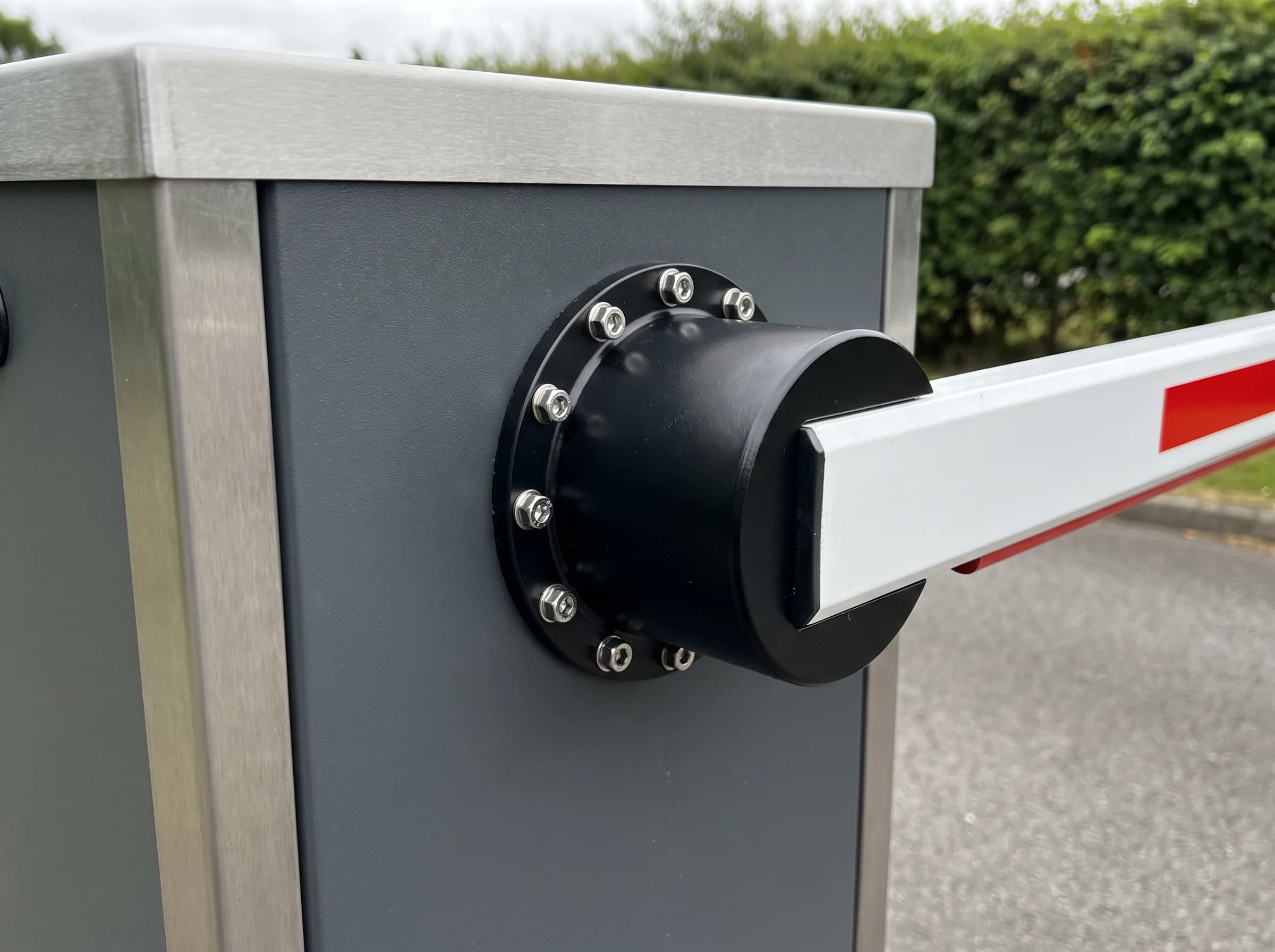
| Body material and finish | Galvanized or painted steel cabinet; stainless steel option on some models |
|---|---|
| Boom or barrier material | Extruded aluminium boom, round or elliptical profile depending on model, painted white |
| Drive mechanism | Electromechanical or hydraulic operator with spring balancing; brushless DC motors and an encoder for position and obstacle detection on current models |
| Reflective marking and lighting | Reflective strips on the boom; LED boom lighting and a cover-mounted warning or traffic light available on most models |
| Supply voltage | 230 V AC 50/60 Hz single phase; wide-range 100–240 V AC on some models |
|---|---|
| Power consumption | Typically 40–270 W depending on model; standby around 2.5 W on current models |
| Battery backup | Optional battery backup on most models |
| IP rating | Typically IP54 depending on model; IP56 on some |
| Operating temperature | -20 °C to +55 °C typical |
| Activation devices | Push button, remote control, key switch, reader, intercom or gatehouse control through open, close, step and stop inputs; radio receiver connector |
|---|---|
| Loop detectors | Two loop detector inputs, integrated on most models |
| Access system interface | Dry-contact inputs for any access control system; RS485 or Modbus on some models |
| Manual release | Key-operated manual release for hand operation on power failure |
| Photocells | Photocell input as standard; photocells fitted to the installation |
|---|---|
| Ground loop safety | Safety loop input holds the boom open while a vehicle is beneath it |
| Behaviour on power failure | Boom can be released and raised by hand; optional battery backup keeps the barrier operating |
| Product standardEN 12453 applies to powered vehicle barriers where they form part of a gate installation. | Powered vehicle barriers fall under EN 12453 and the Machinery Directive; the supplied operator's own declaration applies |
|---|---|
| Conformity marking | As applicable to the supplied operator and market |
| Certificate reference | Manufacturer's declaration for the supplied model; available on request |
Final specification depends on door dimensions, configuration, operating environment and project requirements.
FAQ
Engineering enquiry
Five answers about the opening are usually enough for us to come back with a configuration and a price.

Get in touch
If it is easier to describe the opening than to write it down, call or message us and we will work through it with you.