



Access Control
Boom Barriers
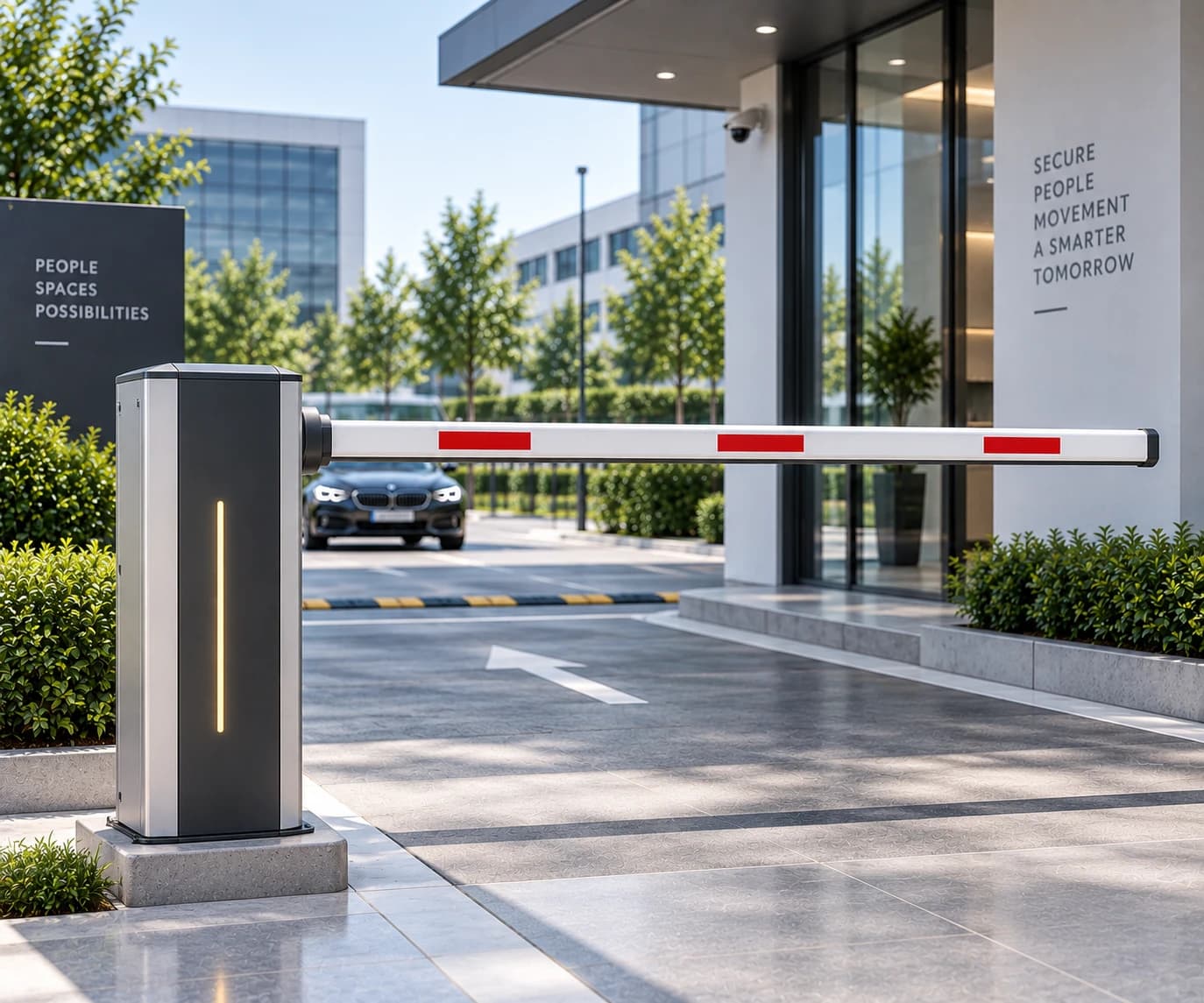
Automatic boom barriers for car park entries, plant gate houses and toll points, driven from loop detectors, readers, remotes or a gatehouse control.
3 configurations
Explore product
Access Control & Vehicle Barriers/Vehicle Access Control
A barrier line that exists only when you need it.
 Access Control
Key specifications
* Final specification depends on door dimensions, configuration, operating environment and project requirements.
01Overview
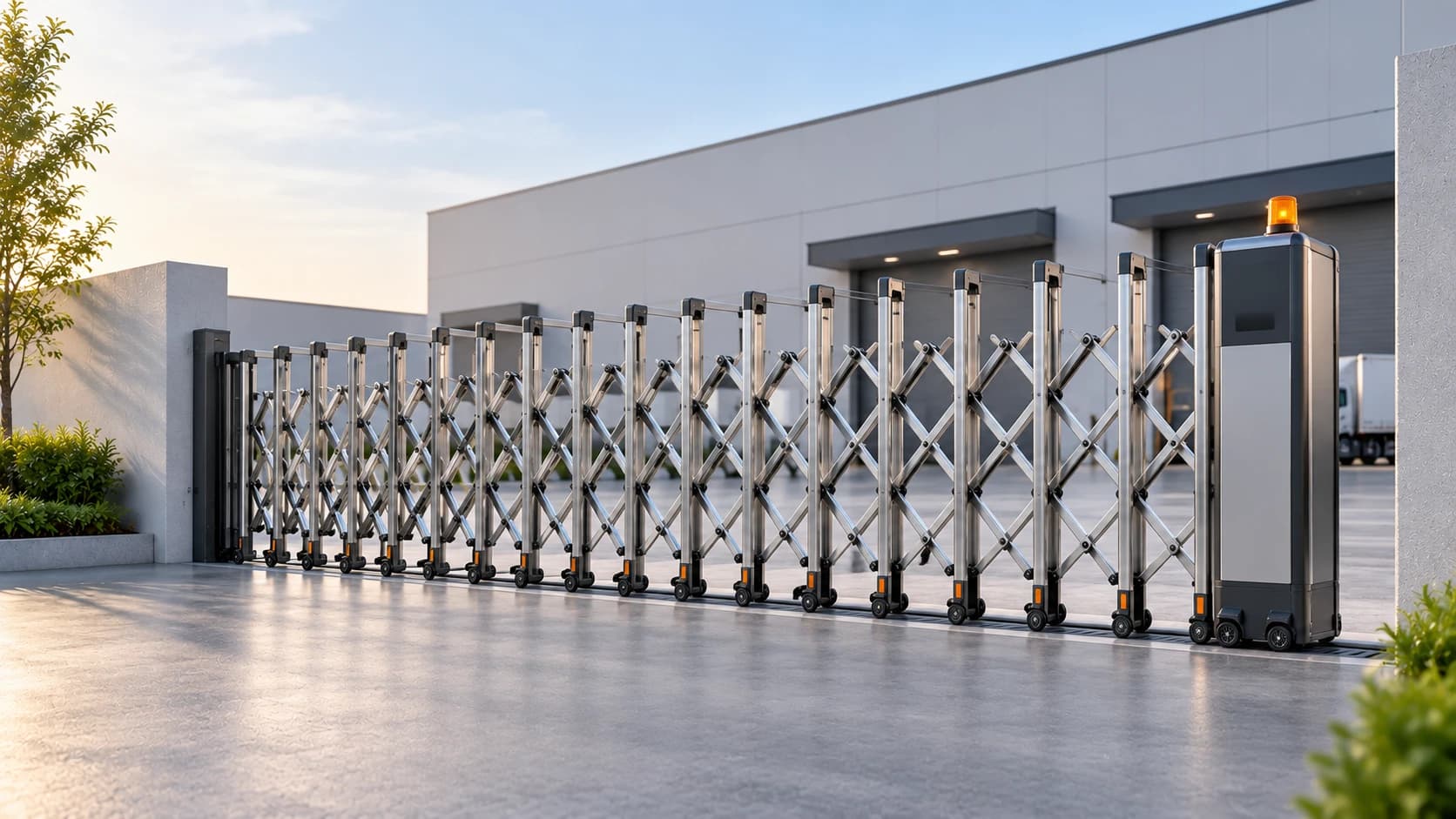
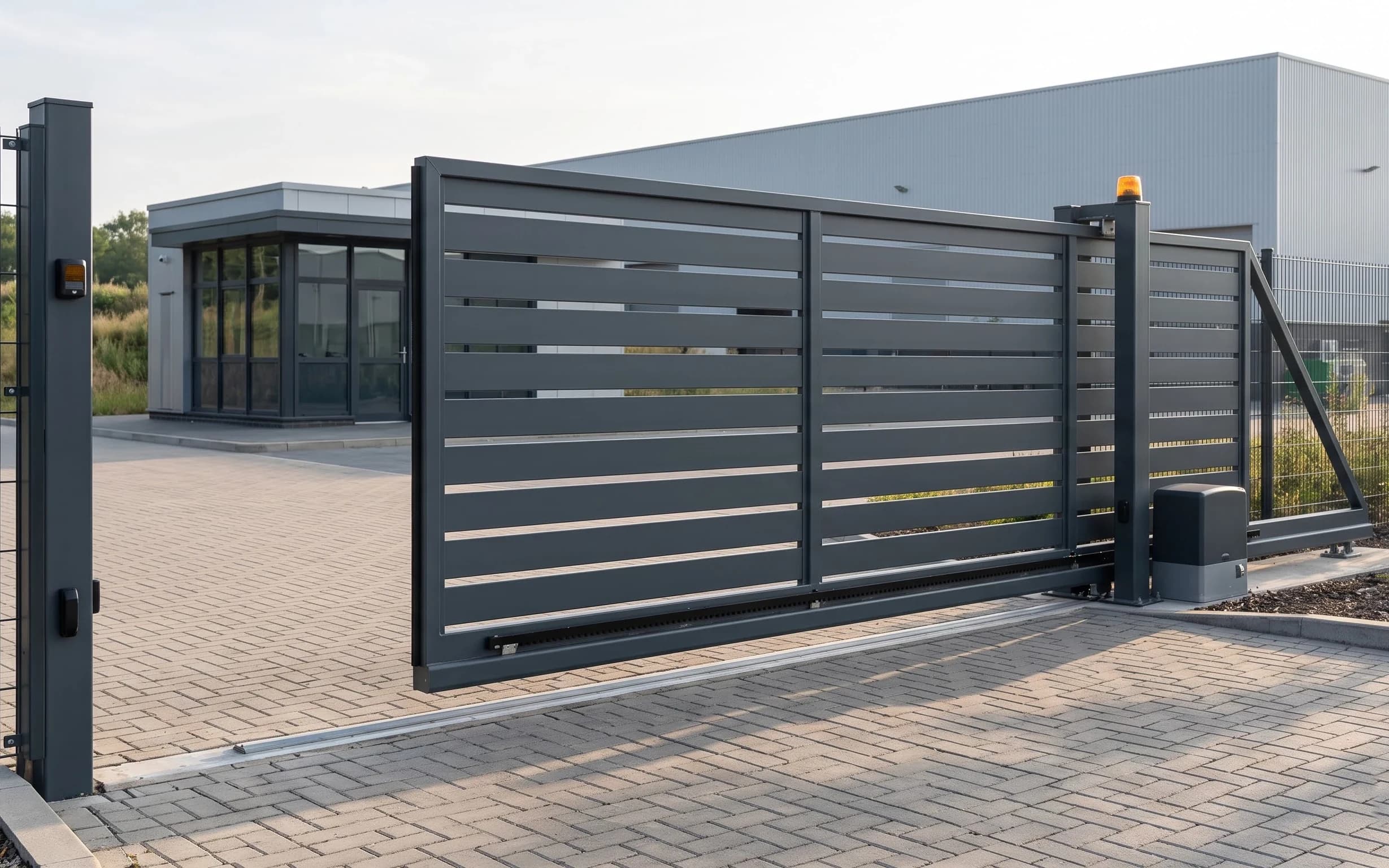
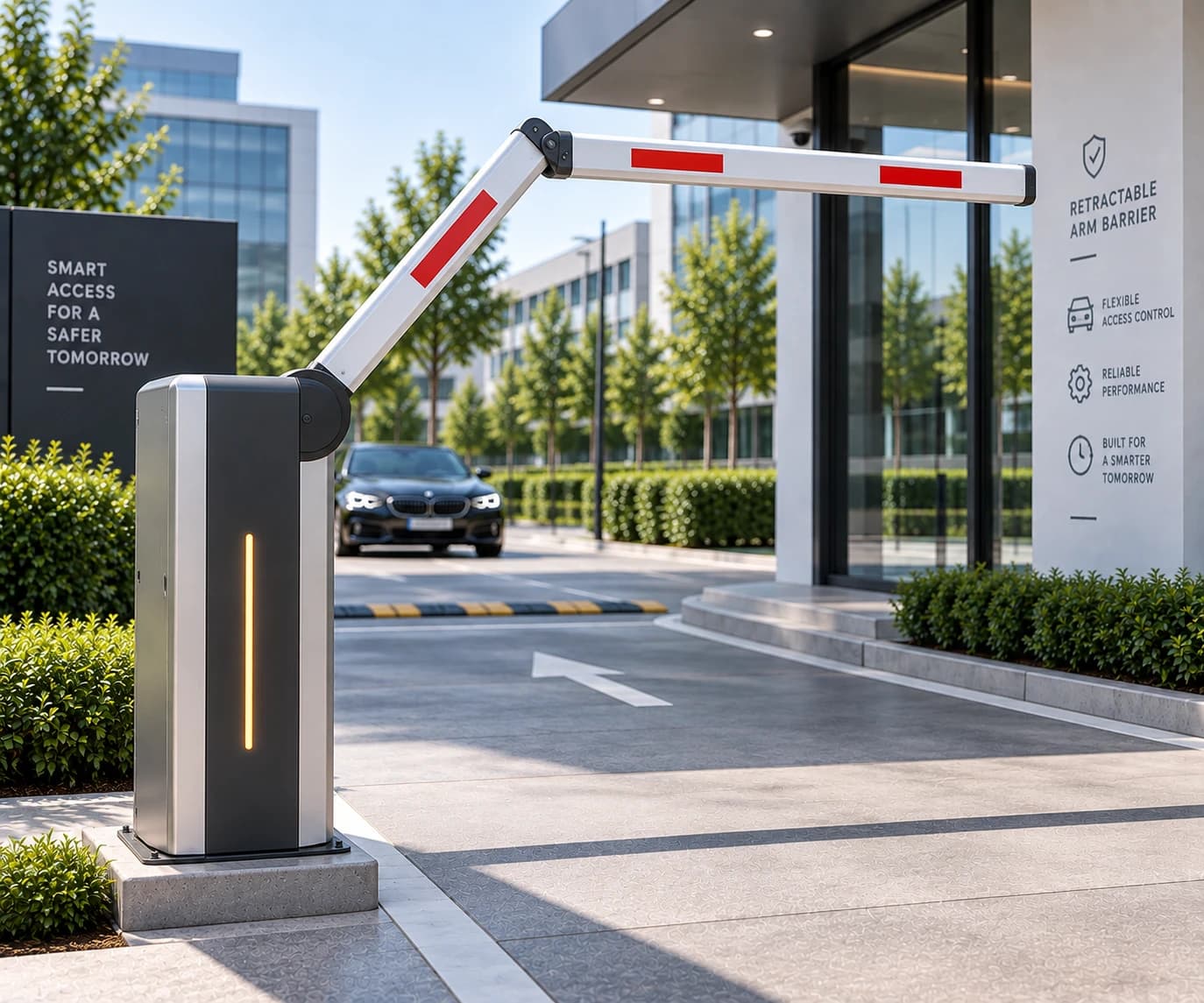
A retractable barrier closes a line that only needs to exist some of the time. The barrier folds into a short stack against the boundary when open, so nothing obstructs the route, and extends across the full width when the line has to be held.
03Variants
The same product, built for a different job. Where a specification depends on opening dimensions, selected profile, operating duty or site conditions, the final configuration is confirmed during technical assessment.
Motorised extension and retraction with a manual release, where the line opens and closes several times a day.
Hand-operated, for lines that change state once or twice a day on a shift pattern.
10Gallery

04Technical specifications
Technical data is shown first; features, applications, compatibility, installation, safety, ordering and downloads are a click away.
Only for products actually tested to an impact standard.
Not stated in the supplier documentation reviewed; confirmed against the model quoted.
EN 12453 applies to powered vehicle barriers where they form part of a gate installation.
| Boom length or barrier width | Closed width typically 3.5–30 m depending on model; retracts to a short stack against the boundary |
|---|---|
| Bollard diameter | Not applicable |
| Bollard height above ground | Not applicable |
| Foundation depth required | Site dependent; a level running surface is needed, with a guide track set into it on tracked models |
| Cabinet or body dimensions | Barrier height typically 1.0–2.5 m depending on model, 1.6 m being common; the drive is housed in the leading post |
| Opening time | Set by the width and the running speed; powered models run at around 17–19 m/min |
|---|---|
| Closing time | As opening time |
| Mean cycles between failure | Not published as a cycle count; supplier ratings refer to the running gear rather than the barrier |
| Impact resistanceOnly for products actually tested to an impact standard. | Not impact rated. A retractable barrier marks and holds a line; it is not a vehicle security barrier |
| Body material and finish | Stainless steel, brushed, or powder-coated aluminium alloy, depending on model |
|---|---|
| Boom or barrier material | Folding lattice in the same material as the posts |
| Drive mechanism | Powered models: motor in the leading post driving rubber-tyred wheels, trackless or on a single or double guide track; manual models are pushed by hand |
| Reflective marking and lighting | Warning lamp on the leading post; LED message display available on some models |
| Supply voltage | 220–230 V AC 50 Hz single phase on powered models |
|---|---|
| Power consumption | Motor typically 370–750 W depending on model and width |
| Battery backup | Not normally fitted; the barrier is released and moved by hand on power failure |
| IP ratingNot stated in the supplier documentation reviewed; confirmed against the model quoted. | Model dependent |
| Operating temperature | Typically -25 °C to +75 °C, depending on model |
| Activation devices | Remote control as standard on powered models, typically 30–50 m range; push button or gatehouse control through the control unit |
|---|---|
| Loop detectors | Not normally fitted; the line is opened and closed on a time or shift basis |
| Access system interface | Dry-contact input on the control unit, depending on model |
| Manual release | Clutch key releases the drive so the barrier can be moved by hand |
| Photocells | Infrared anti-collision sensing on the leading post, stopping the barrier around 30–40 cm from an obstacle |
|---|---|
| Ground loop safety | Not applicable |
| Behaviour on power failure | Stops in place; released by the clutch key and moved by hand |
| Product standardEN 12453 applies to powered vehicle barriers where they form part of a gate installation. | Powered folding barriers fall under the powered-gate safety framework; the supplied unit's own documentation applies |
|---|---|
| Conformity marking | As applicable to the supplied unit and market |
| Certificate reference | Supplier documentation for the supplied model; available on request |
Final specification depends on door dimensions, configuration, operating environment and project requirements.
FAQ
Engineering enquiry
Five answers about the opening are usually enough for us to come back with a configuration and a price.

Get in touch
If it is easier to describe the opening than to write it down, call or message us and we will work through it with you.