



Access Control
Tripod Turnstiles
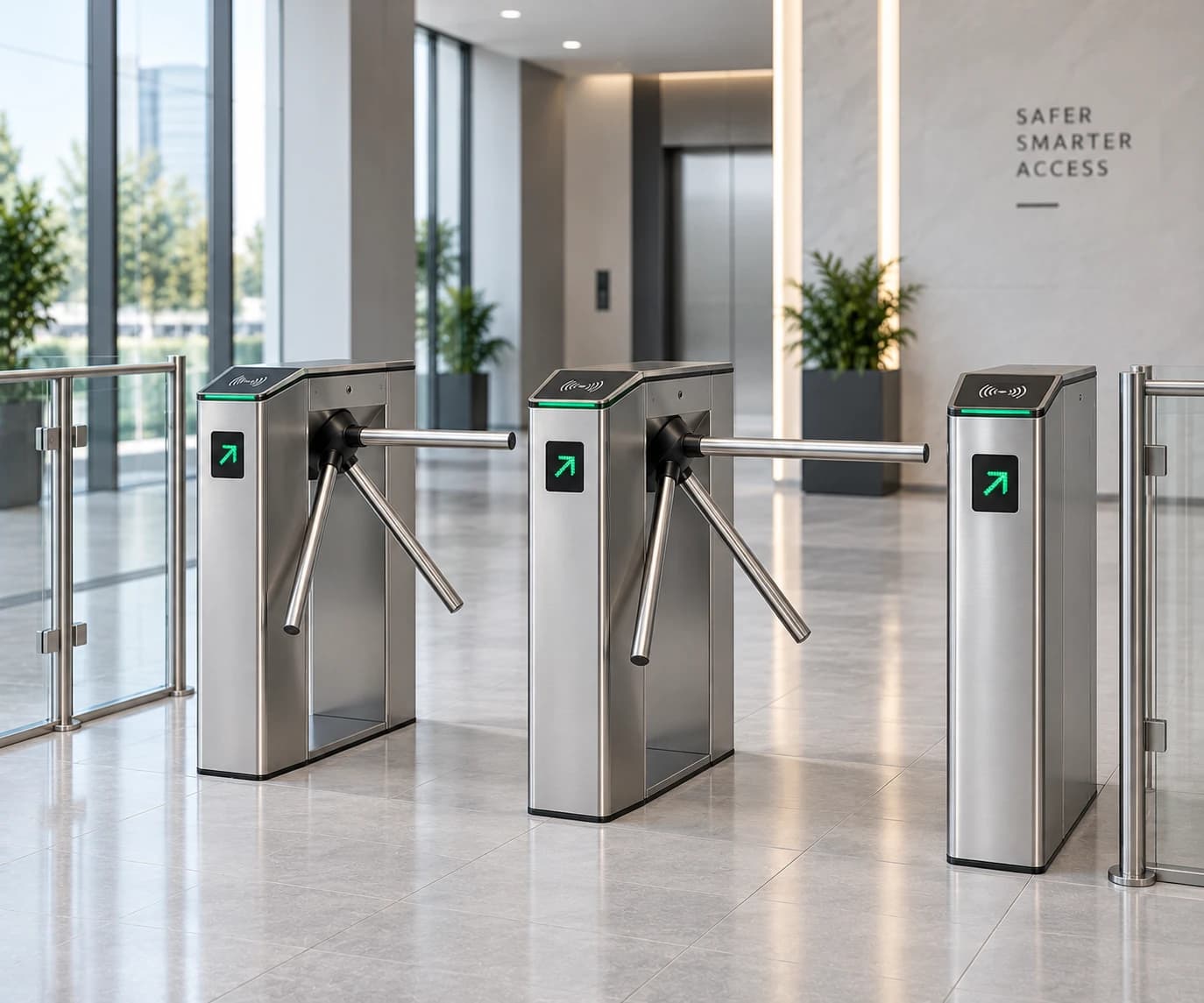
Tripod turnstiles for controlled pedestrian entry at gate houses, staff entrances and transit points, with drop-arm emergency release.
2 configurations
Explore product
Access Control & Vehicle Barriers/Pedestrian Access Control
An unclimbable line where nobody is watching.
 Access Control
Key specifications
* Final specification depends on door dimensions, configuration, operating environment and project requirements.
01Overview
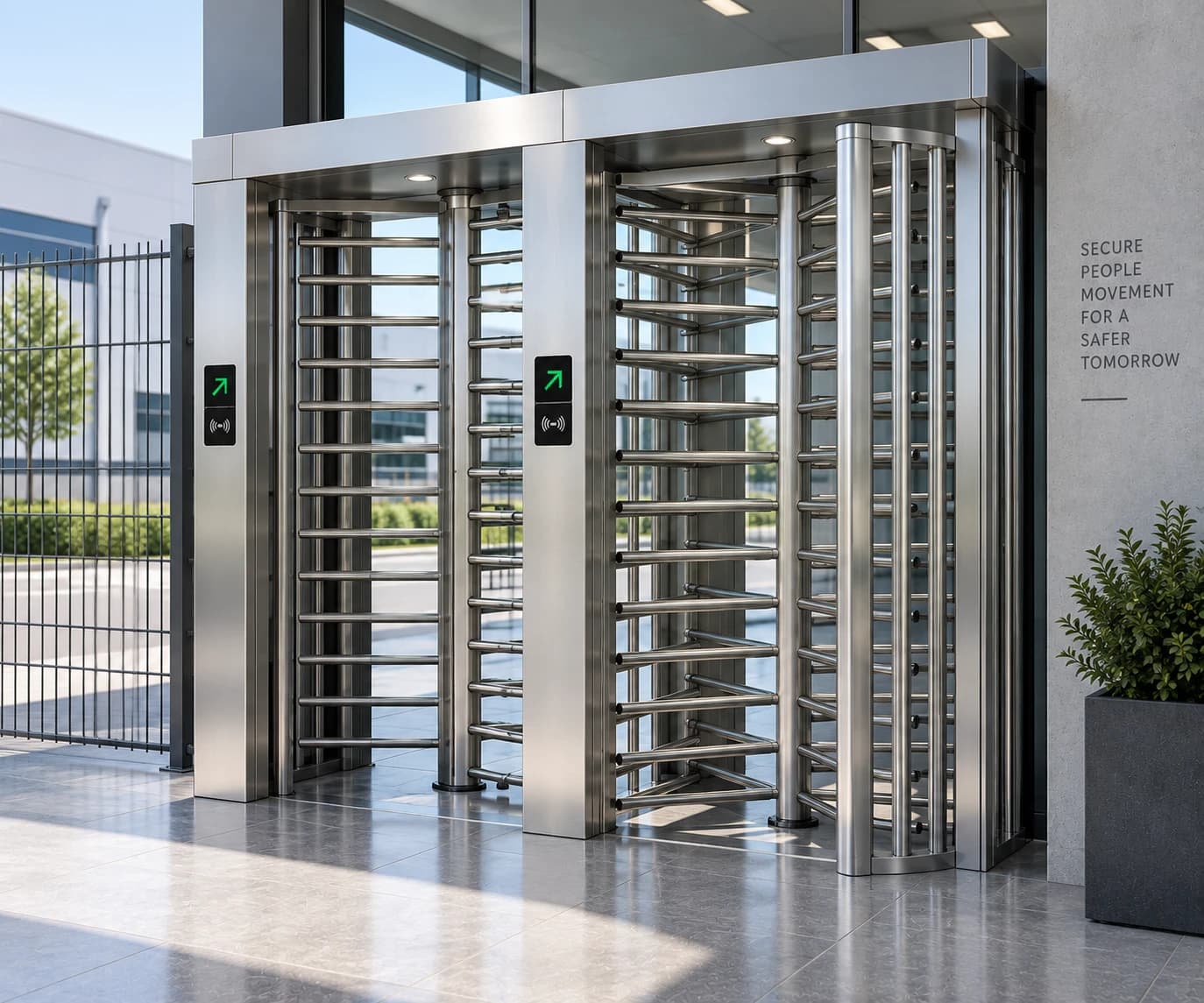
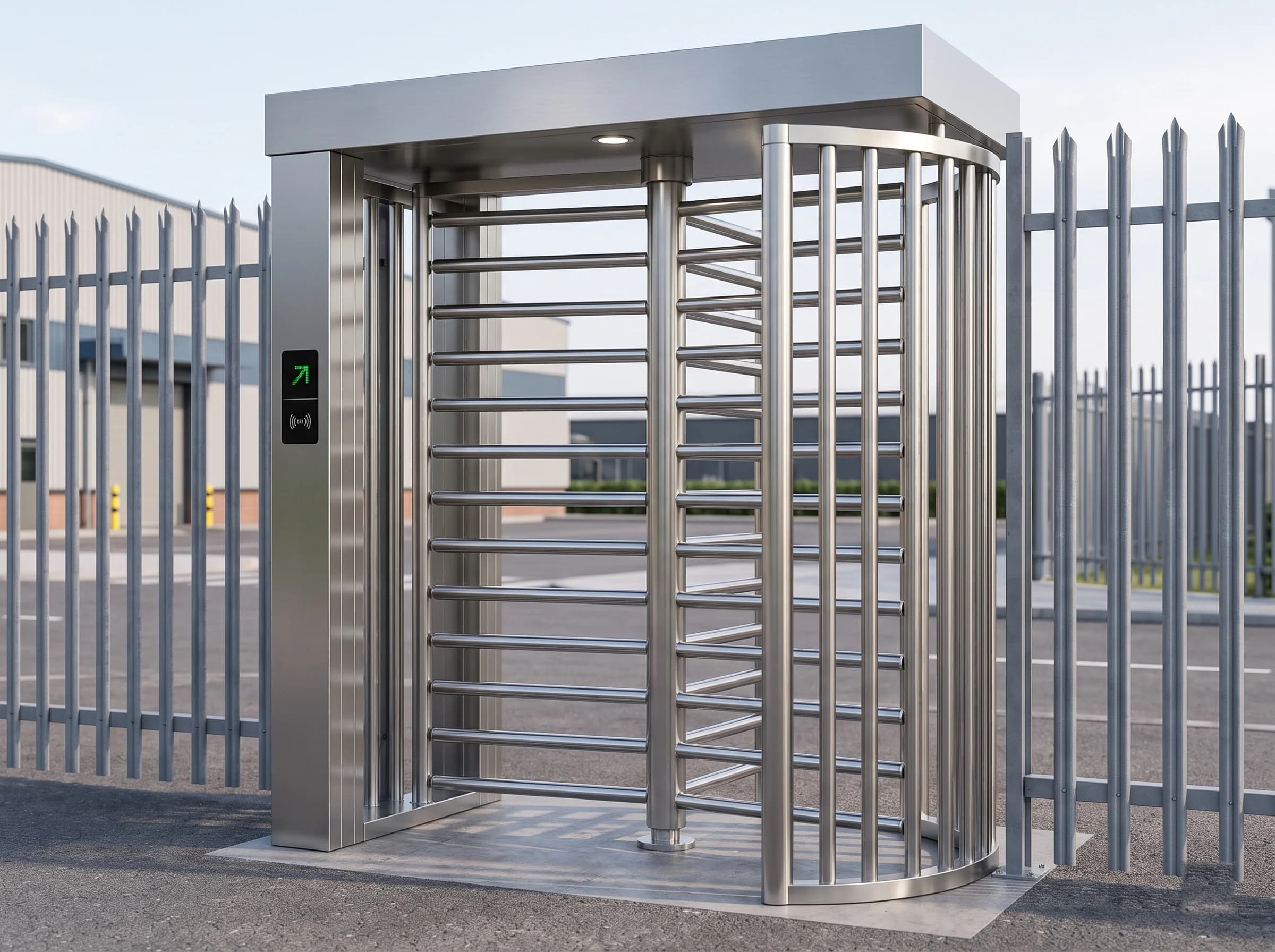
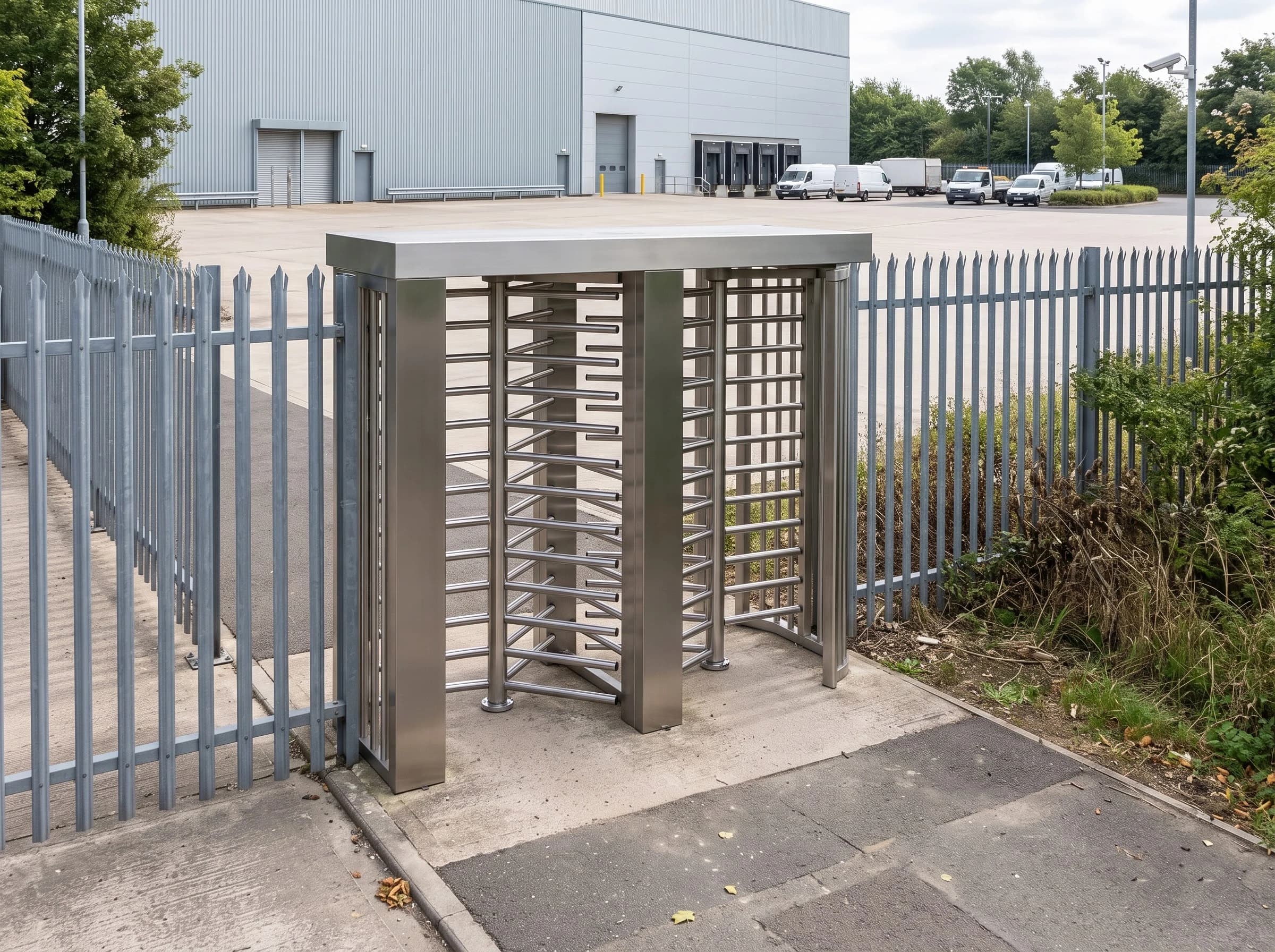
A full height turnstile extends the rotor from floor to head height inside a cage, so there is no over and no under. That makes it the correct choice at an unsupervised perimeter point, where a waist-height unit could simply be stepped over.
03Variants
The same product, built for a different job. Where a specification depends on opening dimensions, selected profile, operating duty or site conditions, the final configuration is confirmed during technical assessment.
One controlled passage in a self-contained frame. The usual arrangement at a secondary perimeter point.
Two rotors in a shared frame, typically set for entry and exit, where flow justifies both in one footprint.
10Gallery
04Technical specifications
Technical data is shown first; features, applications, compatibility, installation, safety, ordering and downloads are a click away.
At least one wide lane is normally required per bank.
Escape route behaviour is set by the building's fire strategy.
| Clear passage width | Typically 550–700 mm per lane depending on model and rotor configuration |
|---|---|
| Accessible lane widthAt least one wide lane is normally required per bank. | Provided by a separate full-height swing gate alongside the turnstile, sized to the accessibility requirement |
| Housing length | Typically 1,200–1,700 mm for a single lane; up to about 2,400 mm for a double lane |
| Housing width | Typically 1,400–1,600 mm for a single lane; around 2,400 mm for a double interlocking lane |
| Housing height | Typically 2,300–2,400 mm overall, giving about 2,100 mm passage height |
| Throughput | Not published by the manufacturers reviewed; set by the reader response and the user, and lower than a tripod because the user walks the full rotation |
|---|---|
| Opening time | Unlocks on a valid read; the user pushes the rotor through |
| Closing time | Re-locks after one 120° or 90° rotation |
| Mean cycles between failure | Manufacturer ratings of around 1,000,000 cycles, depending on model |
| Housing material and finish | Galvanized and painted steel as standard; AISI 304 or 316 stainless steel for outdoor and coastal sites |
|---|---|
| Arm or wing material | Steel or stainless steel rotor arms, typically about 600 mm long and 38 mm diameter |
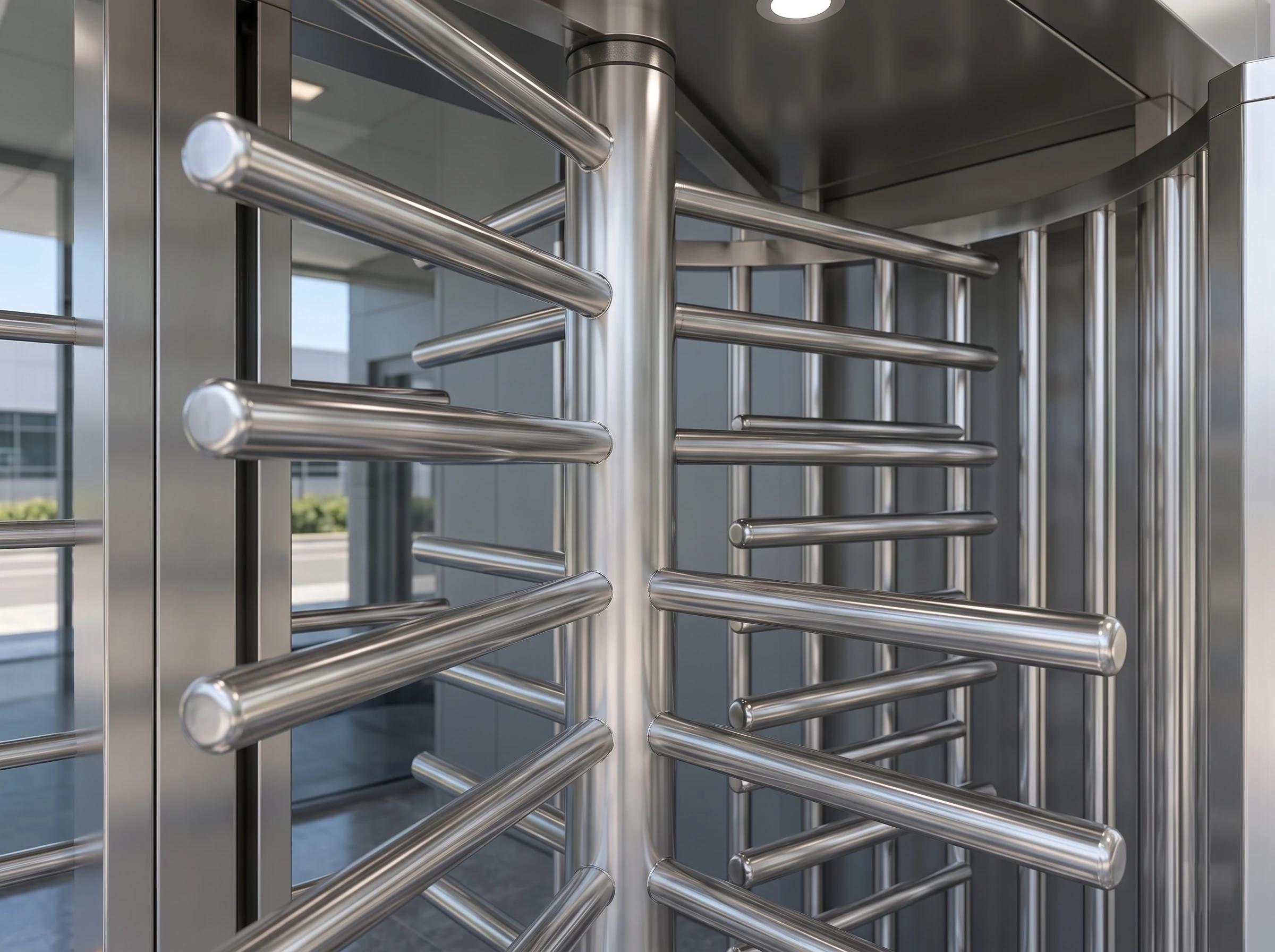
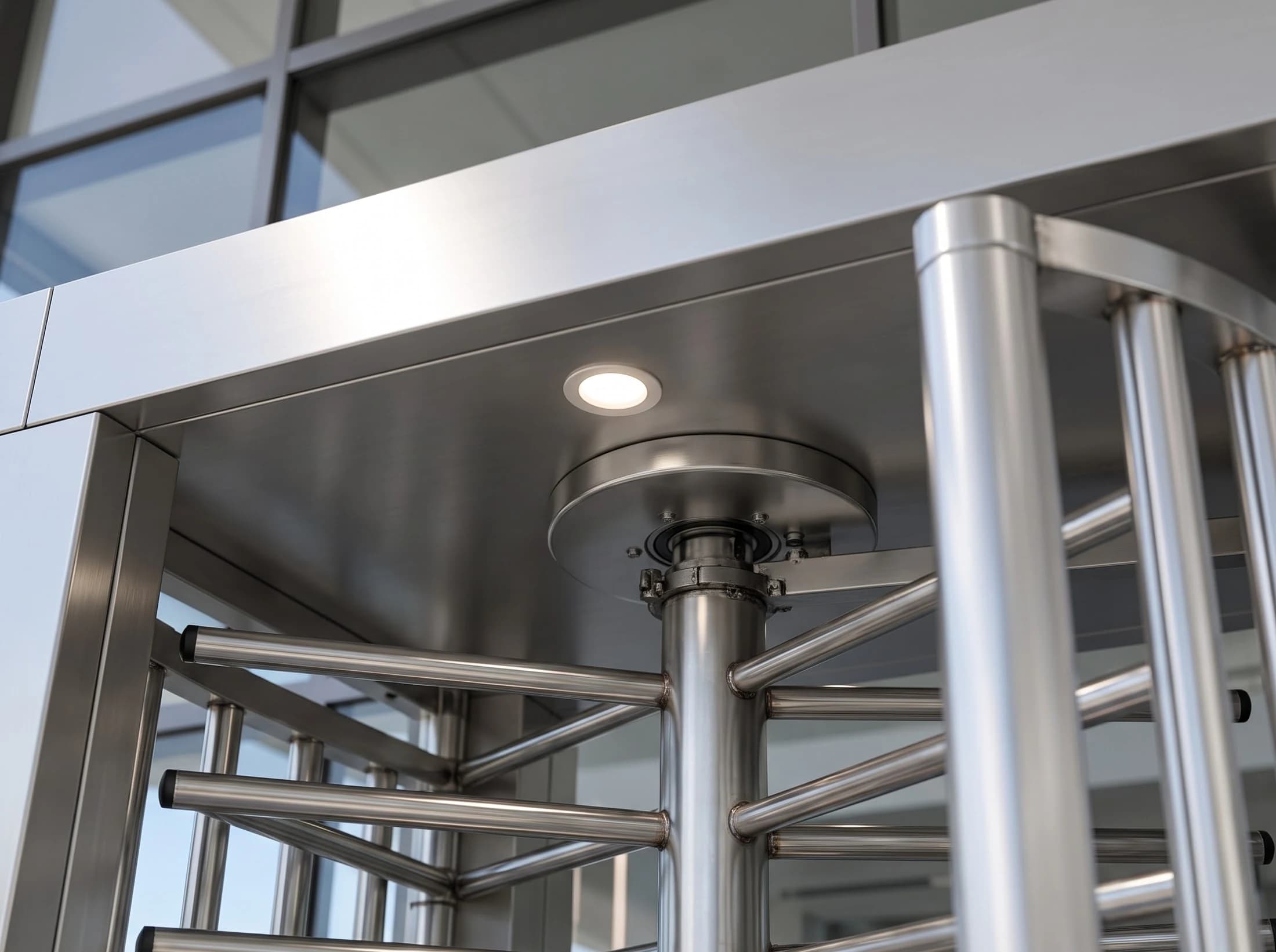
| Mechanism | Manually pushed rotor with 3 arms at 120° or 4 arms at 90°, electromagnetically locked in each position, with a damper for controlled rotation |
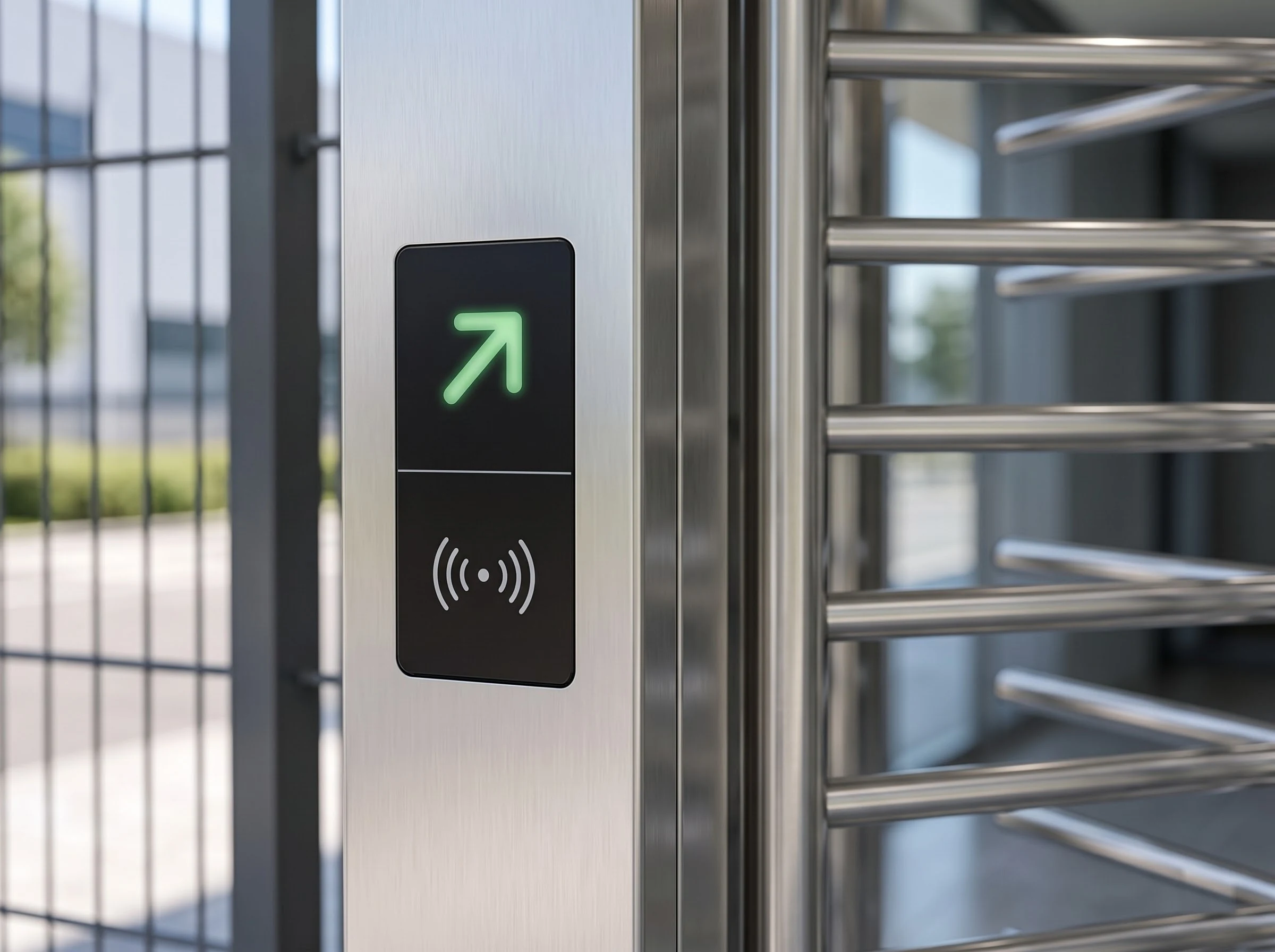
| Reader mounting provision | Reader box or support post on the housing for each direction |
| Supply voltage | 230 V AC single phase 50/60 Hz, depending on model |
|---|---|
| Power consumption | Low; typically 50–70 W maximum per rotor |
| IP rating | Typically IP43–IP44 depending on model |
| Operating temperature | Typically -10 °C to +50 °C, depending on model |
| Indoor or outdoor | Indoor or outdoor; the standard product is intended for site perimeters and yard gates |
| Reader interface | Dry-contact input per direction from any access control reader; CAN bus or serial interface on some models |
|---|---|
| Signal type | Volt-free contacts for passage request and passage confirmation |
| Direction control | Bidirectional, with each direction independently free, controlled or locked |
| Indicators and counting | Traffic-light indicators or LED pictograms per direction; passage counting through the controller |
| Behaviour on power failure | Selectable per model: fail-safe, with the rotor free to turn, or fail-secure, with the rotor locked |
|---|---|
| Behaviour on fire alarm | Set by the building's fire strategy; an emergency input unlocks the rotor for exit where required |
| Emergency release | Manual release kit on some models; fail-safe configuration for escape routes |
| Obstruction and tailgate detection | Anti-passback mechanism prevents reverse rotation once a passage has started; improper-transit alarm on some models |
| Product standardEscape route behaviour is set by the building's fire strategy. | No single product standard governs turnstiles; escape-route behaviour is set by the building's fire strategy and the supplied unit's own documentation applies |
|---|---|
| Conformity marking | As applicable to the supplied unit and market |
| Certificate reference | Manufacturer's documentation for the supplied model; available on request |
Final specification depends on door dimensions, configuration, operating environment and project requirements.
FAQ
Engineering enquiry
Five answers about the opening are usually enough for us to come back with a configuration and a price.

Get in touch
If it is easier to describe the opening than to write it down, call or message us and we will work through it with you.