


Access Control
Flap Barriers
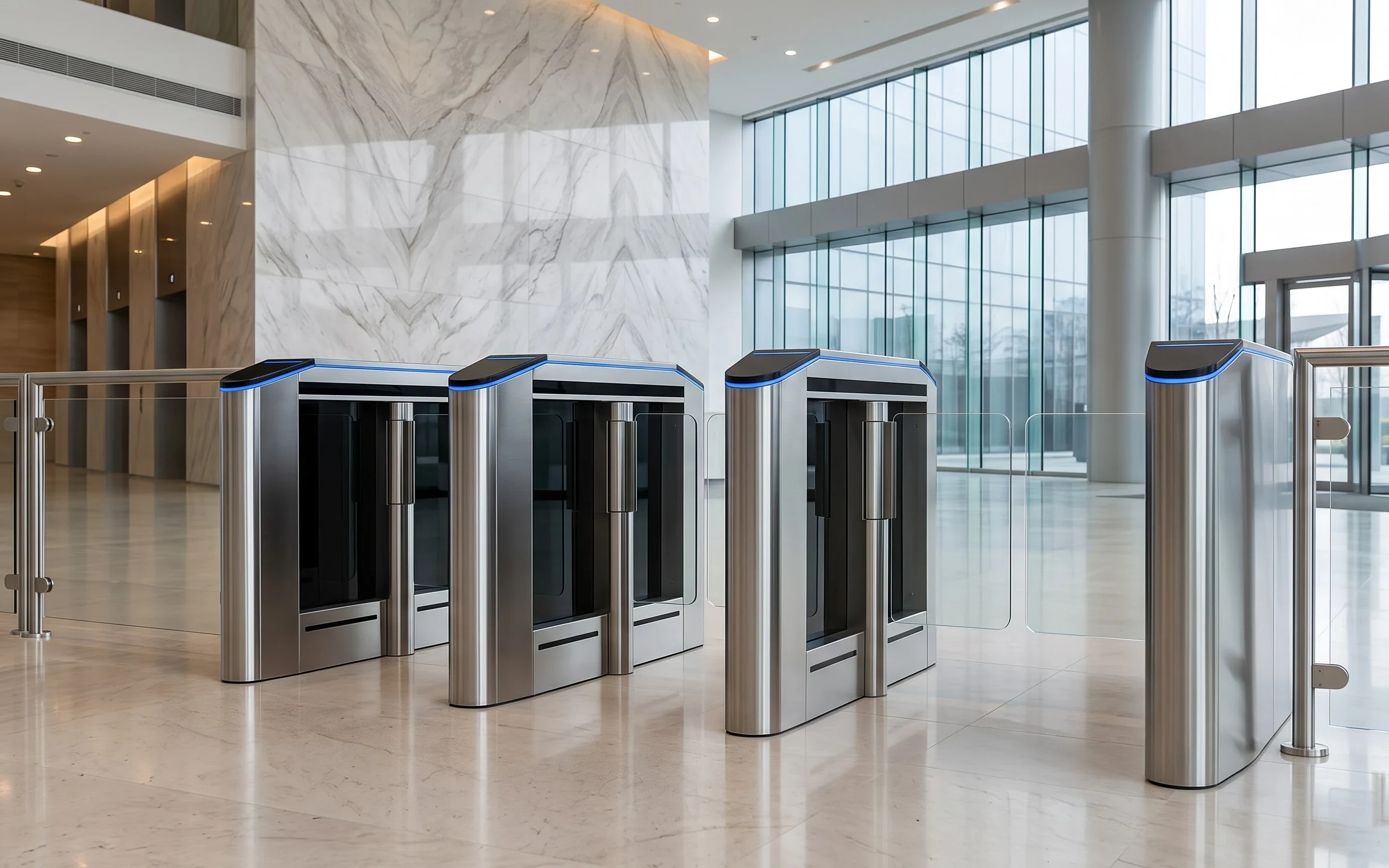
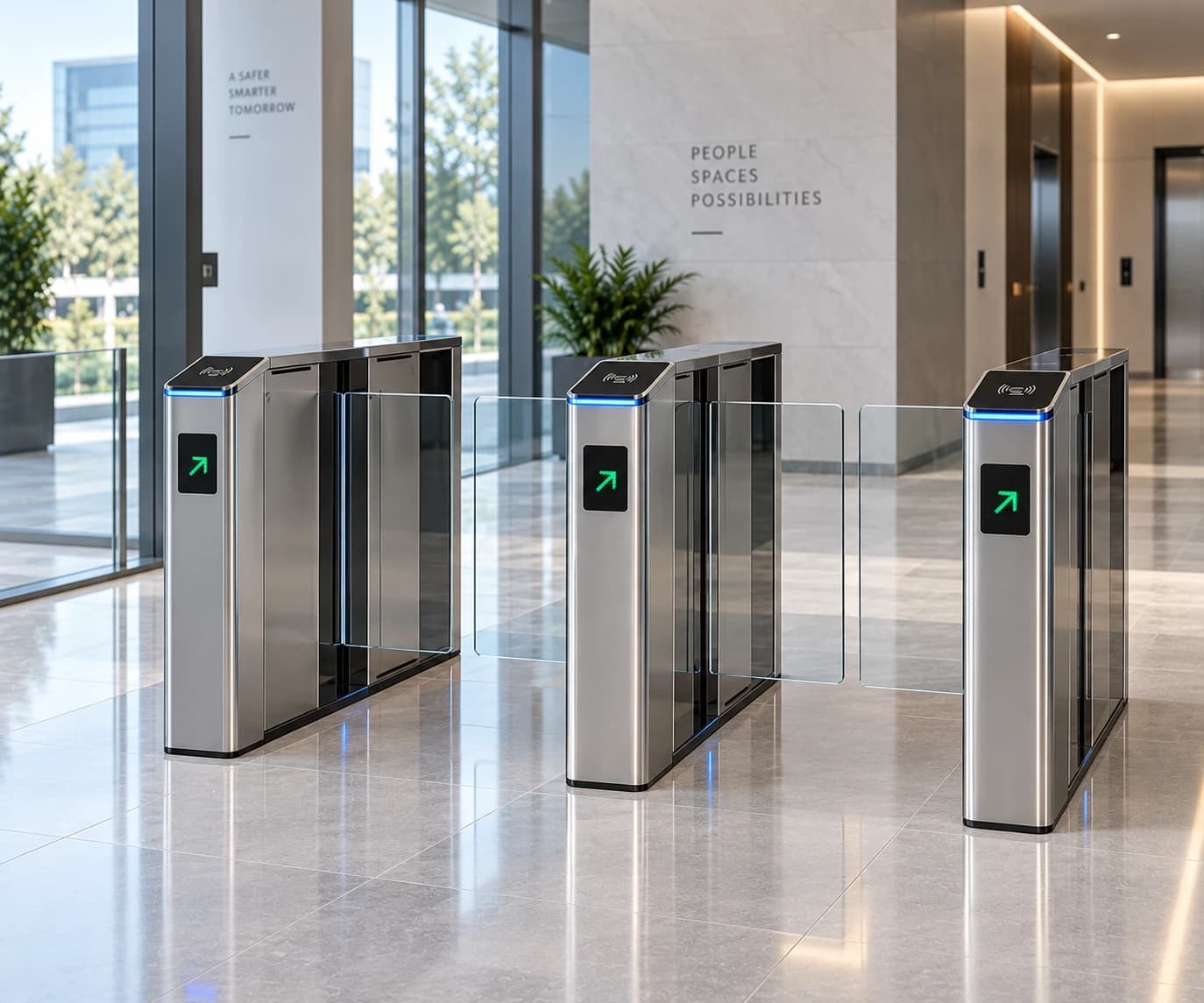
Flap barrier lanes with retracting acrylic or glass wings for corporate lobbies and high-footfall entrances, including wide accessible lanes.
2 configurations
Explore product
Access Control & Vehicle Barriers/Pedestrian Access Control
One person, one authorisation, enforced mechanically.
 Access Control
Key specifications
* Final specification depends on door dimensions, configuration, operating environment and project requirements.
01Overview
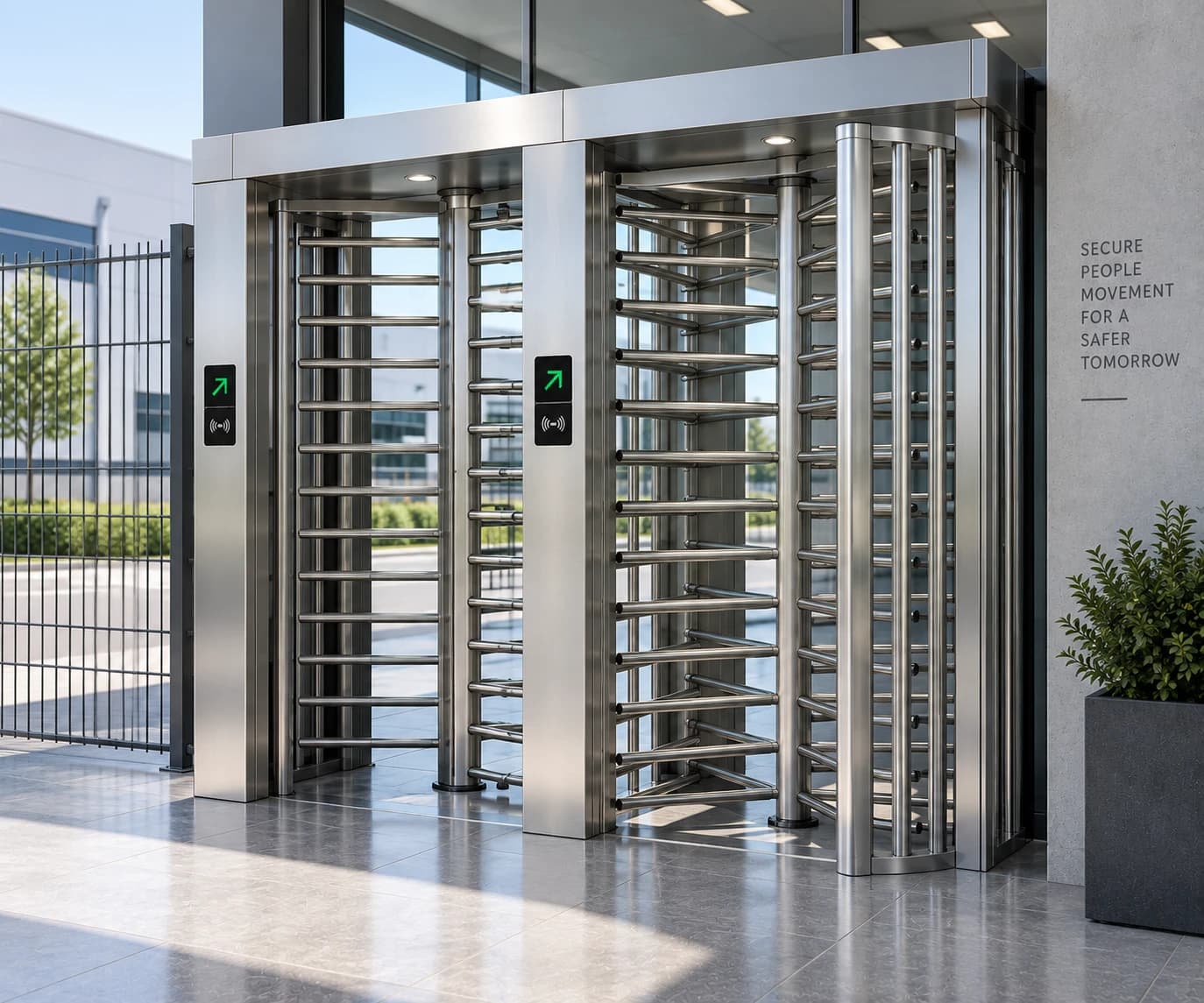
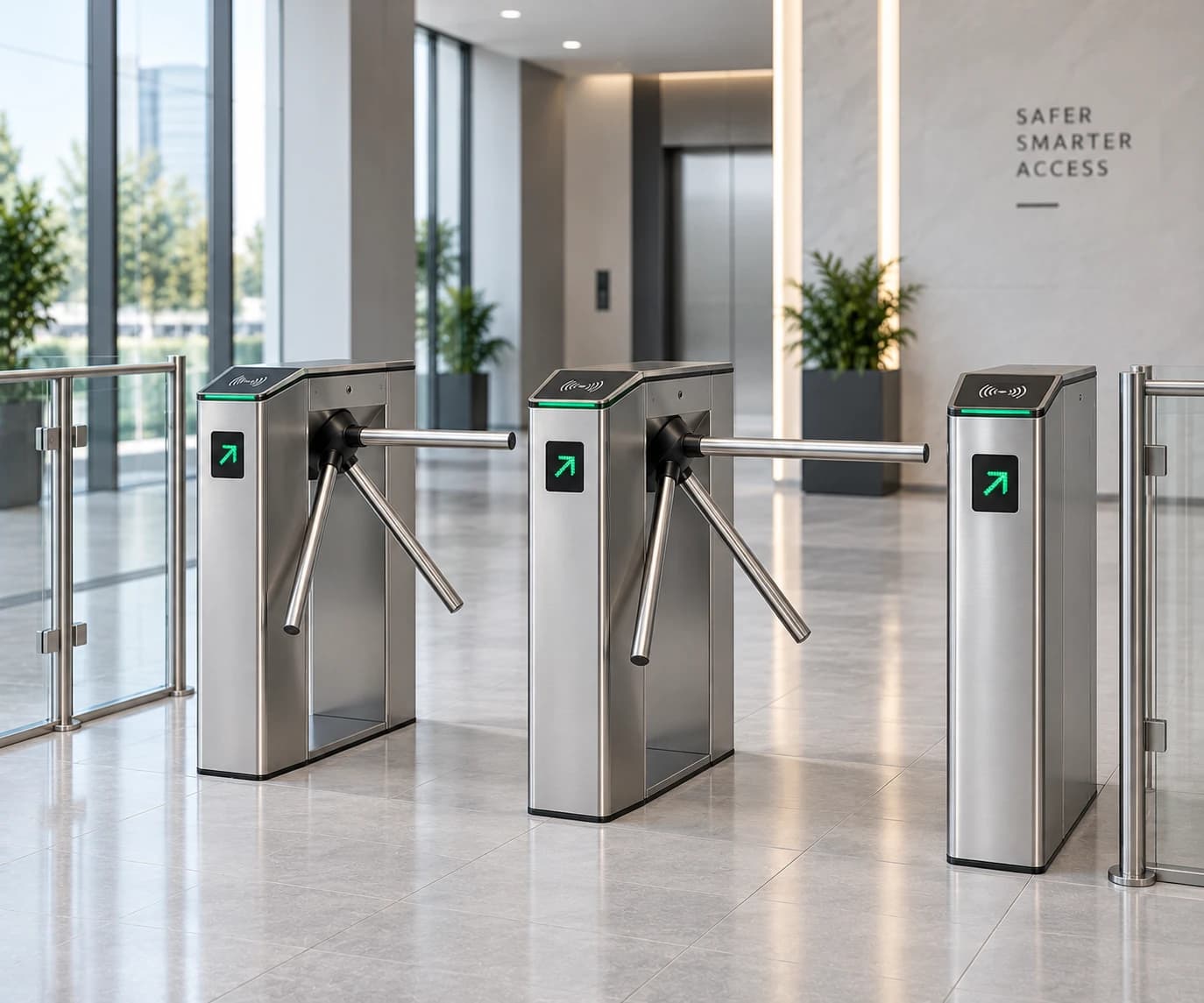
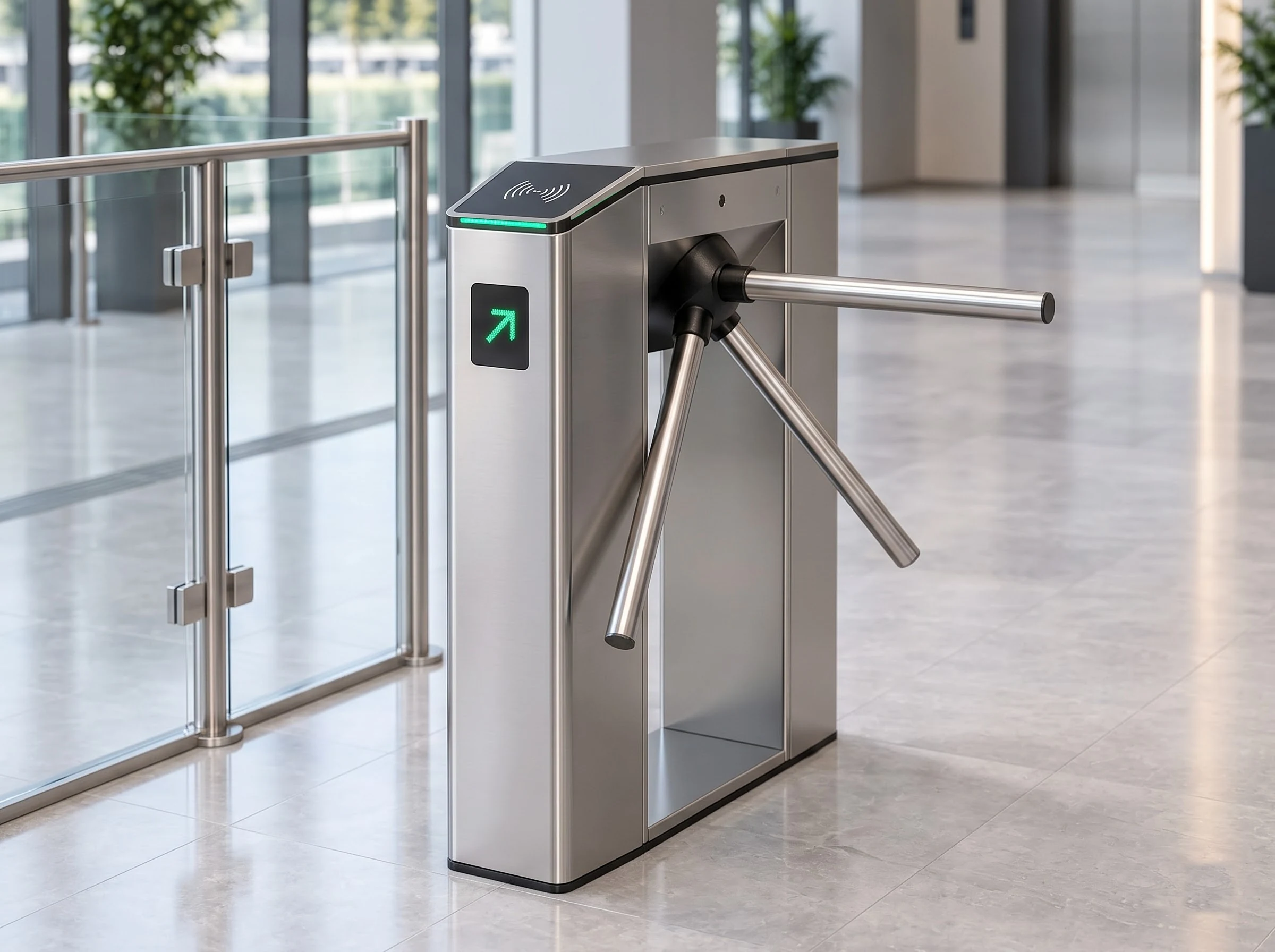
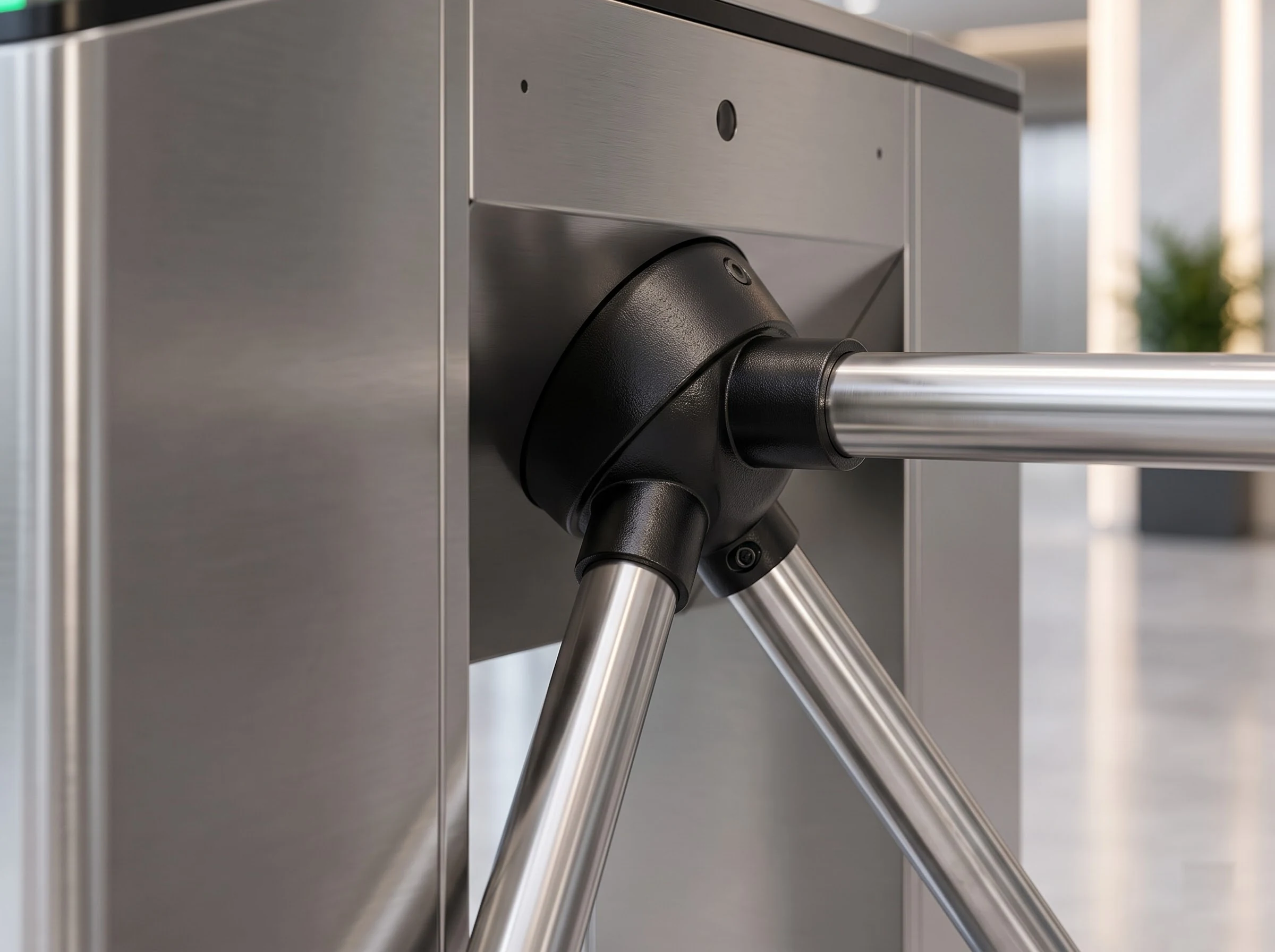
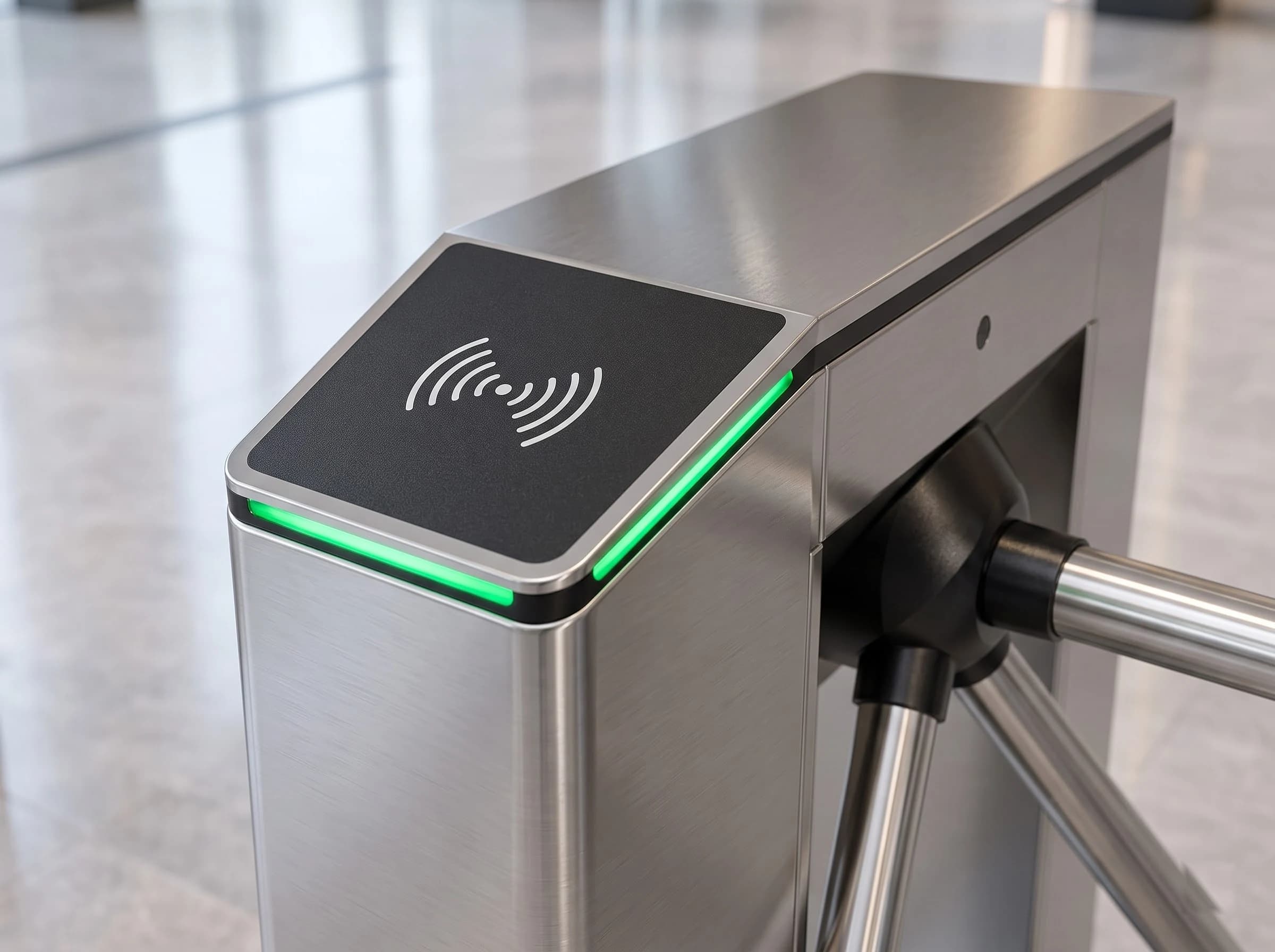
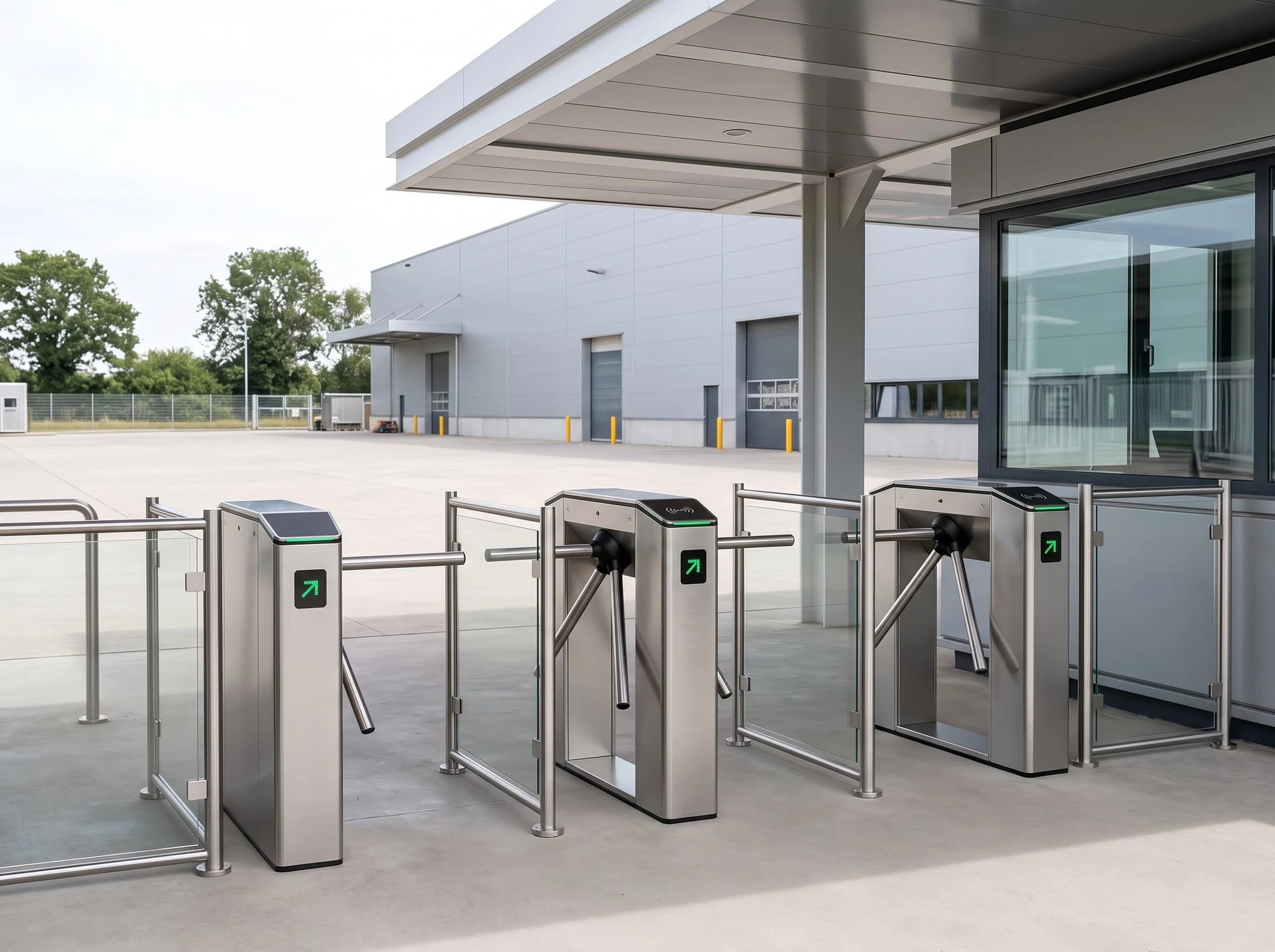
A tripod turnstile enforces single-person passage: three arms rotate one third of a turn per authorisation, so a valid credential admits exactly one person. It is the most compact and most economical way to make an access decision physical rather than advisory.
03Variants
The same product, built for a different job. Where a specification depends on opening dimensions, selected profile, operating duty or site conditions, the final configuration is confirmed during technical assessment.
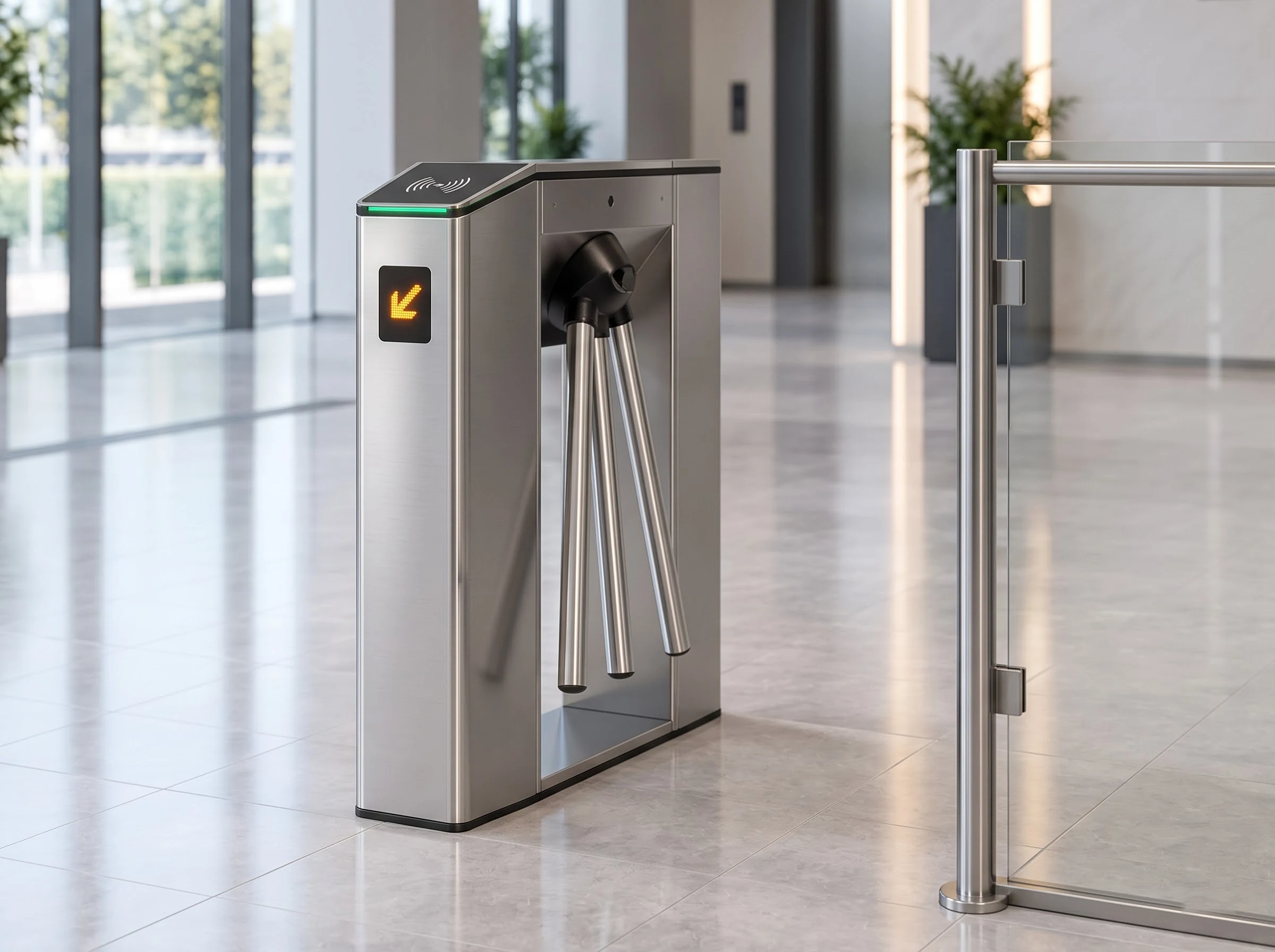
The arms fall clear on alarm or power failure, converting the lane into open escape width.
For external gate houses and washdown or coastal environments where a painted housing would not last.
10Gallery
04Technical specifications
Technical data is shown first; features, applications, compatibility, installation, safety, ordering and downloads are a click away.
At least one wide lane is normally required per bank.
Escape route behaviour is set by the building's fire strategy.
| Clear passage width | Typically 450–560 mm depending on model |
|---|---|
| Accessible lane widthAt least one wide lane is normally required per bank. | Provided by a separate swing gate alongside the bank, sized to the accessibility requirement |
| Housing length | Typically 700–1,300 mm depending on model |
| Housing width | Typically 180–240 mm depending on model |
| Housing height | Typically 920–1,000 mm; arm at about 750 mm |
| Throughput | Typically 20–25 persons/min, depending on the access control system's response and the users |
|---|---|
| Opening time | Unlocks on a valid read; the user turns the arm |
| Closing time | Re-locks after one rotation of the arm |
| Mean cycles between failure | Manufacturer ratings of up to 5,000,000 cycles with recommended maintenance, depending on model |
| Housing material and finish | Painted steel or stainless steel housing with stainless top cover; full AISI 304 or 316 stainless options for outdoor and coastal sites |
|---|---|
| Arm or wing material | AISI 304 stainless steel arms |
| Mechanism | Electromagnetically locked tripod with locking cams; unidirectional as standard, bidirectional as an option; motorised arm assistance on some models |
| Reader mounting provision | Space in the top cover and the housing for readers, keypads and collectors; integration kits per model |
| Supply voltage | 100–240 V AC single phase 50/60 Hz; 24 V DC control circuit |
|---|---|
| Power consumption | Typically under 20 W; up to around 85 W with motorised arms, and higher on some models |
| IP rating | Typically IP44 depending on model |
| Operating temperature | Typically -10 °C to +50 °C; heating options extend the range on some models |
| Indoor or outdoor | Indoor as standard; outdoor versions in stainless steel with a weather-rated housing |
| Reader interface | Dry-contact input per direction from any access control reader; optional IP connectivity on some models |
|---|---|
| Signal type | Volt-free contacts for passage request and passage confirmation |
| Direction control | Unidirectional as standard; bidirectional and free-exit configurations available |
| Indicators and counting | Red and green status lights with direction pictograms; passage count output on some models |
| Behaviour on power failure | Configurable per direction: free rotation, or a drop-arm that falls to clear the lane; the arm is reset by hand or by motor when power returns |
|---|---|
| Behaviour on fire alarm | Set by the building's fire strategy; a fire alarm input releases the lane where required |
| Emergency release | Drop-arm or free-rotation release on loss of power or on the emergency input |
| Obstruction and tailgate detection | Anti-return device prevents reverse rotation; jump-over and crawl-under detection available on some models |
| Product standardEscape route behaviour is set by the building's fire strategy. | No single product standard governs turnstiles; escape-route behaviour is set by the building's fire strategy and the supplied unit's own documentation applies |
|---|---|
| Conformity marking | As applicable to the supplied unit and market |
| Certificate reference | Manufacturer's documentation for the supplied model; available on request |
Final specification depends on door dimensions, configuration, operating environment and project requirements.
FAQ
Engineering enquiry
Five answers about the opening are usually enough for us to come back with a configuration and a price.
Get in touch
If it is easier to describe the opening than to write it down, call or message us and we will work through it with you.