
Entrance Automation
Automatic Sliding Glass Doors
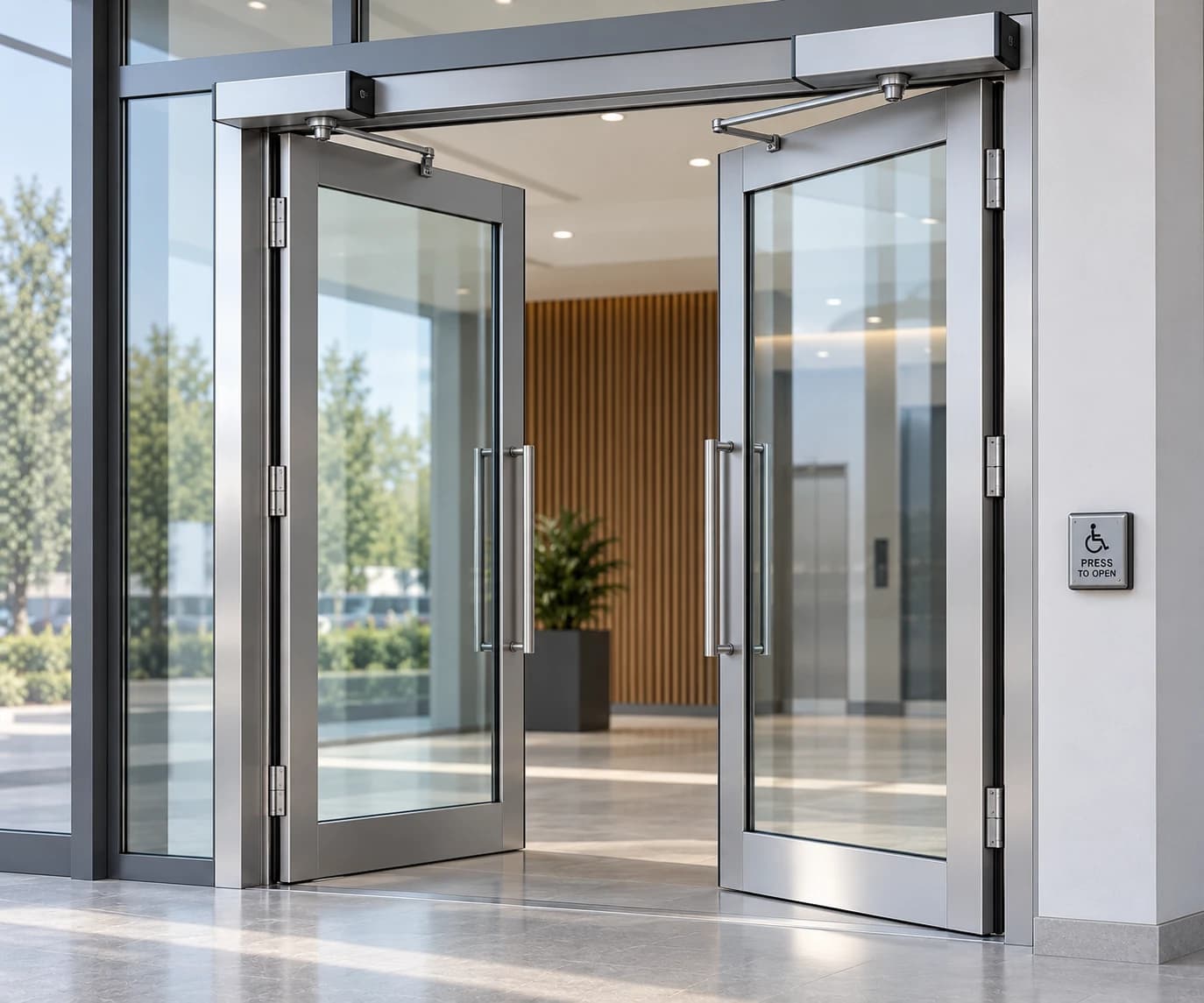
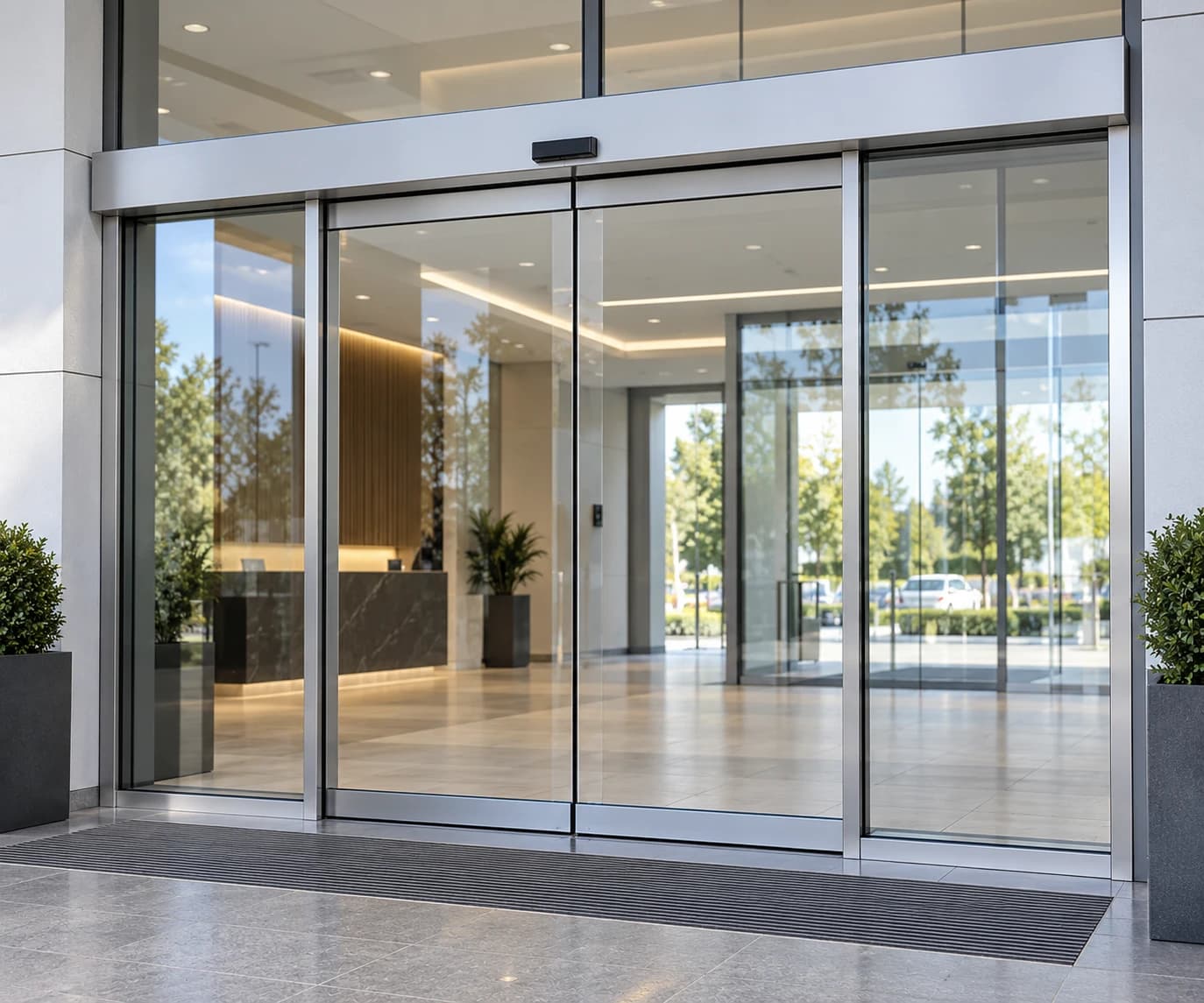
Sensor-operated sliding glass door systems for lobbies, retail and healthcare entrances, in single-leaf and bi-parting arrangements with defined egress behaviour.
4 configurations
Explore product
Entrance Automation/Hermetic & Cleanroom Doors
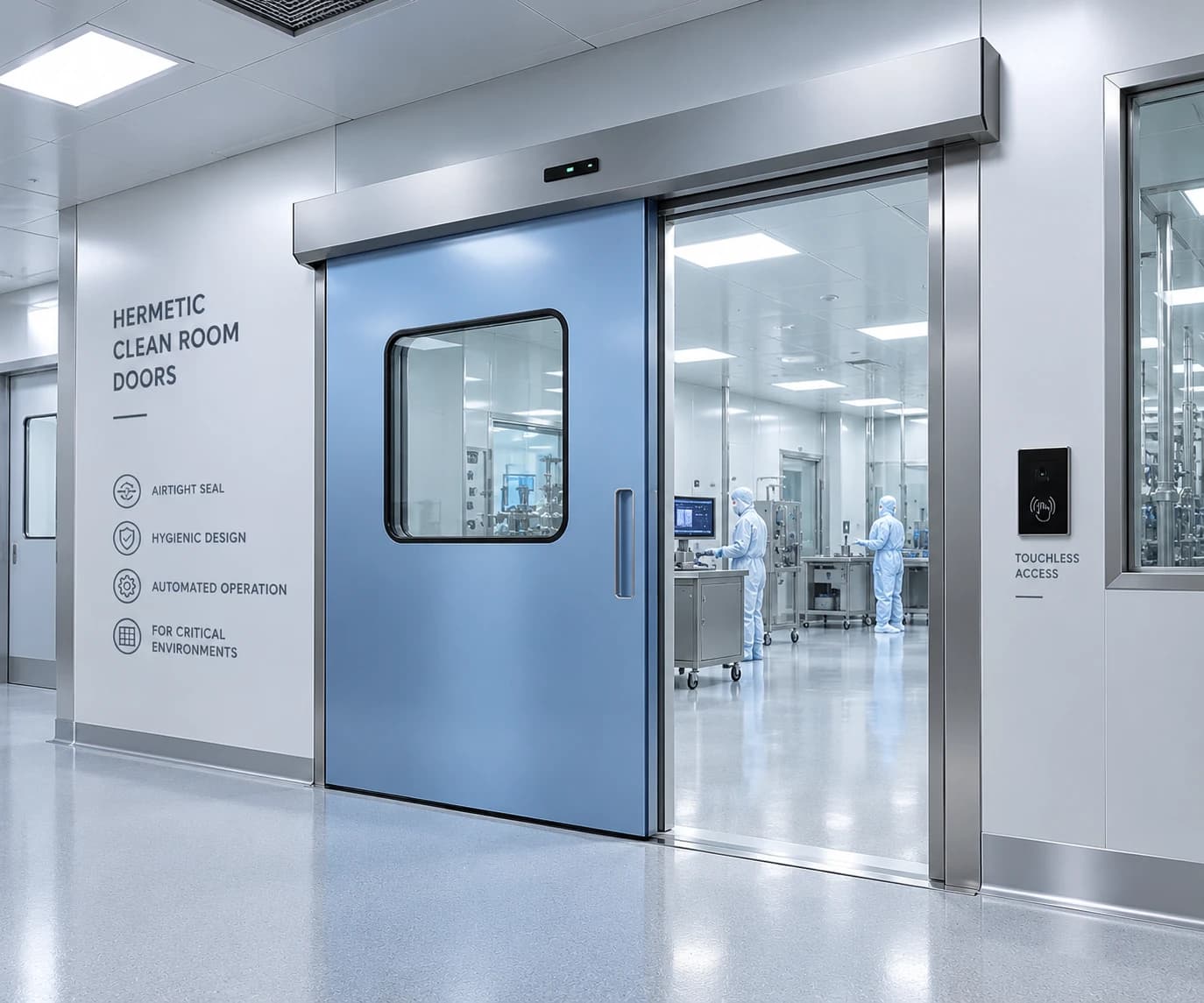
An opening that can hold a pressure differential and a classification.
 Entrance Automation
Key specifications
* Final specification depends on door dimensions, configuration, operating environment and project requirements.
01Overview
A hermetic door seals against its frame on all four edges as it closes, rather than simply meeting a stop. That is what allows the opening to sit in a wall separating two classified areas without breaking the pressure cascade that keeps the cleaner side clean.
03Variants
The same product, built for a different job. Where a specification depends on opening dimensions, selected profile, operating duty or site conditions, the final configuration is confirmed during technical assessment.
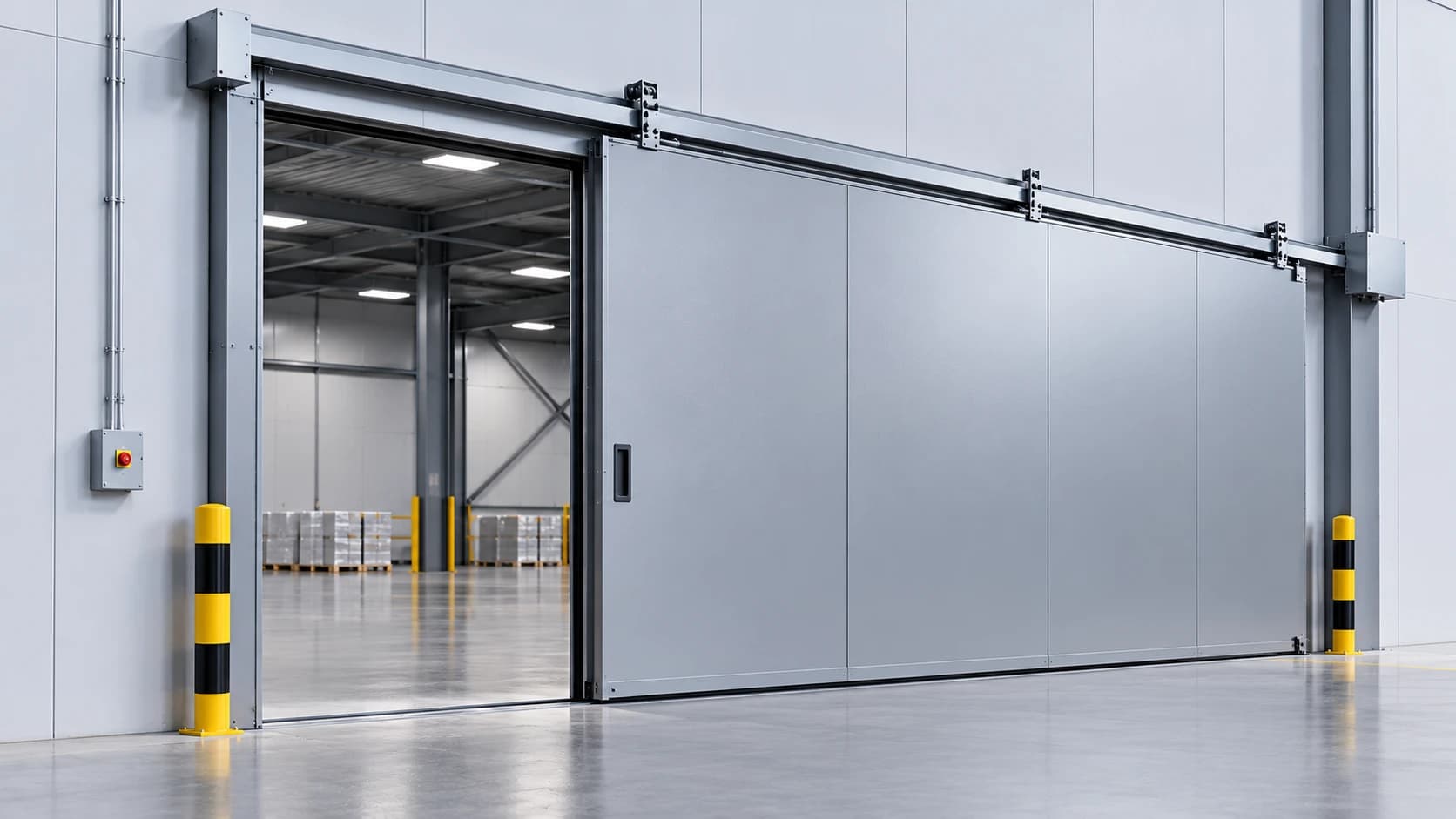
The standard arrangement for gowning rooms and personnel access between classified areas.
Two leaves for wider openings such as material and equipment transfer.
Two doors electrically interlocked so both are never open at once, with override defined against the escape strategy.
Lead-lined leaf where the room also requires radiation shielding, coordinated with the room shielding design.
10Gallery

04Technical specifications
Technical data is shown first; features, applications, compatibility, installation, safety, ordering and downloads are a click away.
Clear opening between finished reveals.
Space above the opening for the barrel, stack or track.
Per side, for guides and drive.
Single, bi-parting or telescopic.
EN 16005.
EN 16005 applies to power-operated pedestrian doorsets.
| Maximum clear widthClear opening between finished reveals. | Typically 700–1,800 mm single leaf and up to about 2,000 mm bi-parting, depending on the manufacturer |
|---|---|
| Maximum clear height | Set by the leaf construction; confirmed per project |
| Minimum headroom requiredSpace above the opening for the barrel, stack or track. | The operator header above the opening; depth and height depend on the operator |
| Minimum side room requiredPer side, for guides and drive. | Side room equal to the leaf width for the leaf to park against the wall; confirmed per project |
| Header depth and height | Operator dependent; the header carries the drive and the descending track that seals the leaf |
| Maximum leaf weight | Typically up to about 150 kg per leaf, depending on the operator |
| Opening speed | Adjustable on the operator; typically in the same range as a standard sliding door operator |
|---|---|
| Closing speed | Adjustable on the operator, with a slowed final travel as the leaf seals |
| Hold-open time | Adjustable on the operator; set to suit trolley and bed movement |
| Rated daily cycles | Continuous duty; operators are endurance tested by their manufacturers |
| Leaf arrangementSingle, bi-parting or telescopic. | Single or bi-parting sliding leaves, sealing on all four edges when closed |
|---|---|
| Glazing | Flush vision panel, double glazed and set level with the leaf face for cleaning; full-glass leaves available |
| Frame and track | Aluminium header with a track that drops the leaf onto its seals in the final travel; flush guide at the floor |
| Threshold detail | Flush threshold with a drop seal on the leaf; no floor rail across the opening |
| Finish | Antibacterial HPL laminate, stainless steel or lacquered aluminium leaf faces; lead-lined leaves for radiology |
| Operator type | Electromechanical sliding door operator with a DC motor driving a toothed belt |
|---|---|
| Rated motor power | Operator dependent; low-voltage DC drive |
| Supply voltage | 230 V AC single phase 50 Hz to the operator |
| Duty rating | Continuous automatic operation |
| Manual override | Leaf can be moved by hand on power failure |
| Mode selector | Programme switch with automatic, permanent open, one-way and off modes |
|---|---|
| Activation sensors | Touchless wave sensors, elbow or foot switches, push buttons or access control; radar detectors where hands-free approach opening is wanted |
| Presence sensors | Safety detectors covering the opening and the closing path of the leaf |
| Part-open width | Reduced opening width mode, set on commissioning |
| Interfaces | Volt-free inputs and outputs for access control, interlocking with an adjacent door, fire alarm and building management |
| Behaviour on power failure | Leaf free to move by hand; battery backup for automatic opening on operators fitted with it |
|---|---|
| Break-out leaves | Not normally fitted; the sealed leaf is opened by hand on power failure |
| Presence detection in the threshold | Safety detectors hold the leaf open while a person or trolley is in the opening |
| Escape route complianceEN 16005. | Where the door is on an escape route the operator and its backup opening are specified for that use; the supplied operator's declaration applies |
| Product standardEN 16005 applies to power-operated pedestrian doorsets. | Power-operated pedestrian doorsets fall under EN 16005; air permeability is tested by the door manufacturer to EN 1026 and classed to EN 12207, and the supplied doorset's own test documentation applies |
|---|---|
| Conformity marking | As applicable to the supplied doorset and market |
| Certificate reference | Door manufacturer's air-permeability test report and operator type-test documentation for the supplied model; available on request |
Final specification depends on door dimensions, configuration, operating environment and project requirements.
FAQ
Engineering enquiry
Five answers about the opening are usually enough for us to come back with a configuration and a price.

Get in touch
If it is easier to describe the opening than to write it down, call or message us and we will work through it with you.