


Rolling Shutters
Vision / Window Rolling Shutter
Solid curtains with defined vision and window sections, in standard, large-vision and mixed configurations, for showrooms and retail storefronts.
3 configurations
Explore product
Rolling Shutters/Perforated, Vision & Grille Curtains
A closed shutter you can see and breathe through.
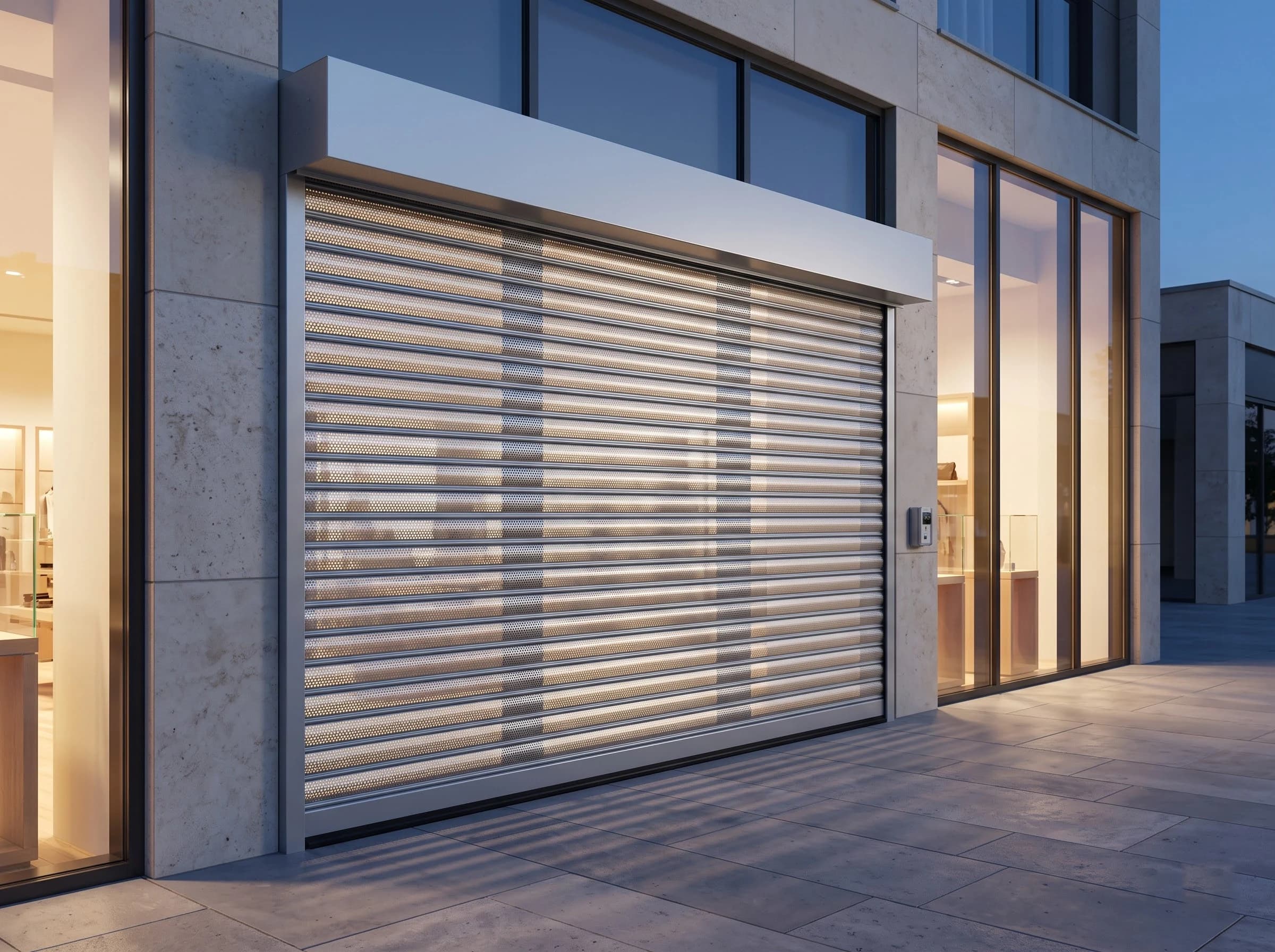 Rolling Shutters
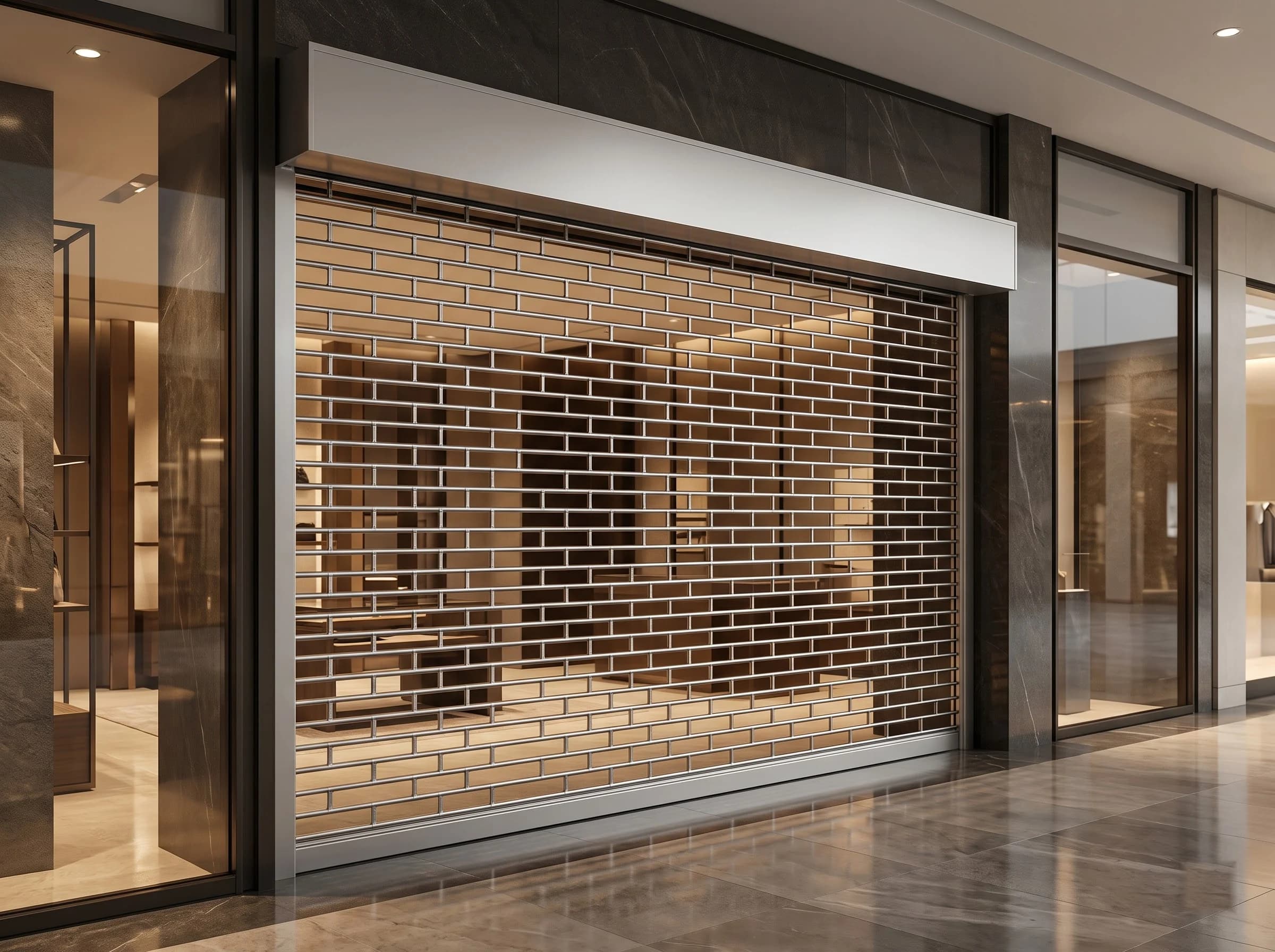
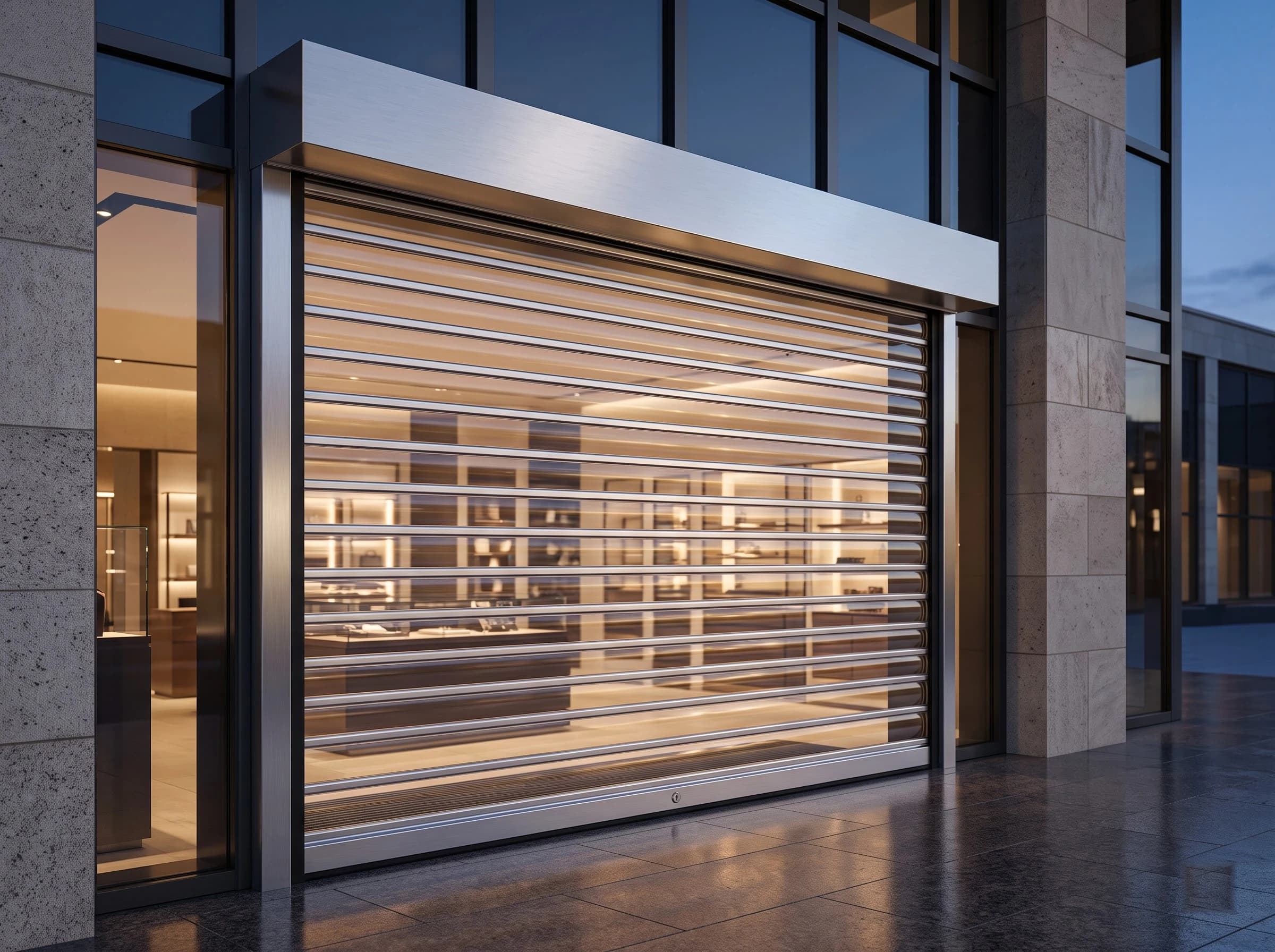
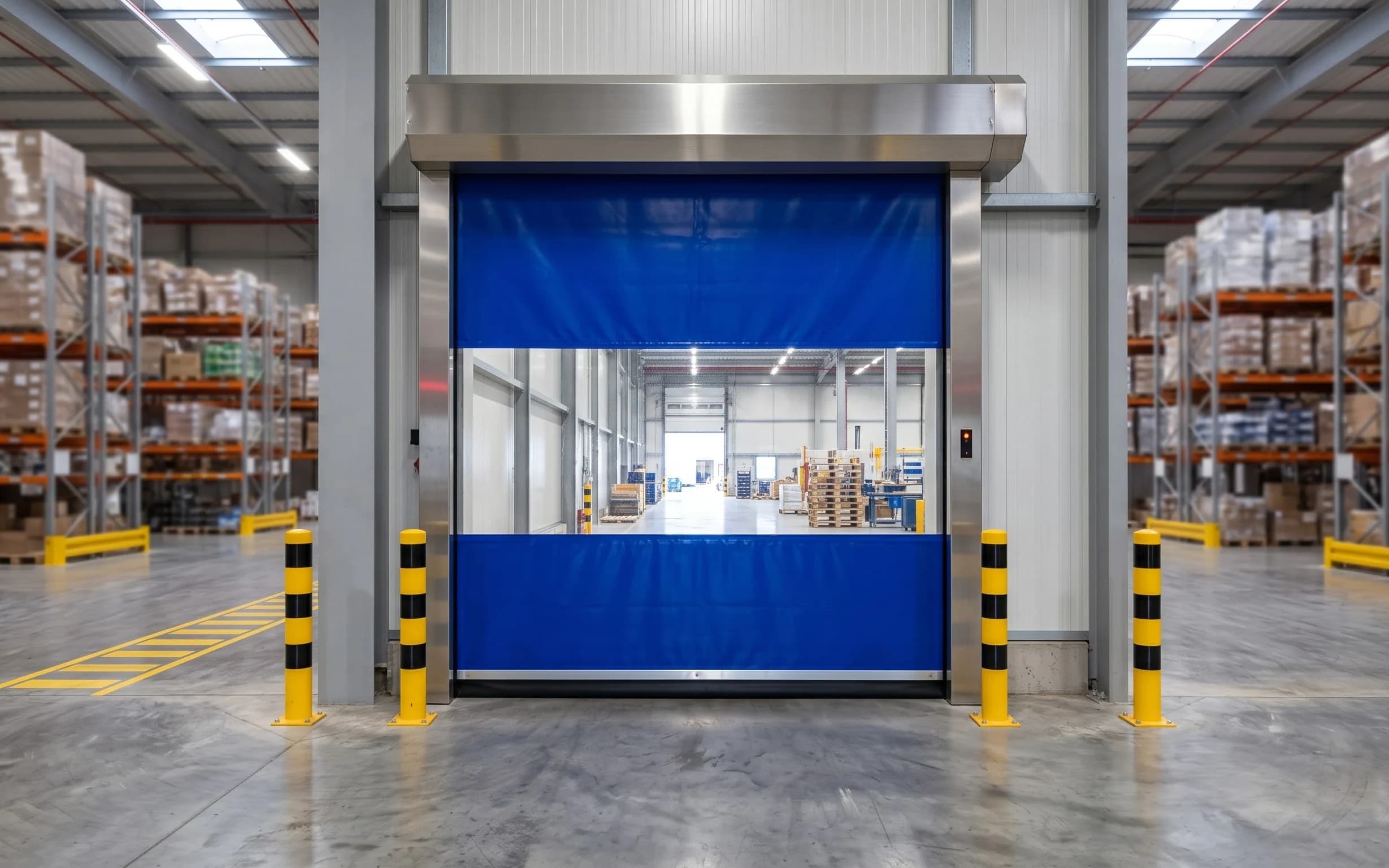
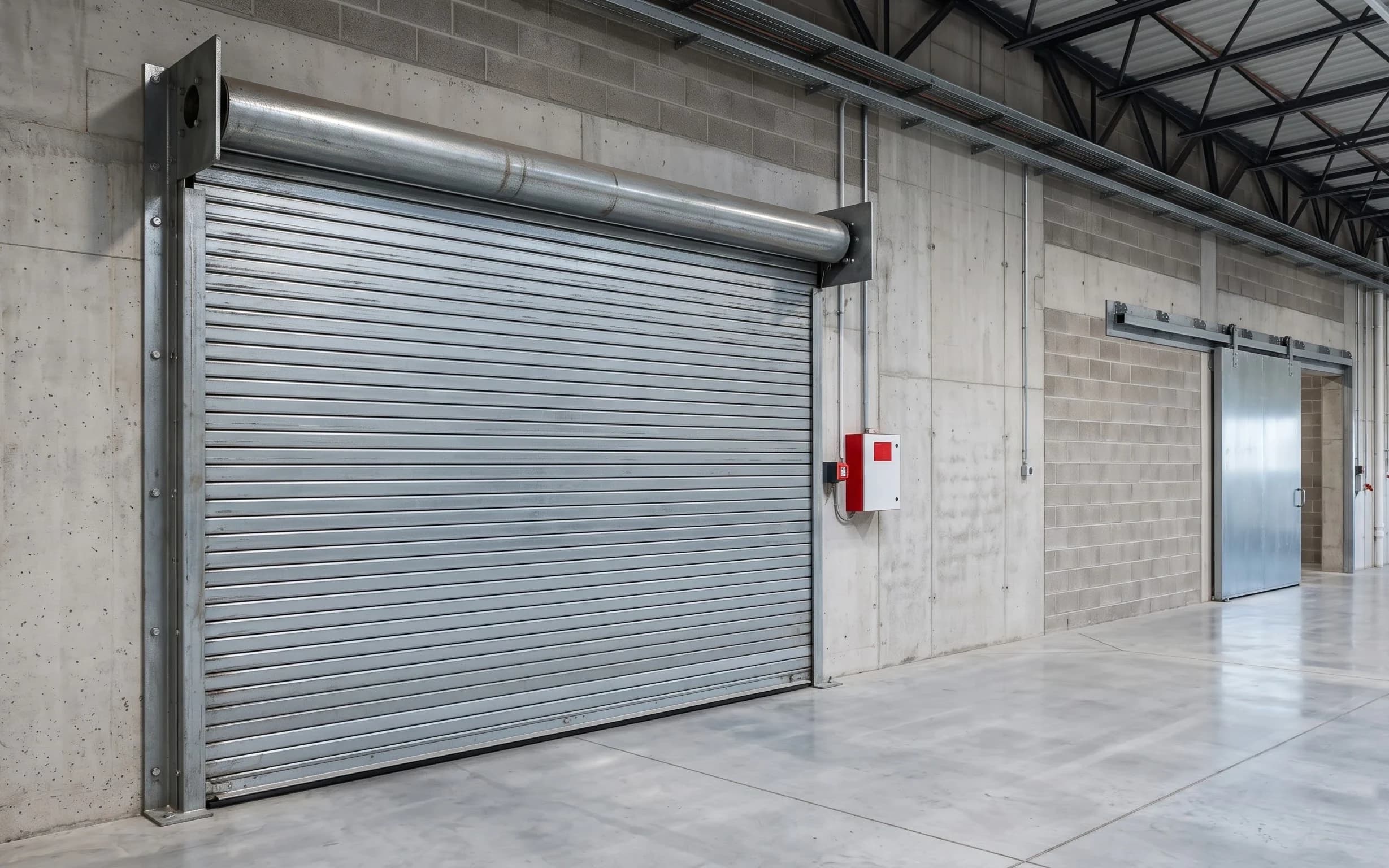
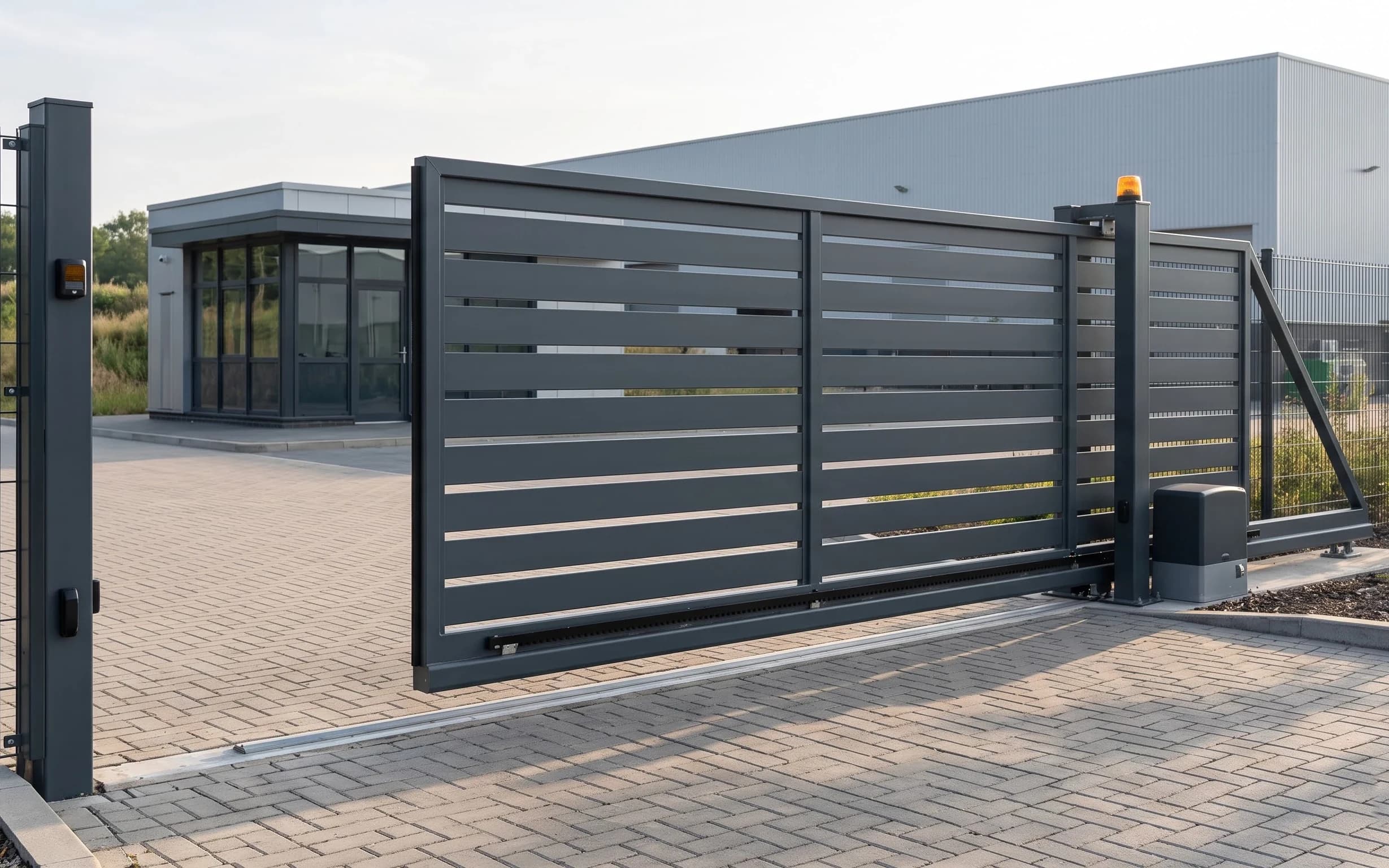
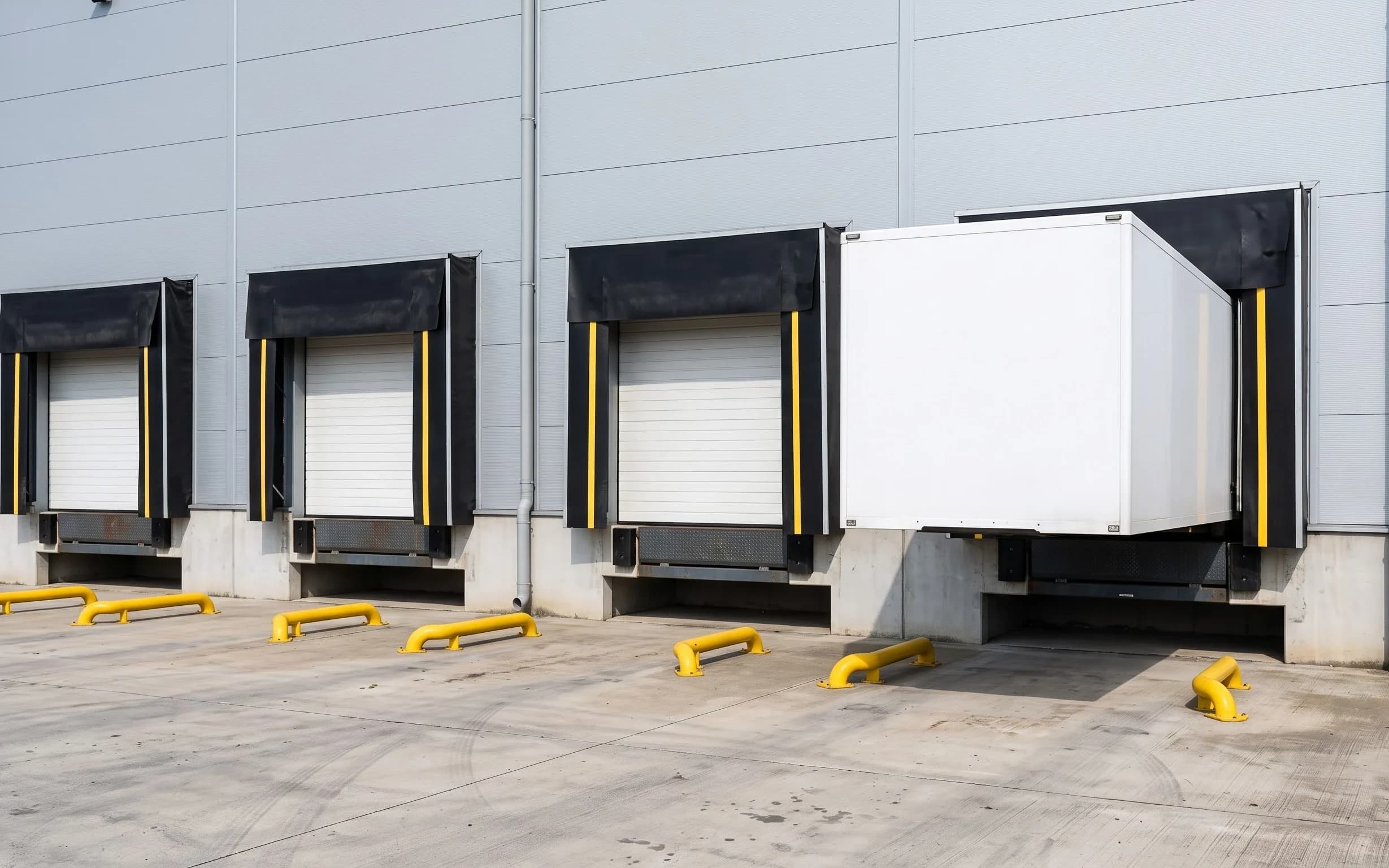
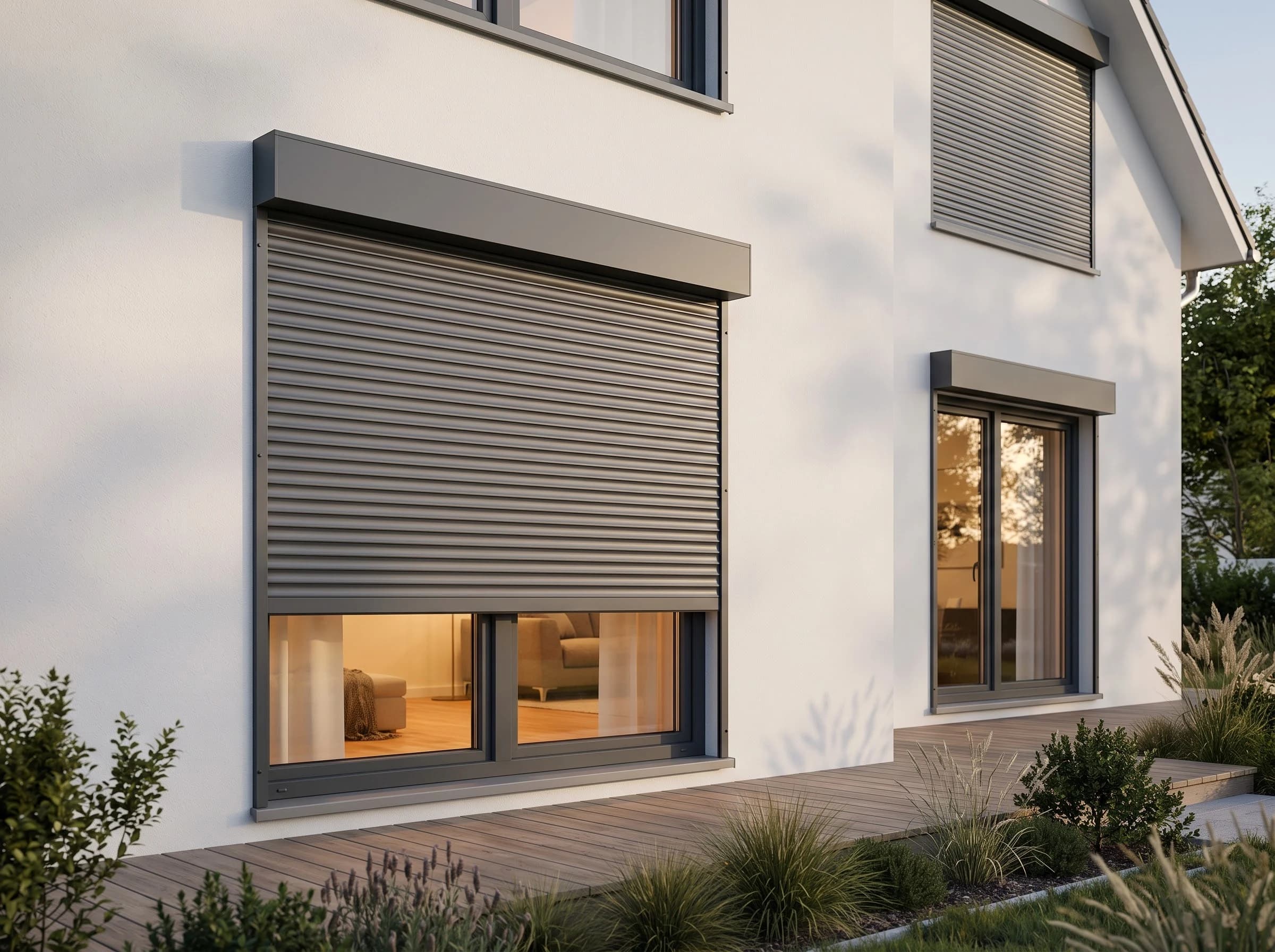
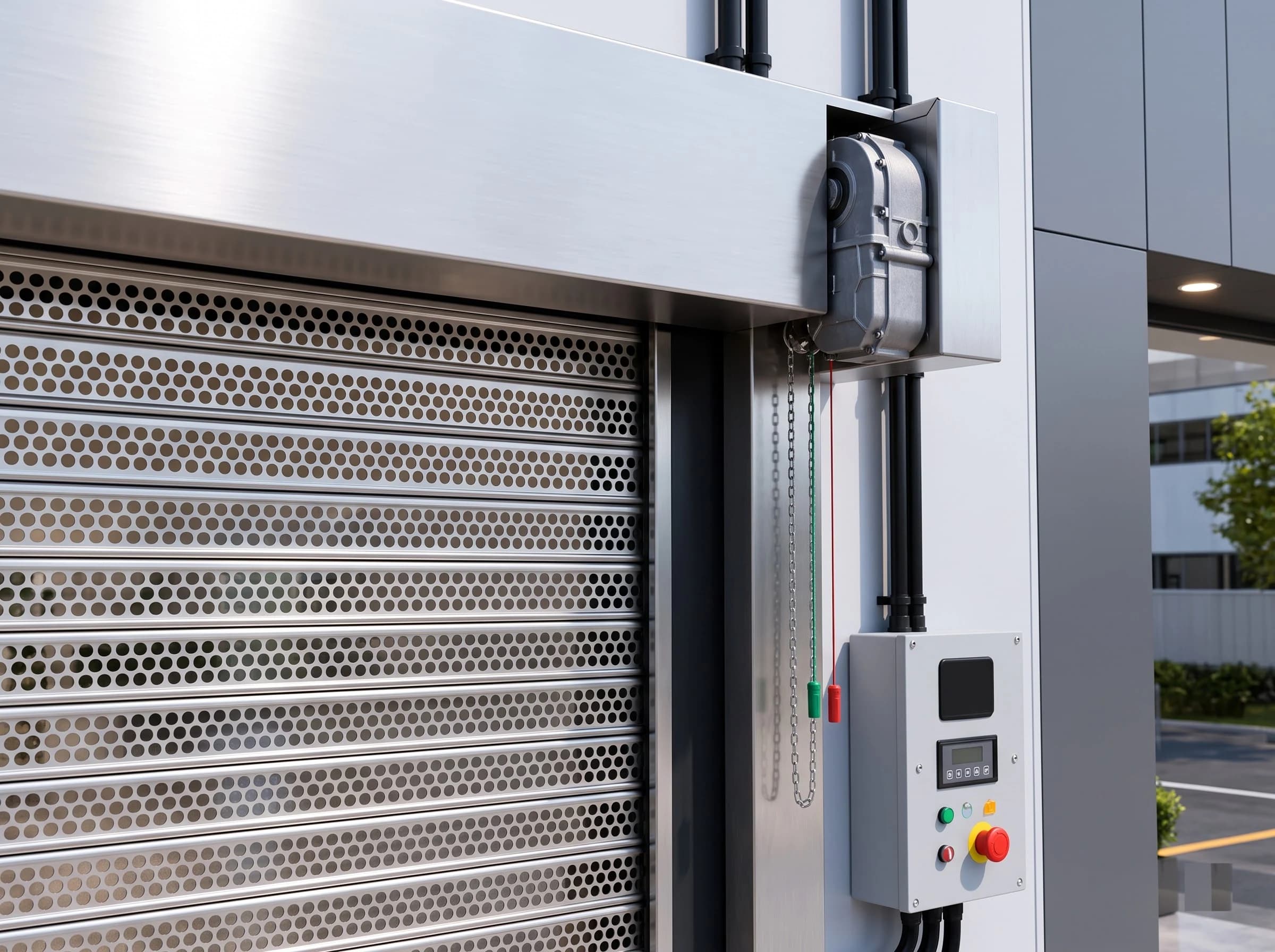
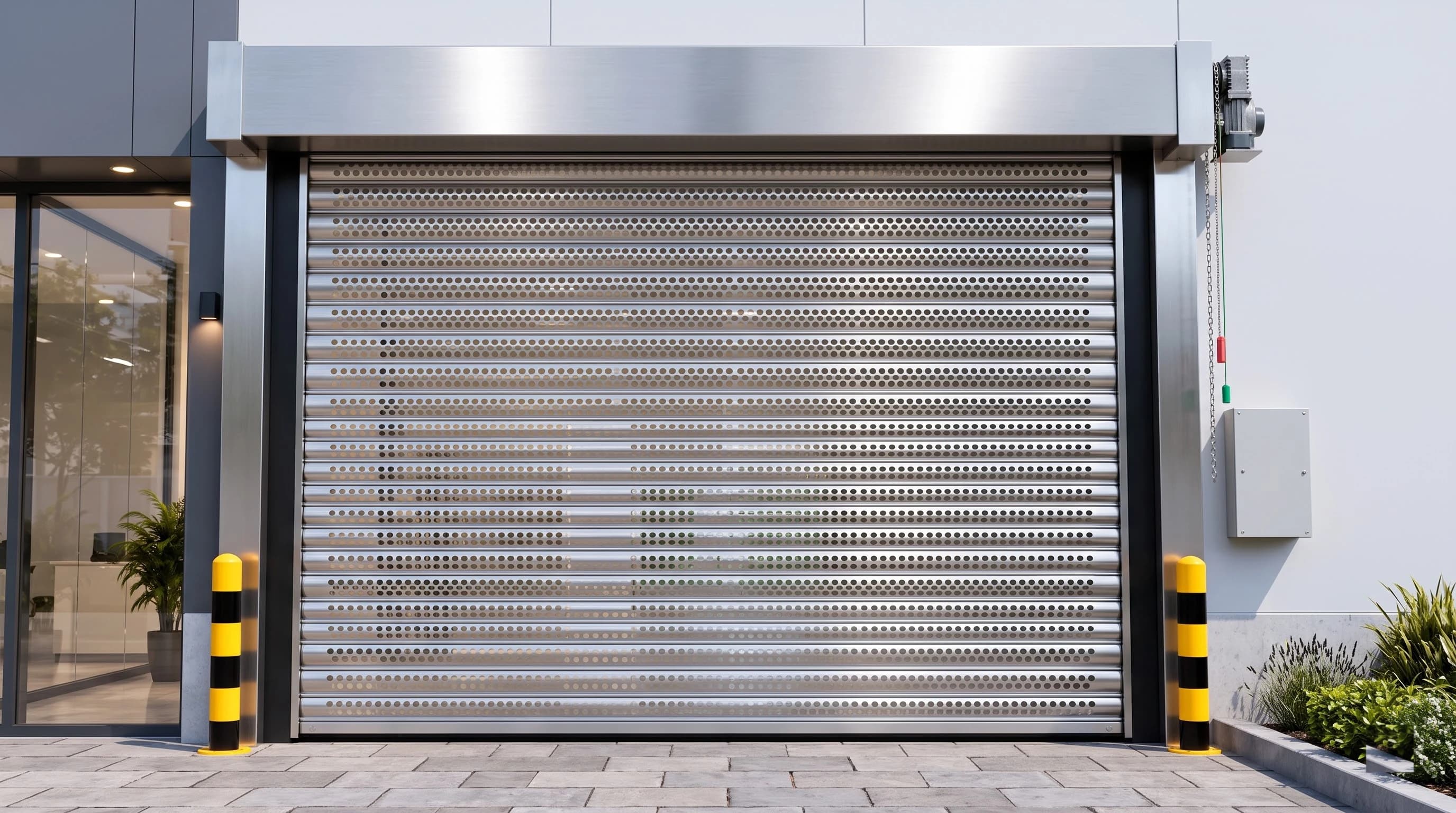
Product visualisations. These images are built to a written specification of this door type rather than photographed on site, and they are replaced as installation photography becomes available. They illustrate construction and arrangement; the figures that matter are in the specification below.
Key specifications
* Final specification depends on door dimensions, configuration, operating environment and project requirements.
01Overview
Perforating the slat turns a solid shutter into one that still secures the opening but lets light, air and some visibility through it. That matters in two quite different places: a shop front that wants the display seen after hours, and a parking structure that needs ventilation through a secured opening.
03Variants
The same product, built for a different job. Where a specification depends on opening dimensions, selected profile, operating duty or site conditions, the final configuration is confirmed during technical assessment.
A fine perforation pattern prioritising security, airflow and light transmission with limited visibility through the curtain. Hole size and pitch are configuration dependent.
A more open pattern giving better visibility along with ventilation, for retail storefront security where the display should stay visible.
Reinforced perforated metal curtain with a heavy-duty guide, for larger openings and harder use.
10Gallery
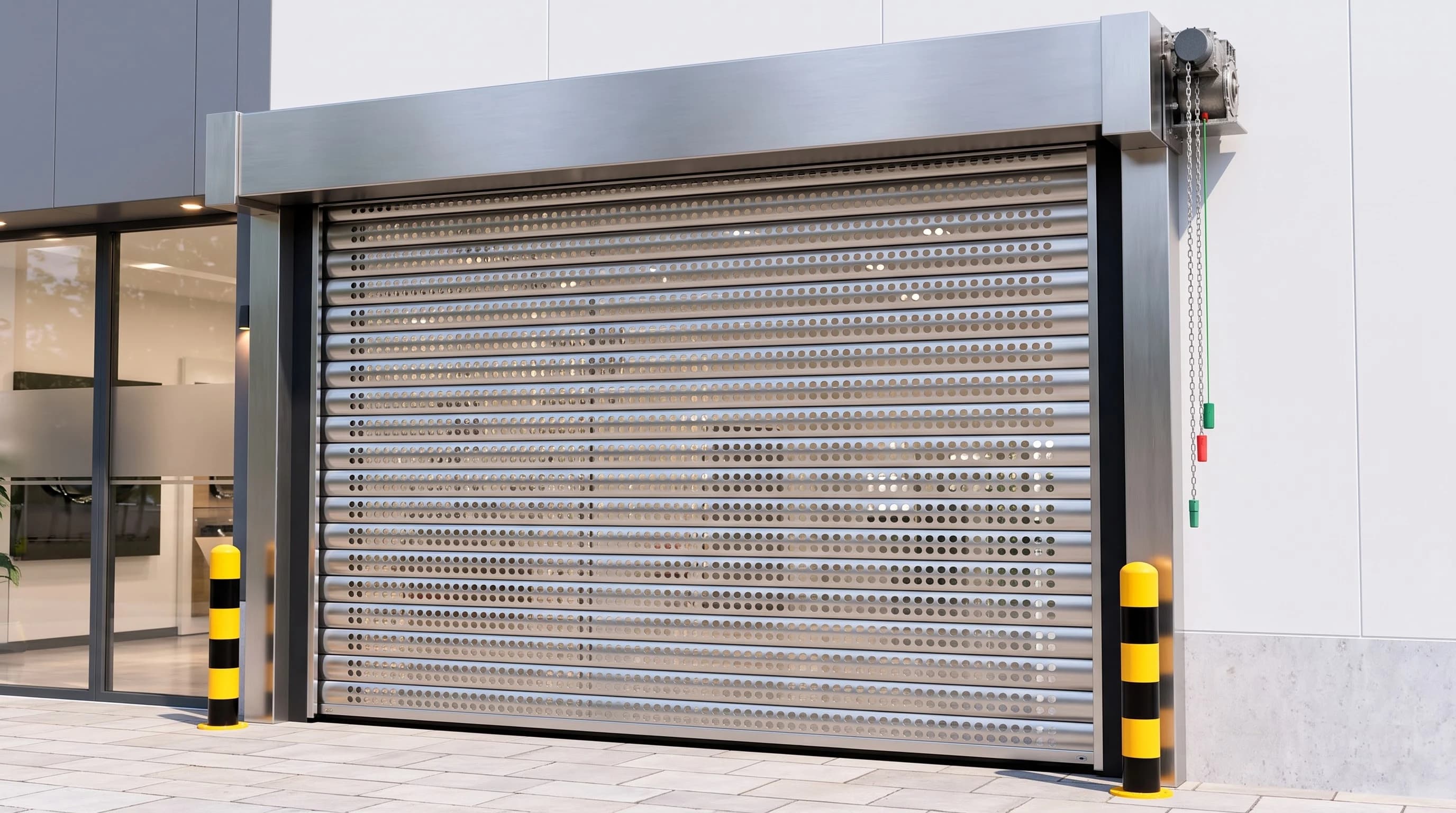
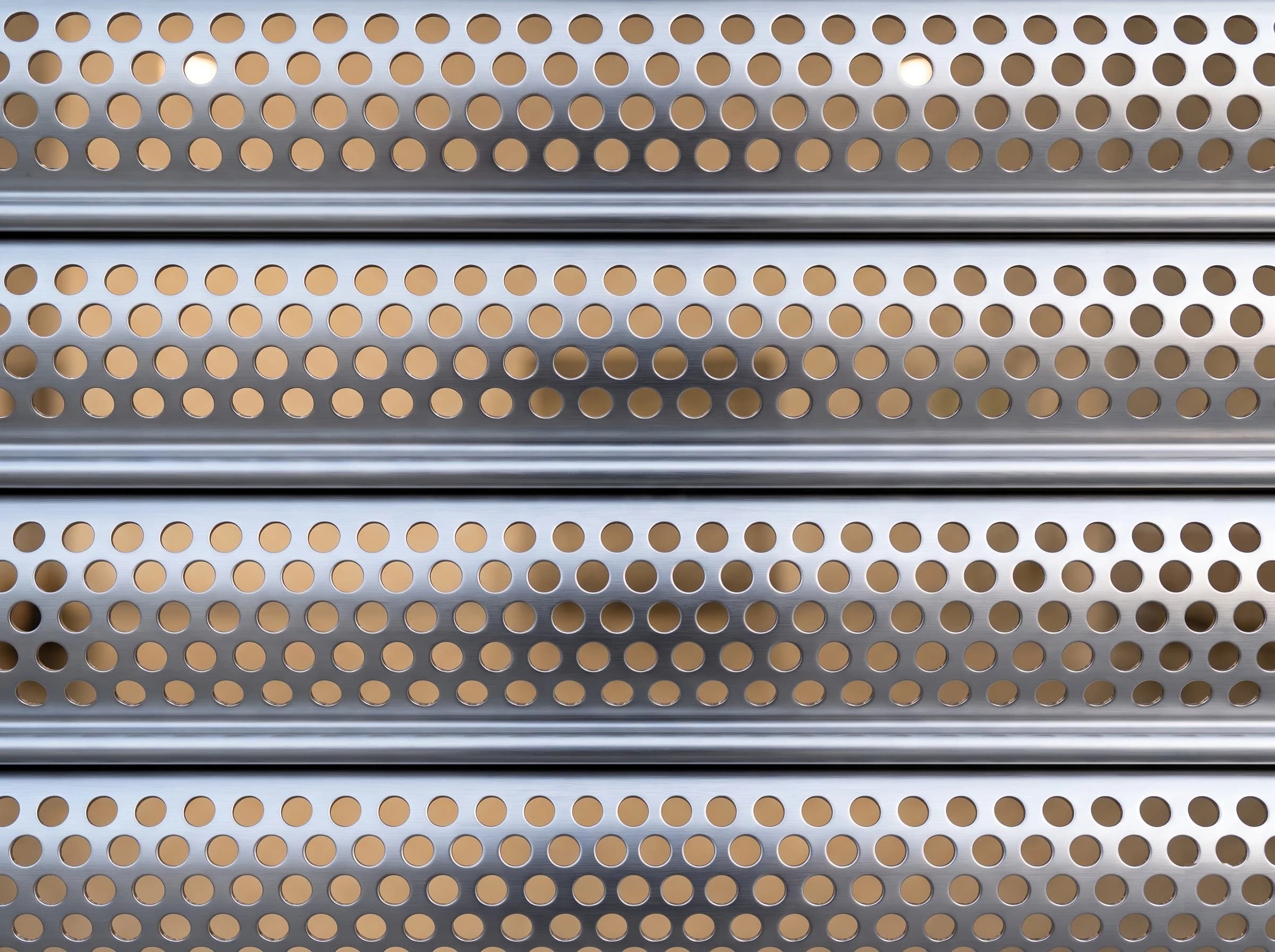
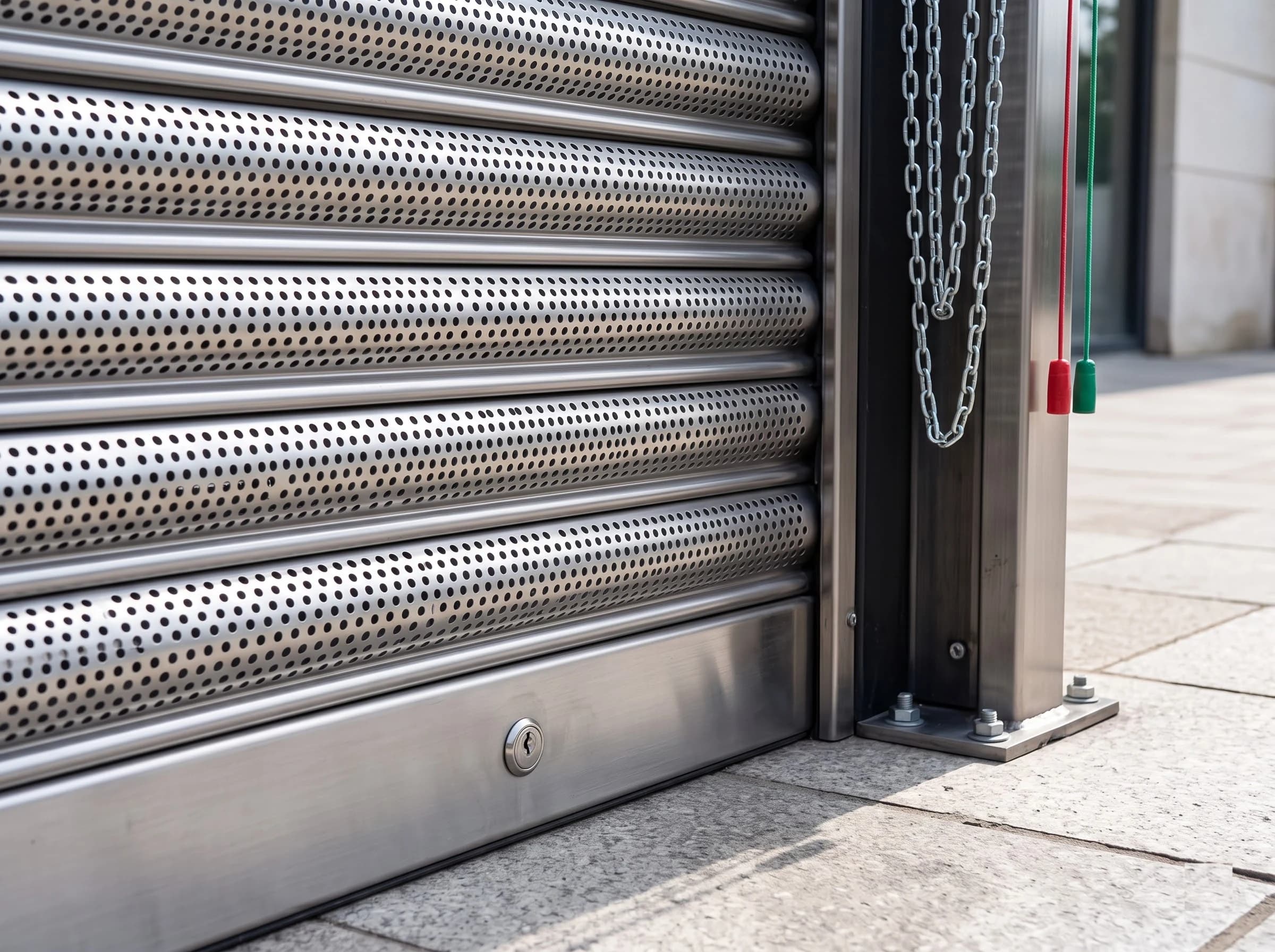
04Technical specifications
Technical data is shown first; features, applications, compatibility, installation, safety, ordering and downloads are a click away.
Open area follows from hole shape, size and pitch. There is no universal figure for a perforated curtain.
| Product family | Perforated Rolling Shutter |
|---|---|
| Material | MS / GI / aluminium |
| Material grade | Selected according to the material chosen for the installation |
| Coating | Paint, galvanized, powder coating or anodising depending on material |
| Surface treatment | Powder coating or anodising optional |
| Construction | Perforated interlocking slats; reinforced curtain on the heavy-duty configuration |
|---|---|
| Profile | Approximately 75–80 mm class for steel-based conventional construction; aluminium profile dependent |
| Profile height | Approximately 75–80 mm class for steel construction; aluminium profile dependent |
| Slat thickness | 0.8 / 1.0 / 1.2 mm class for metal constructions |
| End lock | Configuration dependent |
| Slat weight | Calculated from the selected profile and material |
| Curtain weight | Calculated from the selected profile, material and opening dimensions |
| Perforation pattern | Fine, standard vision or heavy-duty pattern |
| Hole shape | Pattern dependent |
| Hole size | Pattern dependent |
| Hole pitch | Pattern dependent |
| Open areaOpen area follows from hole shape, size and pitch. There is no universal figure for a perforated curtain. | Pattern dependent |
| Maximum width | Custom size; configuration dependent |
|---|---|
| Maximum height | Custom size; configuration dependent |
| Maximum area | Configuration dependent |
| Intermediate mullion | Available for large or multiple curtain arrangements |
| Guide material | MS, GI or aluminium according to the curtain material |
|---|---|
| Guide width | 65 / 75 / 100 mm class depending on opening size |
| Guide depth | Configuration dependent; conventional systems approximately 65–100 mm class |
| Guide thickness | 3.15 mm class conventional guide construction |
| Curtain engagement | 40–60 mm class for conventional steel arrangements |
| Wind lock | Optional; required where wind exposure or design demands it |
| Guide seal | Optional; configuration dependent |
| Barrel type | Conventional or motorised barrel according to configuration |
|---|---|
| Shaft diameter | 32 / 40 / 50 mm class, selected according to shutter width and curtain load |
| Shaft material | Steel |
| Bracket | Steel bracket, size selected according to shutter height and load; conventional reference range from 300 × 300 mm upward |
| Hood / headbox | Hood or headbox to suit the material; size configuration dependent |
| Bottom profile | MS, GI or aluminium bottom profile depending on material |
|---|---|
| Bottom bar dimensions | Configuration dependent |
| Bottom seal | Optional rubber or EPDM seal where required |
| Lock | Central or side locking according to configuration |
| Operation | Manual, gear operated or motorised |
|---|---|
| Motor options | Tubular, central or side-mounted motor depending on shutter size and configuration |
| Motor rating | Selected according to curtain weight, opening size, barrel and duty cycle |
| Supply voltage | 230 V AC single-phase or 415 V AC three-phase depending on the selected motor |
| Emergency manual override | Manual override available on powered configurations |
| Controls | Push button, key switch, RF remote, access control, GSM or Wi-Fi where compatible |
| Wind resistance | Configuration dependent |
|---|---|
| Fire rating | Not fire-rated unless separately tested and certified |
| Thermal performance | Not rated |
| Acoustic performance | Not specifically rated; configuration dependent |
| Corrosion resistance | Depends on the material and finish selected |
| Cycle rating | Duty dependent; the operator is selected according to operating frequency |
| Opening speed | Motor and configuration dependent |
| Safety devices | Photocell, safety edge and emergency stop available depending on the motor and control configuration |
|---|---|
| Anti-drop device | Available where required; configuration dependent |
| Brake | Motor or gear brake according to the selected operator |
| Obstacle detection | Available with a compatible control and safety system |
| Finish | Paint, galvanized, powder coating or anodising depending on material |
|---|---|
| Colour | Standard colours; custom RAL available |
| Mounting | Face mounted, between jamb or recessed |
|---|---|
| Headroom required | Survey dependent |
| Side room required | Survey dependent |
| Mounting substrate | Masonry, RCC, structural steel or other suitable structural support; fixing selected according to the substrate |
Specifications may vary according to opening dimensions, selected profile, material, operating method, site conditions and final system configuration.
FAQ
Engineering enquiry
Five answers about the opening are usually enough for us to come back with a configuration and a price.
Get in touch
If it is easier to describe the opening than to write it down, call or message us and we will work through it with you.